
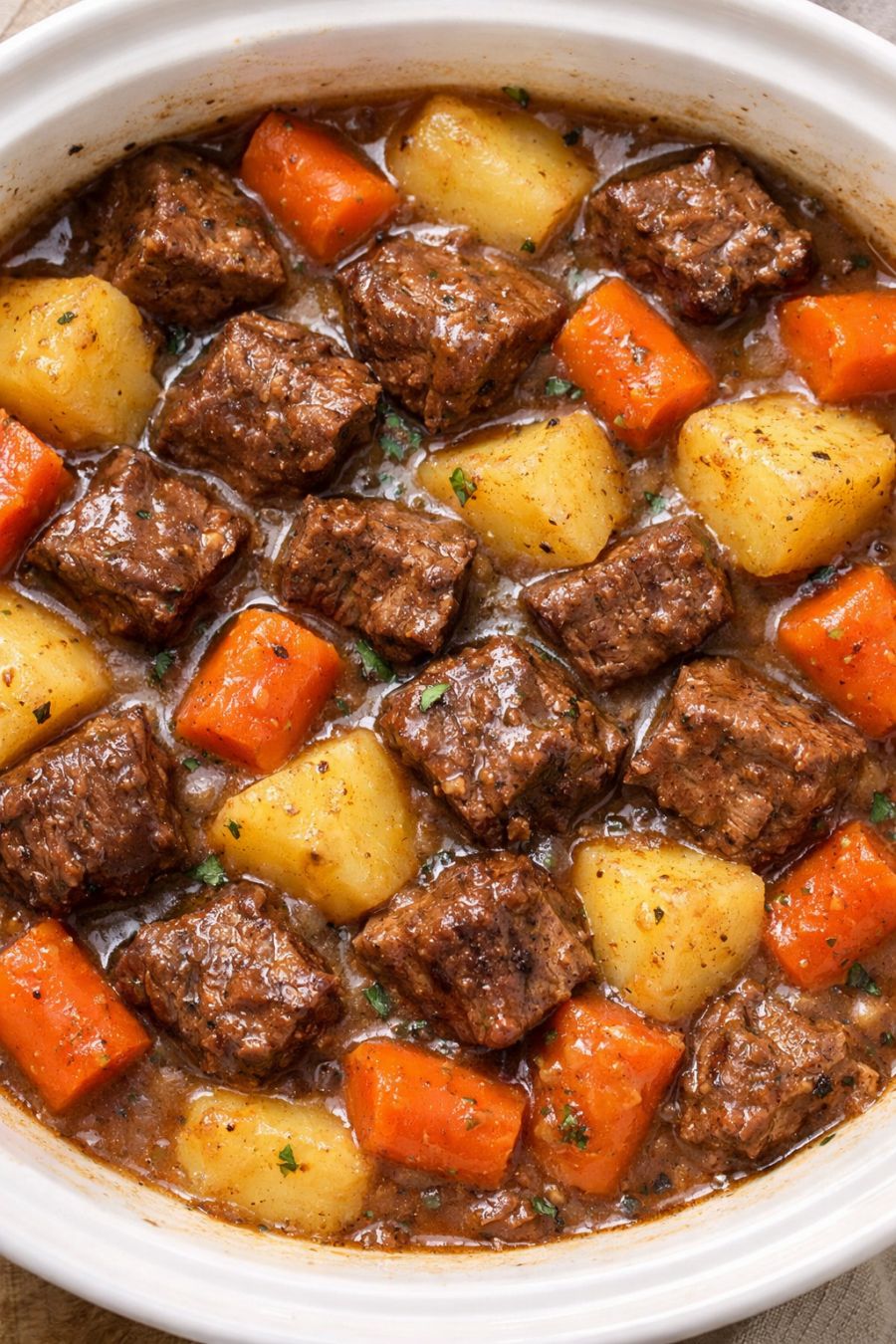
This oven baked 3-ingredient poor man’s beef stew is the kind of dish that quietly stretches a small amount of meat into a full, comforting meal. My aunt learned it from her mother, who relied on this exact method during the Depression to feed a big family on almost nothing. Everything bakes together in one deep casserole dish until the beef is fork-tender, the carrots and potatoes are soft, and the broth turns thick and savory. It’s practical, filling, and about as budget-friendly as real food gets, while still feeling like something you’d be proud to set in the middle of the table for a crowd.
Serve this stew piping hot straight from the casserole dish with a simple green salad or a bowl of sliced cucumbers dressed in vinegar and salt to cut through the richness. If you want to stretch it even further, ladle it over thick slices of day-old bread, plain white rice, or buttered egg noodles so the starch can soak up the gravy. A jar of pickles or pickled beets on the side echoes the thrifty, Depression-era spirit and adds a bright contrast to the deep, beefy flavors.
Oven Baked 3-Ingredient Poor Man’s Beef Stew
Servings: 6–8
Ingredients
2 pounds inexpensive beef stew meat, cut into 1-inch cubes
2 pounds russet or other starchy potatoes, peeled and cut into 1-inch chunks
1 pound carrots, peeled and cut into 1/2- to 1-inch pieces
1 1/2 teaspoons kosher salt (or to taste)
1 teaspoon black pepper
2 cups water (or enough to barely come up around the ingredients)
1 tablespoon vegetable oil or any neutral cooking oil (for greasing the dish, optional)
Directions
Preheat your oven to 325°F (165°C). Lightly grease a deep white ceramic casserole dish (about 3-quart capacity) with the vegetable oil, if using. This helps prevent sticking and makes cleanup easier.
Layer the potatoes evenly over the bottom of the casserole dish. This creates a starchy base that will help thicken the broth as it bakes, echoing the way home cooks stretched stews during the Depression.
Scatter the carrot pieces over the potatoes in an even layer. The carrots will soften and sweeten as they cook, balancing the savory flavor of the beef and broth.
Place the beef cubes on top of the vegetables in a single, fairly even layer. It’s fine if they overlap a bit, but try not to pack them too tightly so the heat circulates well.
Sprinkle the salt and black pepper evenly over the beef and vegetables. In my aunt’s version, this simple seasoning was all they could afford, and it still delivers a surprisingly deep flavor once everything has baked together.
Pour the water gently into the casserole dish, aiming for the sides so you don’t wash all the seasoning off the top. Add just enough water so it comes about three-quarters of the way up the layers; the potatoes will release some liquid as they cook, and you want a thick, stew-like broth at the end, not a soup.
Cover the casserole dish tightly with a lid or a double layer of foil. A tight seal is important: it traps steam, keeps the beef moist, and helps the potatoes break down slightly to thicken the broth without any extra ingredients.
Place the covered casserole dish on the middle rack of the preheated oven and bake for 2 1/2 to 3 hours. Do not stir during this time; the long, gentle bake is what turns inexpensive stew meat into fork-tender cubes and allows the vegetables to soften completely.
After about 2 1/2 hours, carefully remove the dish from the oven and lift a corner of the lid or foil away from you to avoid steam burns. Check a piece of beef with a fork; it should be very tender and easy to pull apart. The potatoes and carrots should be soft, and the liquid should have thickened into a glossy, savory broth.
If the beef is not yet fork-tender or the broth looks thinner than you’d like, re-cover the dish and return it to the oven for another 20–30 minutes. The starch from the potatoes will continue to thicken the liquid as it cooks.
When the stew is done, taste the broth and adjust the seasoning with a bit more salt and pepper if needed. Let the casserole sit, covered, for about 10 minutes before serving; this resting time allows the bubbles to settle and the broth to thicken just a touch more.
Serve the stew straight from the deep white ceramic casserole dish, making sure each portion includes plenty of beef cubes, soft carrots, potatoes, and a generous spoonful of the thick, savory broth.
Variations & Tips
To stay true to the spirit of a Depression-era recipe, think of variations in terms of using what you have rather than adding expensive ingredients. For the 3-ingredient core, you can swap the potatoes for any starchy root vegetable you have on hand, such as turnips or parsnips, and use any inexpensive cut of beef suitable for stewing (like chuck, round, or even beef shank with the bone left in for extra flavor). If you want to deepen the flavor without spending much, replace up to 1 cup of the water with leftover coffee or a splash of soy sauce mixed with water—both were common thrifty tricks to add savoriness. A spoonful of flour tossed with the beef before layering can make the broth even thicker, mimicking a gravy. For a truly “feeds a crowd” version, increase the potatoes and carrots by 50% and keep the beef amount the same; you’ll end up with more vegetables in each serving but still plenty of meat for flavor. Leftovers reheat well and can be stretched by adding a bit more water and serving over rice or noodles, turning one casserole into two different meals.
