
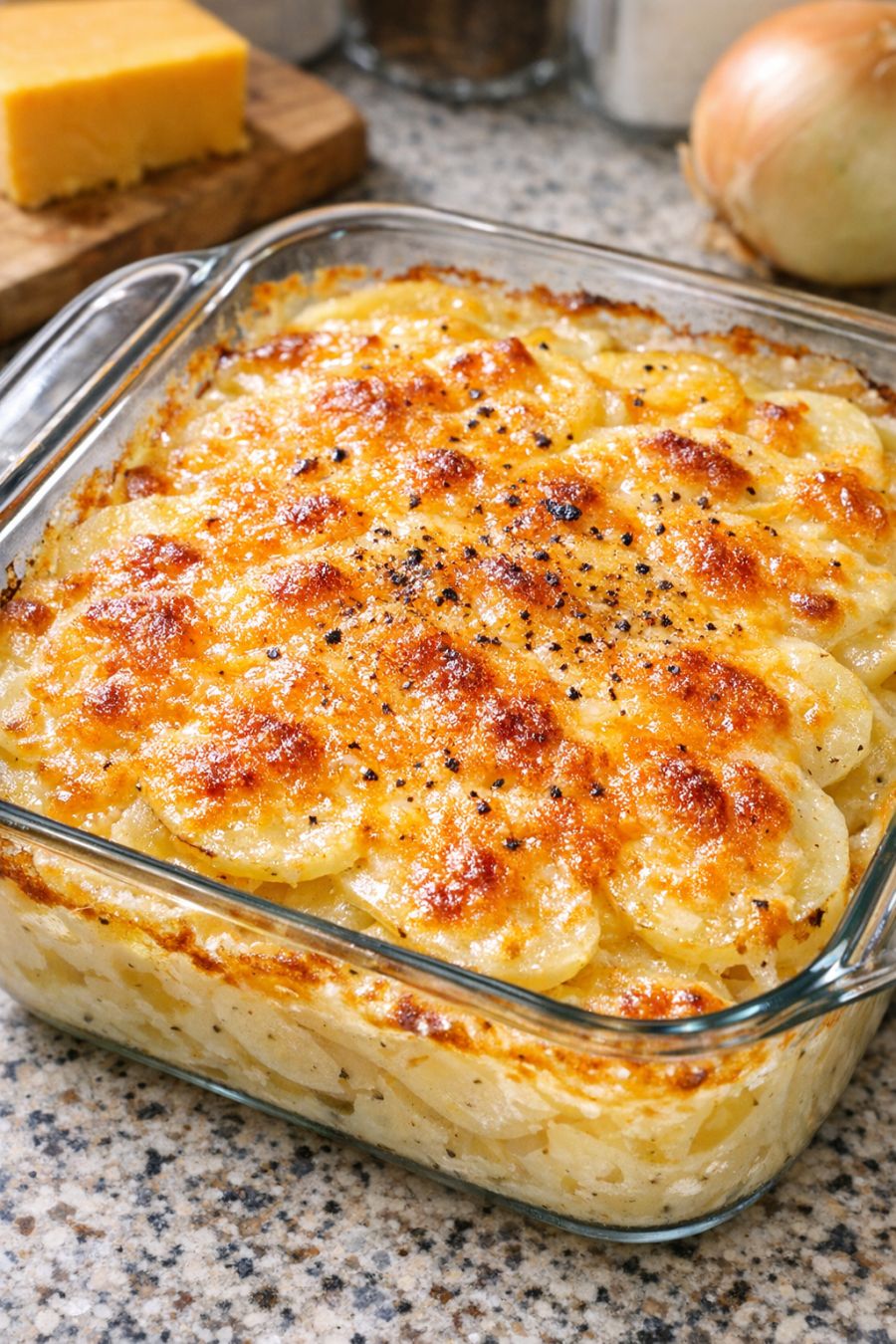
This is my pared-down, 5-ingredient take on classic Amish-style scalloped potatoes: thinly sliced raw potatoes go straight into a glass casserole dish, then you simply add four pantry-friendly ingredients and let the oven do the work. No pre-cooking, no flour roux, no fussy steps—just honest, creamy, golden potatoes with a bit of old-fashioned comfort baked in. Amish and Pennsylvania Dutch cooks are known for making the most of simple ingredients, and this version leans into that spirit: straightforward, hearty, and the kind of dish that has family members going back for seconds (and sometimes thirds).
Serve these scalloped potatoes hot from the oven alongside simple proteins like roast chicken, baked ham, or pan-seared pork chops. A crisp green salad with a tangy vinaigrette or steamed green beans balances the richness nicely. They also pair well with roasted vegetables, grilled sausages, or a seared steak if you’re turning this into a Sunday-style dinner. Leftovers reheat beautifully next to a fried egg for a cozy brunch plate.
5-Ingredient Amish Scalloped Potatoes
Servings: 6
Ingredients
3 pounds russet or Yukon Gold potatoes, peeled (if desired) and thinly sliced
2 cups whole milk (or 1 1/2 cups milk + 1/2 cup heavy cream)
1 1/2 cups shredded sharp cheddar cheese, divided
4 tablespoons unsalted butter, cut into small pieces
1 1/2 teaspoons kosher salt, plus more to taste
1/2 teaspoon freshly ground black pepper
Directions
Preheat your oven to 375°F (190°C). Lightly butter or spray a deep 2- to 3-quart glass casserole dish; this helps keep the potatoes from sticking and encourages browning on the edges.
Prepare the potatoes: Peel them if you like a smoother texture, or leave the skins on for a more rustic feel. Slice the potatoes into thin, even rounds, about 1/8 inch thick. A mandoline makes this quick, but a sharp knife and a steady hand work just as well.
Dump the raw sliced potatoes directly into the prepared glass casserole dish. Spread them out with your hands so they’re in an even layer, loosely shingled and filling the dish from edge to edge. The top should look like overlapping potato coins in a single, fairly level layer, though some pieces will naturally stack a bit deeper in the dish.
Season the potatoes in the dish by sprinkling the kosher salt and black pepper evenly over the top. Use your hands or a spoon to gently toss and redistribute the slices so the seasoning lightly coats the potatoes throughout, then smooth them back into an even, overlapping layer.
Scatter half of the shredded cheddar cheese evenly over the potatoes. Tuck some of the cheese between visible layers by lifting a few slices here and there—this helps the cheese melt into pockets throughout the dish rather than sitting only on top.
Dot the potatoes all over with the small pieces of butter. Aim to distribute the butter evenly so it melts down between the slices as the dish bakes, enriching the milk and helping to create a creamy, slightly thickened sauce without a separate roux.
Pour the milk (or milk and cream mixture) slowly and evenly over the potatoes. You should see the liquid settle in between the slices and come about halfway to three-quarters of the way up the layers. Gently press down on the potatoes with a spatula or your palm to help them settle into the milk and release any large air pockets.
Sprinkle the remaining cheddar cheese evenly over the top of the potatoes. This final layer will melt into a bubbly, golden-brown cap that keeps the potatoes underneath moist and tender.
Cover the glass casserole dish tightly with foil, tenting it slightly so the foil doesn’t stick to the cheese. Place the dish on a rimmed baking sheet to catch any bubbling overflow, then transfer to the preheated oven.
Bake covered for 45 to 55 minutes, until the potatoes are mostly tender when pierced with the tip of a knife and the liquid around the edges is hot and starting to thicken. The exact time depends on how thinly you sliced the potatoes and the depth of your dish.
Remove the foil and continue baking for another 20 to 30 minutes, or until the top is deeply golden, the cheese is browned in spots, and the potatoes are completely tender all the way through. You should see the sauce bubbling gently around the edges.
Once done, take the casserole out of the oven and let the scalloped potatoes rest for at least 10 to 15 minutes before serving. This brief rest allows the creamy sauce to thicken slightly and the layers to set, so you can spoon out neat portions with distinct, tender slices rather than a loose, soupy mixture.
Taste a small corner and adjust with a light sprinkle of extra salt and pepper on top if needed. Serve warm, scooping down through all the layers so each portion includes tender potatoes, creamy sauce, and that cheesy, browned top.
Variations & Tips
For a more traditional Amish-style feel, you can skip the cheese entirely and rely on the milk, butter, salt, and pepper to create a simple, clean-tasting creamy potato bake; the technique remains the same, but the flavor is milder and very homey. If you’d like a little onion character without adding a sixth main ingredient, rub a cut clove of garlic or a halved onion around the inside of the glass dish before adding the potatoes—this perfumes the casserole without complicating the ingredient list. To lighten things up, use 2% milk and reduce the cheese by a third; bake time stays the same, but the sauce will be slightly less rich. For a heartier, almost one-pan meal, tuck thin slices of pre-cooked ham or smoked sausage between some of the potato layers (this technically adds an ingredient but works well when you’re not strictly counting). You can also swap in part Swiss or Colby cheese for a different flavor profile, or sprinkle a tablespoon of dried breadcrumbs over the top during the last 10 minutes of baking for extra crunch. If your potatoes are still firm after the suggested time, simply cover loosely with foil and continue baking in 5- to 10-minute increments; differences in slice thickness and oven calibration can change the timing, and fully tender potatoes are the key to that irresistible, beg-for-more texture.
