
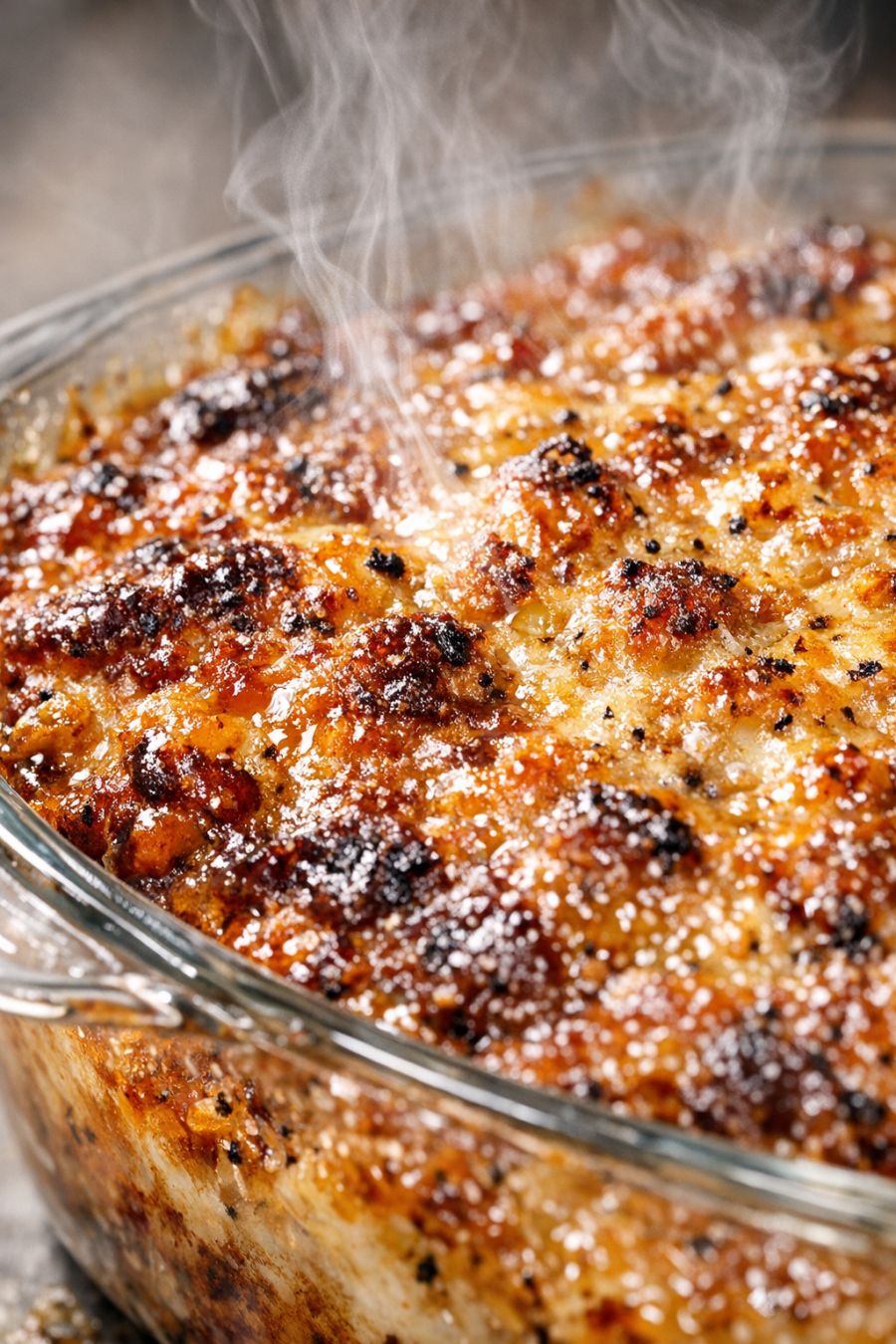
This is the kind of Good Friday lifesaver I lean on when I want the oven to do the work and supper to be ready without any fuss. It’s just three simple pantry staples layered in a glass baking dish and left alone until the top turns a deep, glistening amber and the edges bubble like an old church potluck casserole. The idea comes straight out of Midwestern farmhouse cooking—take something humble, give it time and low heat, and let it transform into something comforting and rich without standing over the stove. I put this together in the late morning, slide it into the oven, and by the time evening rolls around the house smells like I’ve been cooking all day, even though I barely lifted a finger.
I like to spoon this over plain white rice or buttered egg noodles so all those savory, caramelized juices soak in. A simple side of steamed green beans or a tossed salad keeps things light around the edges. Warm dinner rolls or a slice of crusty bread are perfect for mopping up the browned, syrupy bits from the bottom of the dish. If you’re serving a crowd, set the baking dish right on the table with a big spoon and let everyone dig in family-style, just like we did at the old church basement suppers.
3-Ingredient Friday Oven Lifesaver Bake
Servings: 4
Ingredients
2 pounds bone-in, skin-on chicken thighs (about 4–6 pieces)
1 cup French onion soup (canned or from a carton, well stirred)
1 cup bottled French dressing (thick, orange, and tangy)
Directions
Heat your oven to 300°F (150°C). This gentle heat is what gives you that deeply roasted, glistening amber crust without any babysitting.
Place the chicken thighs, skin side up, in a 9x13-inch glass baking dish. They can be snug, but try not to overlap them so every piece gets a chance to brown.
In a medium bowl, whisk together the French onion soup and French dressing until smooth and well combined. It will look thin now, but it thickens and caramelizes as it bakes.
Pour the mixture evenly over the chicken thighs, making sure each piece is coated. Do not cover the dish; leaving it uncovered helps the top turn deeply roasted and glossy.
Slide the glass baking dish onto the center rack of the oven. Bake, uncovered, for 2 1/2 to 3 hours, until the chicken is very tender, the top is a rich amber color, and the sauce has reduced to a thick, glistening glaze around the edges. You don’t need to stir or flip—just let the oven do its work.
If you’d like an extra-deep roasted finish, turn the oven up to 350°F (175°C) for the last 15–20 minutes, watching so the sugars in the dressing don’t burn. The top should be deeply browned, with steam rising and tiny bubbles around the edges of the glass dish.
Remove the dish from the oven and let the chicken rest for 5–10 minutes. The bubbling will calm down and the sauce will thicken just a bit more into a spoonable, savory glaze. Serve the chicken straight from the glass dish, spooning that glistening roasted sauce over each piece.
Variations & Tips
If you prefer boneless, skinless chicken thighs, you can use them, but reduce the baking time to about 1 3/4 to 2 hours and check for doneness; they won’t develop quite as crisp and amber a top without the skin, but the sauce will still turn syrupy and rich. For a slightly lighter flavor, swap half the French dressing for an equal amount of chicken broth, which makes the finished sauce more pourable for serving over rice. You can also tuck a few unpeeled garlic cloves or thick onion wedges around the chicken before baking for extra aroma, though that technically adds ingredients—my mother would have called them “free add-ins from the pantry.” If your oven runs hot, tent a piece of foil loosely over the dish during the last hour to prevent over-browning, then remove it for the final 10 minutes to bring back that glossy top. Leftovers reheat beautifully in the oven at 325°F, covered, until warmed through; the sauce thickens even more by the next day, making it wonderful shredded and piled onto buttered toast or tucked into soft rolls.
