
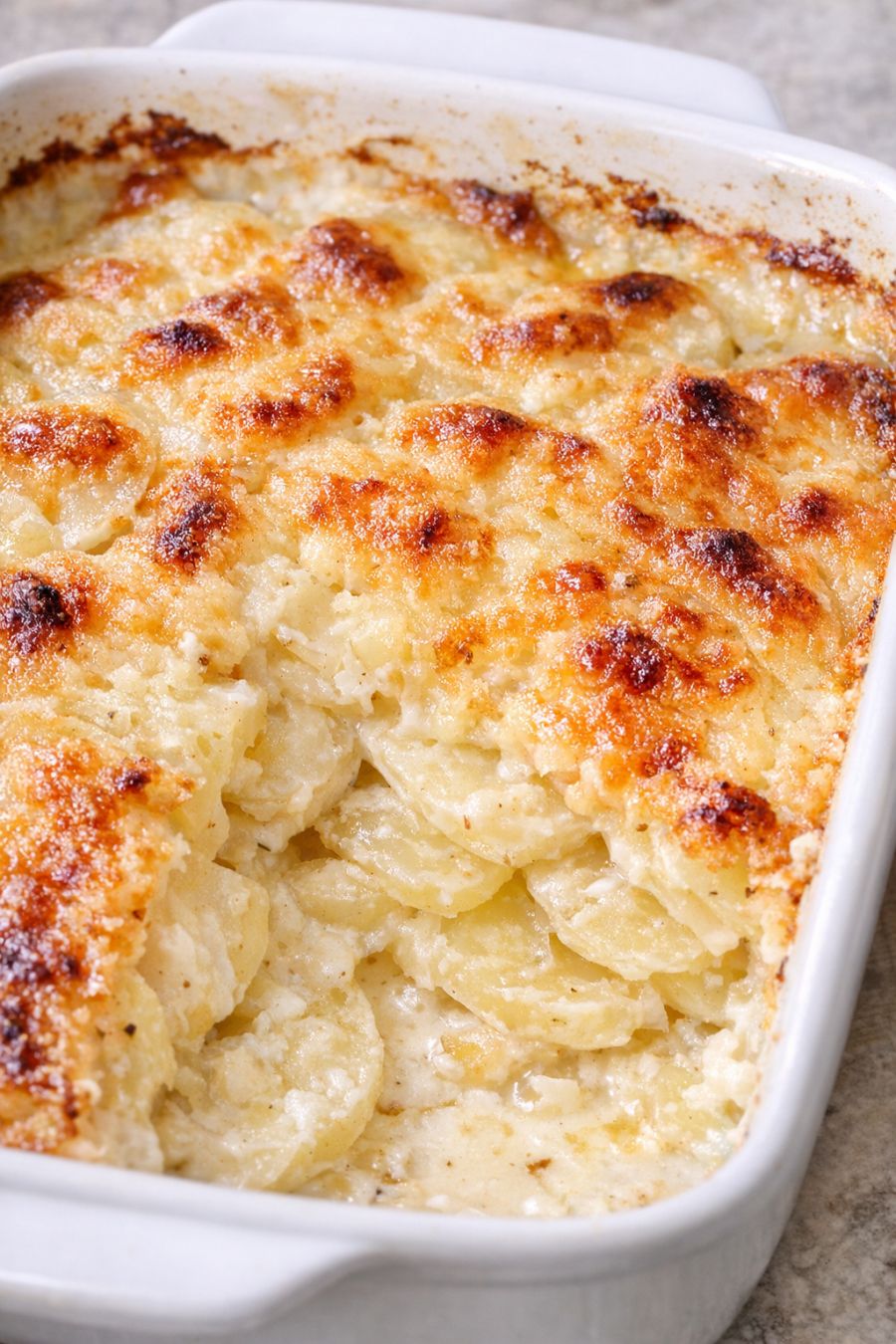
This little buttermilk potato casserole is the kind of dish that quietly steals the show at Sunday dinner. My grandma would slide a pan of these creamy, tender potatoes into the oven while a roast or baked ham bubbled away beside it, and by the time we cleared the table there wouldn’t be a scrap left in the dish. It’s as simple and honest as Midwestern cooking gets: just potatoes, buttermilk, and butter, baked low and slow until the slices are soft as can be and the top turns golden and lightly crusted. If you’re looking for a comforting side that feels like it came straight out of Grandma’s farmhouse kitchen—and only uses three ingredients—this is it.
Serve this buttermilk potato casserole alongside a Sunday roast, baked chicken, or a pan of meatloaf with green beans or buttered corn on the side. It’s also lovely with ham and a simple lettuce salad dressed with vinegar and oil to cut through the richness. For a cozy meatless supper, spoon the potatoes into warm bowls and add a side of stewed tomatoes or a plate of sliced garden cucumbers and onions. Leftovers (if you’re lucky enough to have any) reheat nicely next to fried eggs and sausage for a hearty farmhouse breakfast.
Oven-Baked 3-Ingredient Buttermilk Potato Casserole
Servings: 6
Ingredients
3 pounds russet or Yukon Gold potatoes, peeled and thinly sliced (about 1/8 inch thick)
2 cups full-fat buttermilk, well shaken
6 tablespoons unsalted butter, melted, plus a little extra for greasing the dish
Salt and black pepper, to taste (optional, not counted as ingredients)
Directions
Preheat your oven to 375°F (190°C). Generously butter a 9x13-inch (or similar) casserole dish, making sure to coat the bottom and sides so the potatoes don’t stick.
Peel the potatoes and slice them as evenly as you can, about 1/8 inch thick. A sharp knife works just fine; no need for fancy gadgets, though a mandoline will give you very even slices if you have one.
In a bowl or large measuring cup, stir together the buttermilk and the melted butter until well combined. If you like, season this mixture lightly with salt and black pepper, remembering that the flavors will concentrate a bit as the casserole bakes.
Lay a snug, even layer of sliced potatoes in the bottom of the buttered casserole dish. Overlap the slices slightly, like shingles on a roof, so they bake up tender and creamy.
Drizzle some of the buttermilk-butter mixture over the first layer of potatoes, using a spoon to help it seep down between the slices. You want each layer lightly coated but not swimming.
Continue layering potatoes and drizzling over the buttermilk-butter mixture until you’ve used all the potatoes. Pour any remaining liquid evenly over the top so everything is moistened. Gently press down with your hands or the back of a spatula to settle the layers.
Cover the casserole tightly with foil and bake on the middle rack for 45 minutes. This covered time lets the potatoes steam and turn tender without drying out.
After 45 minutes, carefully remove the foil and return the dish to the oven. Bake uncovered for another 25–35 minutes, or until the potatoes are very tender when pierced with a knife and the top is lightly golden with a bit of a baked crust forming around the edges.
If you’d like a deeper golden crust, you can move the dish up a rack or turn the oven up to 400°F (200°C) for the last 5–10 minutes, watching closely so it doesn’t overbrown.
Remove the casserole from the oven and let it rest for at least 10 minutes before serving. This short rest lets the creamy buttermilk settle into the layers so each scoop holds together and the pan is ready to be scraped clean at the table.
Variations & Tips
If your buttermilk is very tangy and you prefer a softer flavor, you can use half buttermilk and half whole milk while still keeping to the spirit of the original three-ingredient dish. Yukon Gold potatoes give a naturally buttery taste and stay a bit creamier than russets, while russets break down a touch more and make the casserole extra soft and custardy—use whichever you have on hand. For a slightly richer top, dot a tablespoon or two of cold butter over the surface before baking uncovered to encourage more browning. If you need to make this ahead, assemble the casserole earlier in the day, cover, and refrigerate; let it sit at room temperature for 20–30 minutes, then bake as directed, adding a few extra minutes if it’s going into the oven cold. Leftovers can be sliced into squares and pan-fried in a bit of butter the next morning until the edges are crisp—a thrifty farmer’s breakfast that tastes like you fussed far more than you did.
