
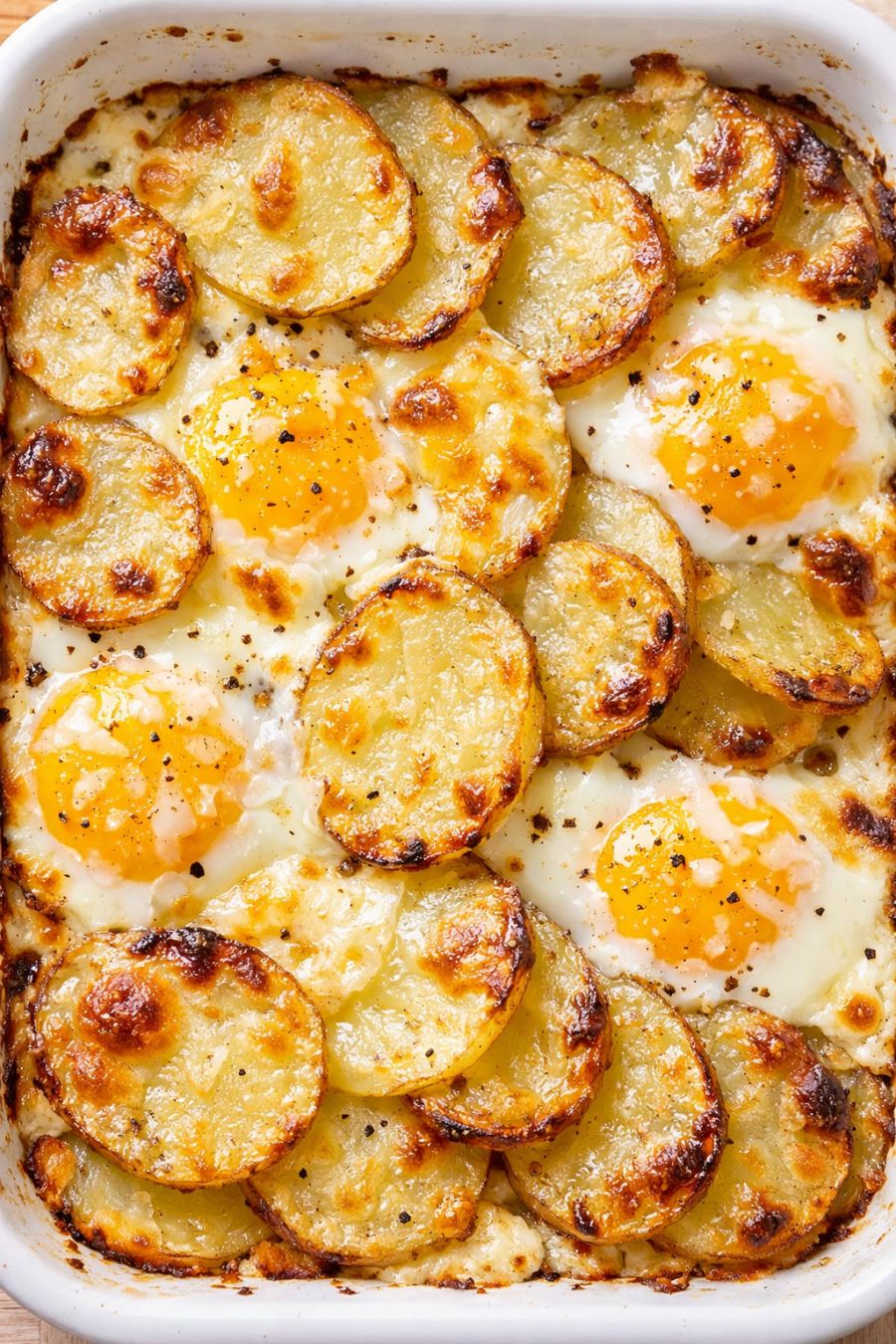
My neighbor Doris carried this dish into a church potluck one snowy January, and I swear it barely made it to the table before folks started digging in. By the time I came back around with my coffee, that casserole was scraped clean. It’s the sort of unbelievably creamy, comforting potato and egg bake that tastes like you fussed all afternoon, but it only uses four simple ingredients most Midwestern kitchens already have on hand. Layers of thinly sliced potatoes and hard‑cooked eggs are tucked into a casserole, then soaked in rich cream and baked until the edges turn golden brown and the center is silky and tender. It’s humble, hearty, and feels like something your grandmother might have made on a Sunday after church.
Serve this potato and egg bake piping hot, straight from the casserole dish, with a simple green salad or steamed green beans to cut through the richness. It’s wonderful alongside baked ham, meatloaf, or roast chicken, but it also makes a fine meatless supper with a side of buttered peas and some crusty bread or dinner rolls to swipe up the creamy sauce. For breakfast or brunch, pair it with crisp bacon or sausage links and a bowl of fresh fruit. Leftovers reheat nicely in the oven and are especially good with a spoonful of salsa or a dollop of sour cream if you like a little extra flair.
Oven-Baked 4-Ingredient Sliced Potato and Egg Bake
Servings: 6
Ingredients
2 tablespoons unsalted butter, softened (for greasing the dish and dotting on top)
2 pounds russet or Yukon Gold potatoes, peeled and very thinly sliced
6 large hard-boiled eggs, peeled and thinly sliced
2 cups heavy cream
1 teaspoon salt
1/2 teaspoon black pepper
Directions
Preheat your oven to 375°F (190°C). Generously butter a 2-quart (about 8x8-inch or similar) oven-safe casserole dish, making sure to coat the bottom and sides so the potatoes don’t stick and the edges brown nicely.
Peel the potatoes and slice them very thinly, about 1/8 inch thick. You can use a sharp knife or a mandoline if you have one. The thinner the slices, the creamier and more tender the bake will be.
Slice the hard-boiled eggs into even rounds. They don’t have to be perfect, but aim for fairly uniform slices so they layer nicely with the potatoes.
Arrange a single, slightly overlapping layer of potato slices in the bottom of the buttered casserole dish. Sprinkle lightly with some of the salt and pepper.
Add a layer of sliced hard-boiled eggs over the potatoes. They can overlap a bit; just try to cover most of the surface.
Repeat the layers, alternating potatoes and eggs and seasoning each potato layer lightly with salt and pepper, until you’ve used all the potatoes and eggs. Finish with a top layer of potatoes so the eggs stay tucked inside and don’t dry out.
Slowly pour the heavy cream evenly over the layered potatoes and eggs, tilting the dish gently if needed so the cream can work its way down between the slices. The cream should come close to the top layer but not completely submerge it.
Dot the top with small bits of the remaining butter to encourage browning and add extra richness around the edges.
Cover the casserole tightly with foil and place it on the middle rack of the preheated oven. Bake for 35 to 40 minutes, until the potatoes are starting to turn tender when pierced with the tip of a knife.
Remove the foil and continue baking for another 20 to 30 minutes, or until the top is deeply golden brown, the cream is bubbling around the edges, and the potatoes are completely tender all the way through. If the top is browning too quickly, you can lay the foil loosely over it for the last few minutes.
Let the casserole rest for at least 10 to 15 minutes before serving. This short rest allows the creamy sauce to thicken slightly so you can scoop neat, rich squares with those lovely browned edges everyone fights over.
Variations & Tips
If you’d like to change things up but keep the spirit of this simple four-ingredient bake, you can play with the details rather than the count. For a slightly lighter version, use half-and-half instead of heavy cream, understanding it won’t be quite as velvety. Yukon Gold potatoes give a naturally buttery flavor, while russets break down a bit more and make the sauce extra silky—use what you have or mix the two. You can also adjust the texture by slicing the potatoes a touch thicker for a more defined layer or paper-thin for a softer, almost gratin-like feel. A pinch of smoked paprika or a little extra black pepper on the top layer before baking adds a gentle warmth without changing the ingredient list much. If you’re serving a crowd that likes a bit of color, scatter chopped fresh parsley or chives over the finished dish right before it hits the table. For make-ahead convenience, assemble the casserole earlier in the day, cover, and refrigerate; just add an extra 10 to 15 minutes to the covered baking time to account for the chill. Leftovers can be cut into squares, cooled, and refrigerated, then reheated in a low oven until warmed through; they make a hearty breakfast alongside a slice of ham or a few sausage links.
