
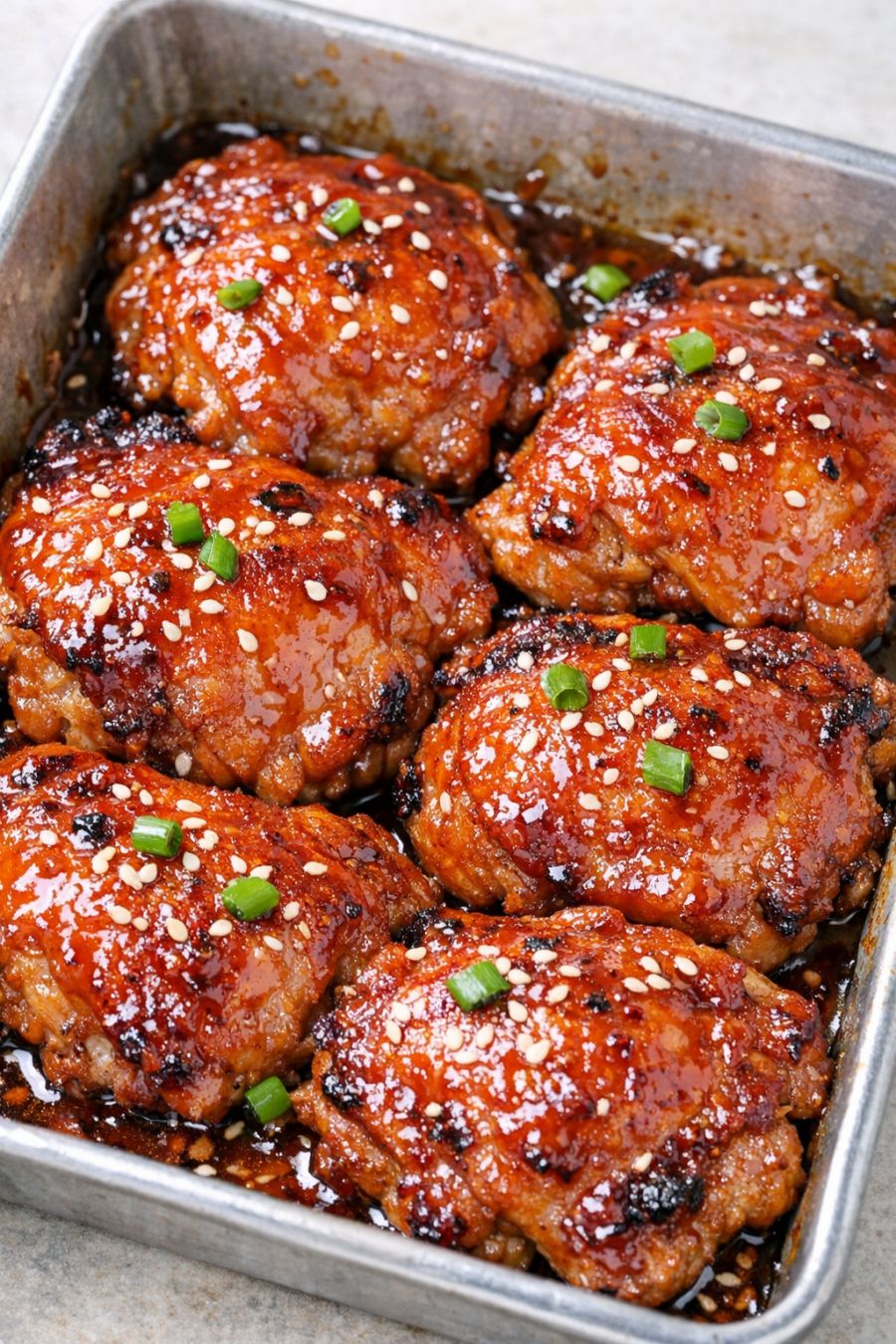
This is the kind of no-fuss, big-flavor chicken that a dad can pull off on a weeknight and still feel like a hero. My dad found this recipe in a magazine about 30 years ago, tore the page out, and stuck it to the fridge with a magnet. From then on, this became the only chicken dish he ever made—and honestly, no one complained. It’s just three pantry ingredients whisked together and poured over chicken thighs, then baked until the glaze turns glossy, caramelized, and a little sticky around the edges. Perfect for busy nights, kid-approved, and simple enough that anyone in the house can learn it and carry on the tradition.
This sweet-tangy Catalina glazed chicken is great over fluffy white rice or buttered egg noodles so they can soak up all that extra sauce in the pan. Add a simple green side like steamed broccoli, roasted green beans, or a tossed salad to balance the richness. Corn on the cob or a pan of roasted potatoes also fit that cozy, Midwestern feel. For a crowd, I like to serve it family-style right in the baking pan with a bowl of rice, a veggie, and maybe some dinner rolls to swipe through the caramelized glaze.
Oven Baked Catalina Glazed Chicken
Servings: 4
Ingredients
2 to 2 1/2 pounds bone-in, skin-on chicken thighs (about 6–8 pieces)
1 cup Catalina salad dressing
1 packet (1 ounce) dry onion soup mix
1/2 cup apricot preserves or jelly
Nonstick cooking spray or a little oil (for the pan, optional)
Directions
Preheat your oven to 375°F (190°C). Lightly spray or oil a rectangular metal baking pan (about 9x13 inches) so the chicken doesn’t stick too much.
Pat the chicken thighs dry with paper towels and trim any excess skin or large pockets of fat if you like. Arrange the thighs in a single layer in the prepared pan, skin-side up, with a little space between each piece.
In a medium bowl, whisk together the Catalina dressing, dry onion soup mix, and apricot preserves until the mixture is smooth and the soup mix is evenly distributed. It will be thick, sweet, and tangy.
Pour the Catalina mixture evenly over the chicken thighs, using a spoon or spatula to make sure each piece is well coated. Spoon a bit of the sauce into the corners of the pan so it can bubble and caramelize as it bakes.
Place the pan on the middle rack of the preheated oven and bake for 35 to 45 minutes, basting once or twice with the pan juices, until the chicken is cooked through (internal temperature reaches 165°F/74°C) and the glaze is glossy and starting to caramelize around the edges.
If you’d like a deeper color and extra caramelization like in those magazine photos, turn the oven to broil for 2 to 4 minutes at the end of baking. Keep a close eye on it so the sugars in the glaze don’t burn—pull it out when the skin looks deep reddish-orange and lightly charred in a few spots.
Let the chicken rest in the pan for about 5 minutes so the juices settle and the glaze thickens slightly. Serve the thighs straight from the metal pan, spooning the glossy, sweet-tangy sauce over each piece and over your rice or noodles.
Variations & Tips
For picky eaters, you can use boneless, skinless chicken thighs or breasts and cut them into large chunks; reduce the baking time to about 25–30 minutes, or until cooked through, and skip the broil if they’re browning too quickly. If your family doesn’t love onions, use half a packet of onion soup mix or pulse it in a blender first so the bits are smaller and less noticeable. For a slightly less sweet version, use 1/3 cup apricot preserves and add a splash (1–2 teaspoons) of apple cider vinegar to keep the tang. You can also swap the apricot for orange marmalade or peach preserves if that’s what you have on hand. To make it a little heartier, tuck halved baby potatoes or thick carrot slices around the chicken before pouring on the sauce; just know they’ll soak up some of the glaze, which is delicious. Leftovers reheat well, especially if you shred the chicken and toss it with the extra sauce to serve over rice or in warm pita bread. If you want to mimic that old-magazine look, always use a metal pan, don’t crowd the chicken, and give it those last few minutes under the broiler for a deeply caramelized, glossy finish.
