
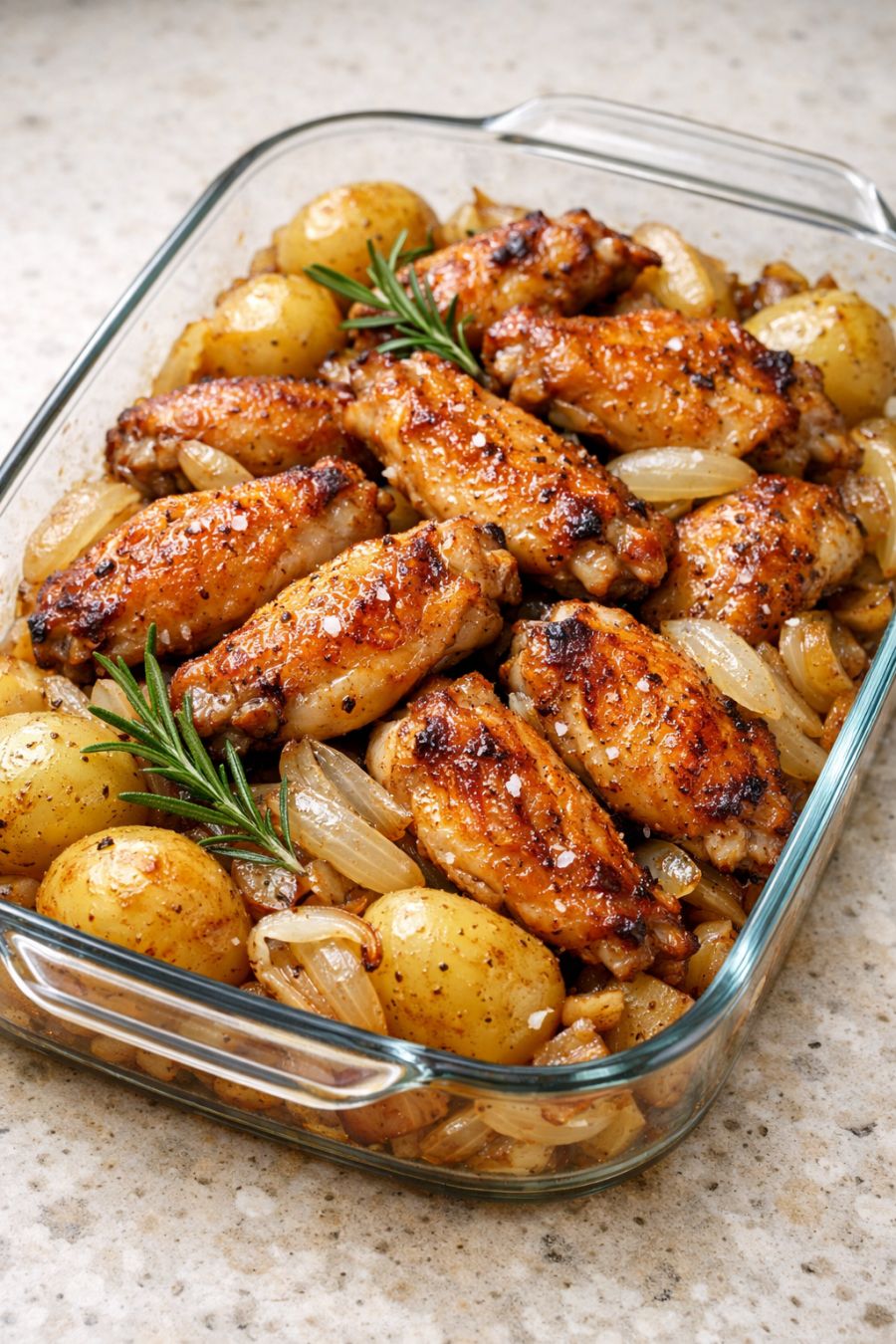
This 4-ingredient depression era oven chicken using raw chicken wings is the kind of make-do, stretch-a-dollar supper our mothers and grandmothers leaned on when money was tight but families were big and hungry. Everything happens right in a glass roasting dish: you toss the raw wings with a few humble pantry staples, slide it into the oven, and out comes a pan of tender, browned chicken with soft, savory little chunks all around. It’s simple, thrifty, and comforting, the way old Midwestern farmhouse cooking has always been—no fancy steps, just honest food that brings everyone to the table.
Serve these wings straight from the glass baking dish with a big spoon for the soft potato and onion chunks. They’re lovely with buttered egg noodles, mashed potatoes, or plain white rice to soak up the pan juices. A side of green beans, peas, or a simple lettuce salad with vinegar dressing keeps it true to its Depression-era roots. If you like, pass a jar of pickles or sliced tomatoes on the table—those bright, tangy bites balance the rich, roasted chicken and make the whole meal feel like a Sunday dinner, even on a weekday.
4-Ingredient Depression Era Oven Chicken Wings
Servings: 4
Ingredients
2 1/2 to 3 pounds raw chicken wings, tips removed if desired
4 medium potatoes, peeled and cut into small chunks
1 medium onion, peeled and cut into chunks
3 tablespoons vegetable oil or melted bacon drippings
1 1/2 teaspoons salt
1 teaspoon black pepper
Directions
Preheat your oven to 375°F (190°C). Pull out a glass roasting dish or a glass 9x13-inch baking dish so you can see everything as it bakes, just like Grandma used to.
Place the raw chicken wings directly into the glass roasting dish in a single, fairly snug layer. It’s fine if they touch; they’ll shrink a bit as they cook.
Scatter the potato chunks all around and in between the raw wings, filling in the gaps so the dish looks nicely crowded. Tuck the onion chunks around the wings and potatoes so they’re nestled close together. The potatoes and onions should look like pale, chunky bits surrounding the wings.
Drizzle the vegetable oil or melted bacon drippings evenly over the wings, potatoes, and onions. Sprinkle the salt and black pepper over everything, trying to cover as much of the surface as you can.
Using clean hands or a large spoon, toss everything right in the glass dish. Turn the wings over and stir the potatoes and onions until all the pieces are lightly coated with the oil and seasoning. Smooth things back into an even layer, with most of the chicken wings on top so they can brown nicely.
Cover the dish tightly with foil and place it on the middle rack of the preheated oven. Bake covered for 35 to 40 minutes, until the wings look opaque and the potatoes are starting to soften when poked with a fork.
Remove the foil, give the potatoes and onions a gentle stir around the edges, and turn any wings that aren’t browning yet. Return the uncovered dish to the oven and continue baking for another 25 to 35 minutes, or until the wings are well browned, the potatoes are tender, and the onions are soft and golden around the edges. If you like them extra browned, you can move the dish up a rack for the last 5 to 10 minutes.
Let the dish rest on the counter for about 5 minutes so the bubbling settles and the juices thicken a bit. Taste a potato chunk and add a pinch more salt or pepper over the top if needed. Serve the wings hot, spooning the soft potato and onion chunks and pan juices over each plate.
Variations & Tips
To keep the spirit of Depression-era thrift, think about what you already have in the pantry before buying anything special. If you don’t have potatoes, you can use peeled, chunked carrots or rutabaga in their place, or use a mix of whatever root vegetables are on hand. A pinch of dried herbs—like thyme, marjoram, or rubbed sage—can be added with the salt and pepper when you toss everything, though folks back then often relied on just salt, pepper, and good fat. For a crisper skin, start the dish uncovered, then cover it loosely with foil only if it seems to be browning too fast. If you prefer less fat, use just 2 tablespoons of oil and give the dish a good stir halfway through cooking so nothing dries out. To stretch the meal further, stir in a drained can of whole or sliced potatoes or carrots during the last 20 minutes of baking. Leftovers make a fine farmer’s breakfast: strip the meat from the bones, chop the potatoes and onions, and fry it all in a skillet the next morning, adding an egg on top if you have one to spare.
