
Cardboard egg cartons are a common household item that often end up in the recycling bin without a second thought. However, these humble containers can be repurposed in a variety of creative and practical ways that reduce waste and save money. By finding new uses for egg cartons, you can contribute to a more sustainable lifestyle while also discovering fun and innovative projects for your home and garden.
In this article, we explore ten smart ways to reuse cardboard egg cartons. From gardening hacks to DIY crafts, these ideas will inspire you to think twice before discarding your next carton. Whether you're looking to organize your drawers or create eco-friendly gifts, there's a project here for every interest and skill level.
1. Seed Starters for Windowsill Herb and Veggie Gardens
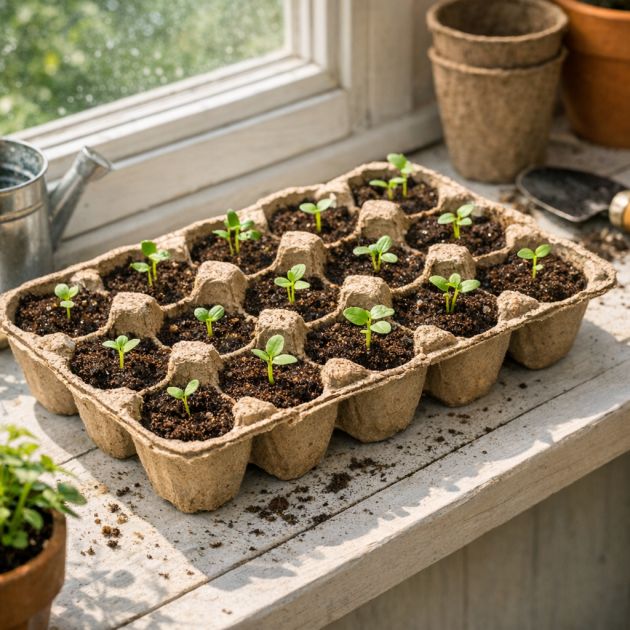
Egg cartons are perfect for starting seeds due to their biodegradable nature and individual compartments. To use an egg carton as a seed starter, fill each cup with potting soil and plant a seed about 1/4 inch deep. Water gently and place the carton on a sunny windowsill. The cardboard material will retain moisture, creating an ideal environment for germination.
As the seedlings grow, you can transplant them into larger pots or directly into your garden. Simply cut apart each cup and plant it into the soil. The cardboard will decompose naturally, providing nutrients to the growing plants.
2. DIY Drawer Organizers for Jewelry, Cords, and Office Supplies
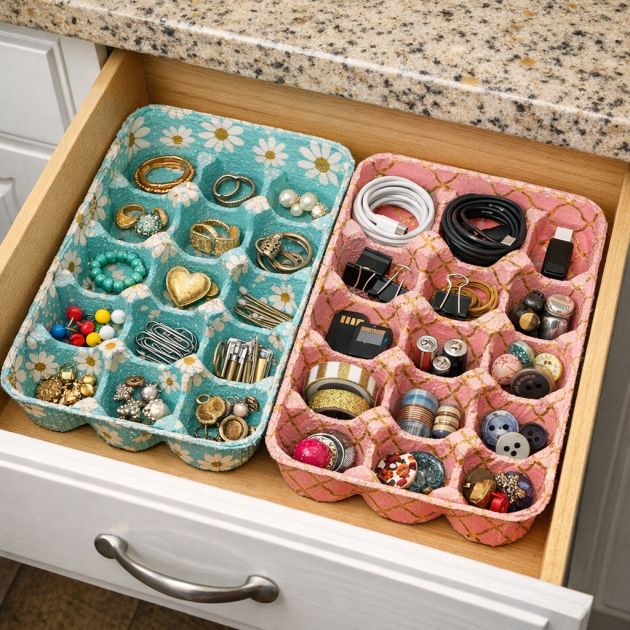
Transform egg cartons into drawer organizers by cutting them to fit the dimensions of your drawers. Each cup can hold small items like jewelry, office supplies, or electronic cords. For a standard kitchen drawer, you might use two egg carton tops laid side-by-side, or trim them to fit smaller spaces.
To personalize your organizers, consider painting them or lining them with decorative paper. This not only makes them visually appealing but also strengthens the cardboard, allowing them to last longer.
3. Paint Palettes and Craft Trays for Kids’ Art Projects
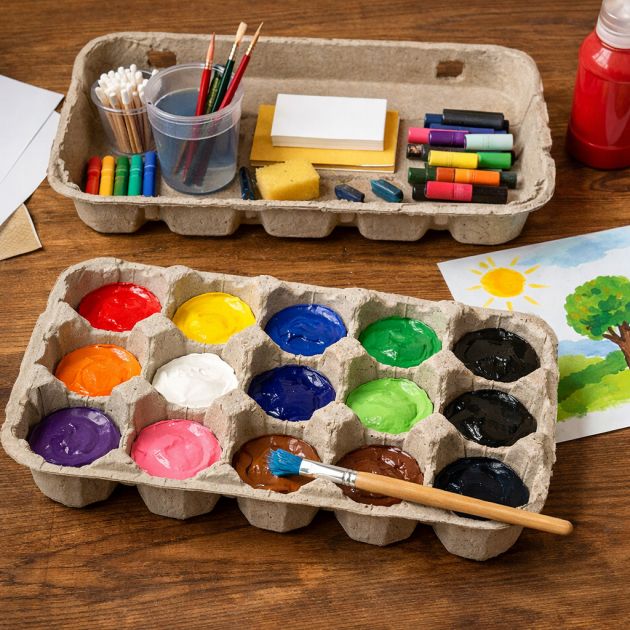
Cardboard egg cartons can be converted into paint palettes by cutting off the lid and using the bottom section. Each cup can hold a different color of paint, making it easy for kids to mix and create their masterpieces. Additionally, the lid can be used as a tray to keep art supplies organized during craft time.
After the art session, simply allow the paint to dry in the cups, and the palette can be reused multiple times. This approach minimizes waste and provides a simple, cost-effective solution for young artists.
4. Eco-Friendly Fire Starters for Camping and Cozy Nights In
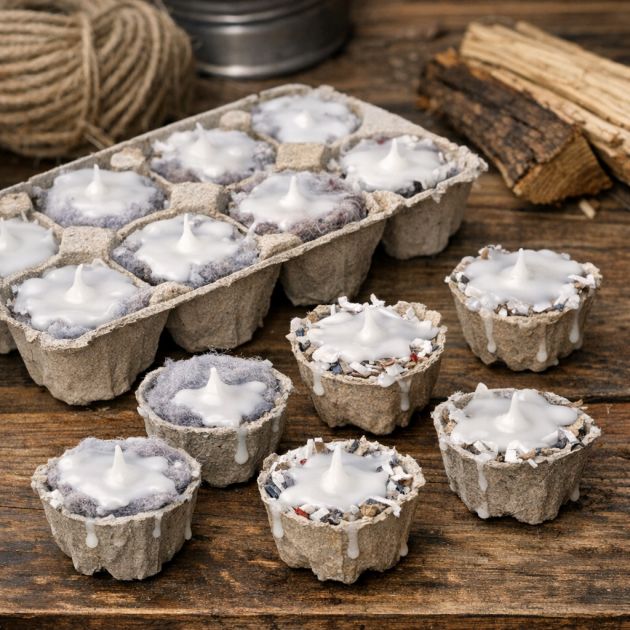
Create fire starters by filling egg carton cups with dryer lint or shredded paper, and then pouring melted wax over the top. Allow the wax to cool and harden before cutting the cups apart. Each individual cup can serve as a fire starter, making it easy to ignite your campfire or fireplace.
These fire starters are especially useful for camping trips, as they are lightweight, pack easily, and burn steadily. Plus, using recycled materials makes them an environmentally friendly option.
5. Sound-Absorbing Panels for Small Studios and Recording Spaces

Egg cartons can be used to improve acoustics in small studios or recording spaces. Their shape and material help to diffuse sound waves, reducing echoes and enhancing sound quality. To create a sound-absorbing panel, glue or staple egg cartons to a backing material such as cardboard or plywood.
Place these panels strategically around the room, particularly on walls facing sound sources. While not as effective as professional acoustic treatments, these DIY panels offer a budget-friendly solution for improving audio clarity in small spaces.
6. Homemade Gift Packaging for Baked Goods and Small Presents
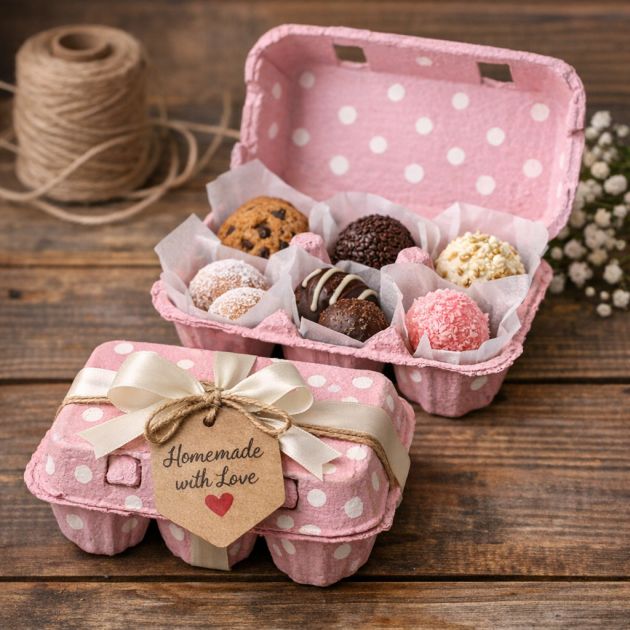
Egg cartons can be repurposed as unique gift packaging for items like baked goods or small handmade gifts. Paint or decorate the cartons to suit the occasion, then line each cup with wax paper before placing cookies, truffles, or other treats inside.
Add a personal touch by tying a ribbon around the closed carton and attaching a handmade tag. This thoughtful presentation not only recycles materials but also adds charm and creativity to your gifts.
7. Bird Feeders and Wildlife Treat Trays for the Backyard
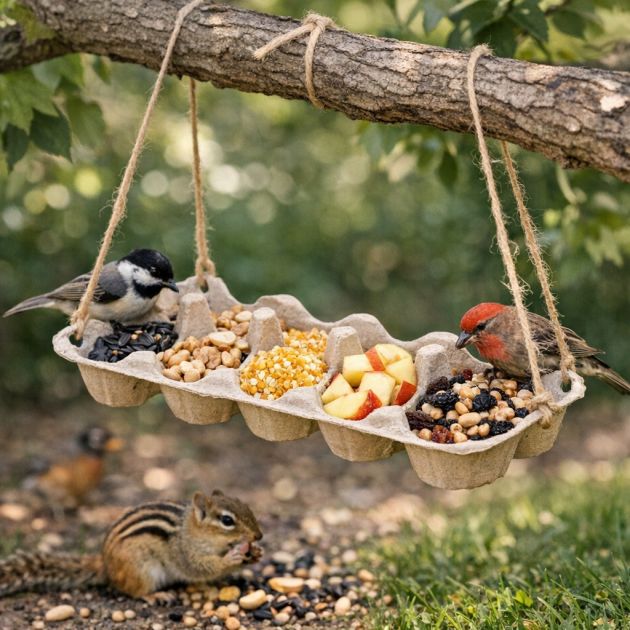
Create simple bird feeders by cutting an egg carton in half lengthwise and filling each cup with birdseed. Use a hole punch to make holes in the corners, then thread string through and tie it to hang the feeder from a tree branch.
For backyard wildlife, fill the cups with a variety of seeds, nuts, or fruits. These treat trays are a wonderful way to attract and support local wildlife while teaching children about nature and conservation.
8. Compostable Storage for Fragile Holiday Ornaments
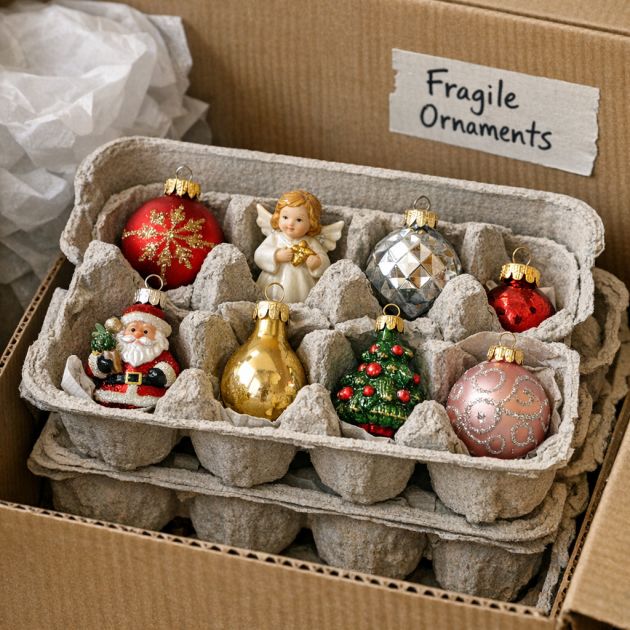
Store fragile ornaments safely by placing them in egg carton cups, which offer cushioning and protection. This method is particularly useful for small, delicate items that might break in traditional storage boxes.
When the holiday season is over, stack the cartons in a larger box or container, and label them for easy access next year. Since the cartons are compostable, you can dispose of them sustainably after several uses.
9. Kids’ STEM and Sensory Play: Sorting, Counting, and Building Games
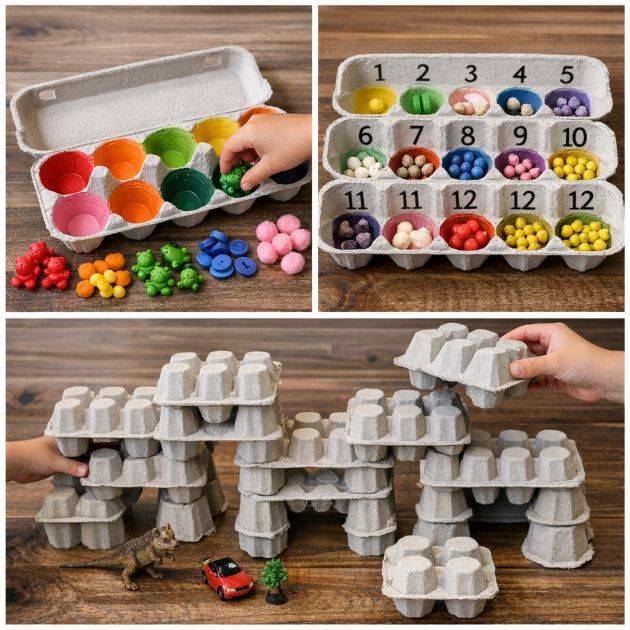
Egg cartons can be used for a variety of educational games that enhance counting, sorting, and building skills. For a sorting game, paint the inside of each cup a different color and provide children with matching colored objects to sort.
For counting exercises, number each cup and have children place the corresponding number of small items inside. Additionally, egg cartons can be used as building blocks for constructing simple structures, encouraging creativity and problem-solving.
10. Moldable Pulp for DIY Paper, Decorations, and Zero-Waste Crafts
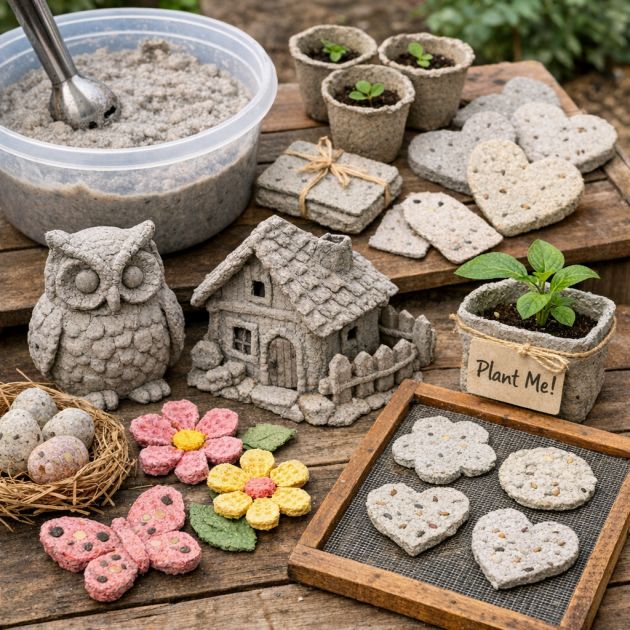
Turn egg cartons into pulp by soaking them in water and blending them into a smooth paste. This pulp can be molded into shapes or spread on screens to dry into unique paper.
Use the pulp to create handmade decorations, sculptures, or even plantable seed paper. This process not only recycles the cartons but also provides a versatile material for a wide range of eco-friendly art projects.
