
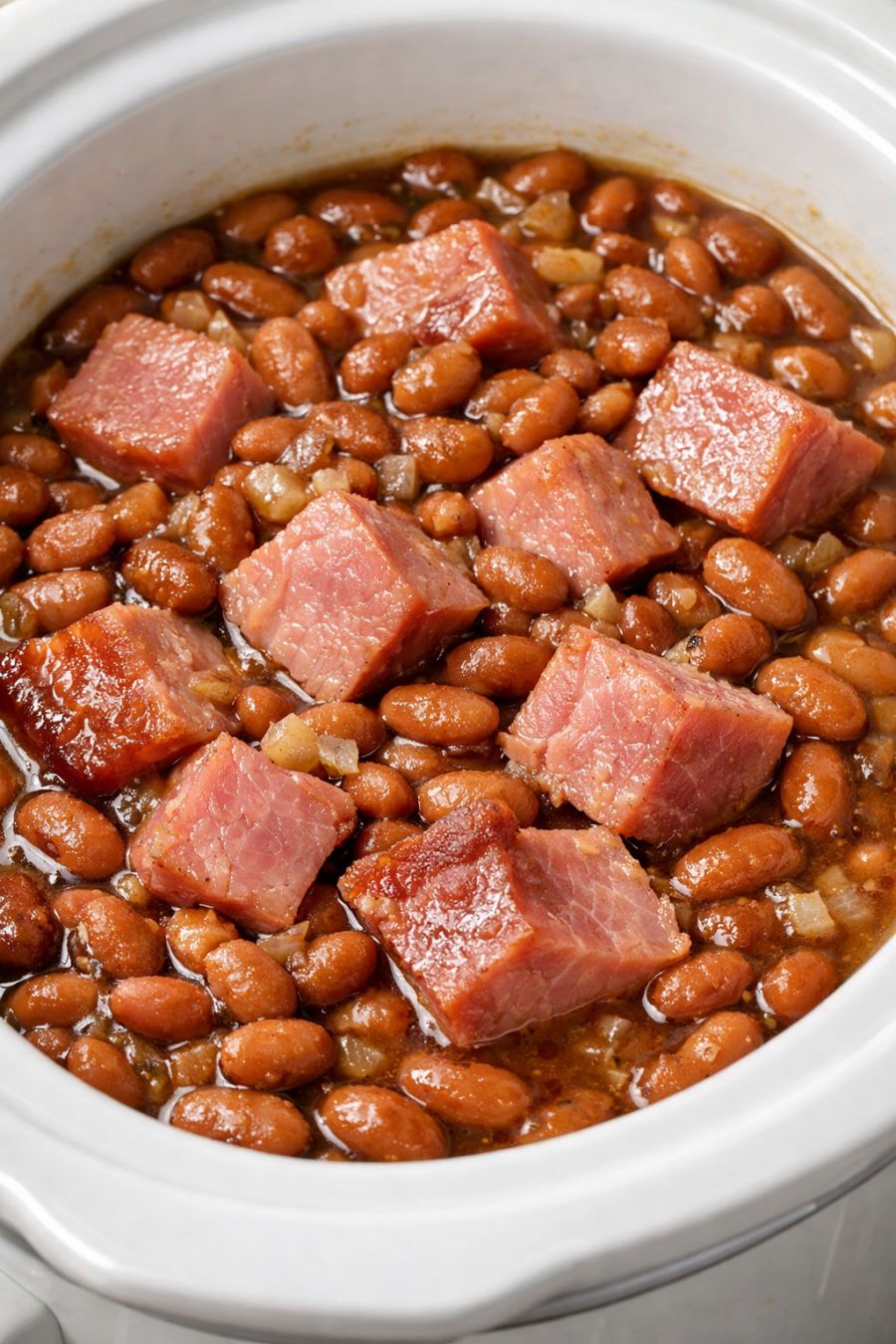
This slow cooker 4-ingredient Amish ham and pinto beans is exactly the kind of hearty, thrifty meal my brother starts hinting about as soon as the holiday ham is carved. It’s a classic post-holiday dish you’ll find, in one form or another, in many Amish and rural Midwestern kitchens: leftover cured ham simmered low and slow with dried beans until everything melts into a deeply flavorful, stick-to-your-ribs stew. With only four ingredients and a hands-off cooking method, it’s an easy, economical way to turn a meaty ham bone and pantry beans into a big pot of comfort that feeds a crowd with almost no effort.
Serve these ham and pinto beans in wide bowls with plenty of the glossy brown broth, alongside warm cornbread, biscuits, or thick slices of crusty bread for dunking. A simple green salad or steamed greens (like collards, kale, or green beans) adds a fresh counterpoint to the richness. If you’d like to stretch the meal even further, spoon the beans over rice or buttered noodles, or set out toppings like chopped onions, a splash of hot sauce, or a little sharp cheddar for people to customize their bowls.
Slow Cooker 4-Ingredient Amish Ham and Pinto Beans
Servings: 8-10
Ingredients
1 pound dried pinto beans, rinsed and picked over
2 to 2 1/2 pounds leftover cured ham with bone (or meaty ham bone plus thick ham chunks)
8 cups water
1 medium yellow onion, peeled and quartered
Directions
Rinse the dried pinto beans under cool running water and pick through them, discarding any shriveled beans or small stones. There’s no need to soak the beans for this recipe; the long slow-cooker time will soften them fully.
Place the ham bone (and any attached meat) into the bottom of a large slow cooker (5- to 7-quart). If you have extra thick slices or cubes of ham, tuck them around the bone so they’re mostly submerged later in the cooking liquid.
Add the rinsed pinto beans to the slow cooker, spreading them evenly around the ham. Nestle the quartered onion pieces into the beans. Keeping the onion in larger chunks allows them to break down gently and flavor the broth without turning the dish into an onion-forward soup.
Pour in the water, making sure the beans are covered by at least an inch of liquid. The ham bone and larger ham chunks may stick up a bit, which is fine; they’ll still season the broth as they simmer.
Cover the slow cooker with the lid and cook on LOW for 8 to 10 hours, or until the pinto beans are very tender and the broth has turned thick, glossy, and brown. The ham should be soft and easy to pull from the bone, and the beans should hold their shape but be creamy inside.
Once the beans are tender, remove the ham bone and any large pieces of ham to a cutting board. Let them cool slightly, then pull or cut the ham into large, hearty chunks, discarding the bone, gristle, and excess fat.
Return the ham chunks to the slow cooker and stir them gently into the beans and broth. At this point, taste the broth before adding any salt. Cured ham can be quite salty on its own, and many people find no additional seasoning is needed.
If desired, skim any excess fat from the surface with a spoon. Ladle the hot ham and pinto beans into bowls, making sure each serving gets plenty of beans, large cubes of pink ham, and some of the rich brown cooking liquid. Serve warm, straight from the slow cooker.
Variations & Tips
Because this recipe is built on only four ingredients, each one does a lot of work. Using a meaty, well-seasoned ham bone will give you the deepest flavor and the thick, glossy broth you’re after. If your ham bone is on the skimpy side, you can supplement with a few extra thick slices or cubes of cured ham to ensure there’s plenty of meat in each bowl. For a slightly smokier profile that still feels traditional, you can swap part of the ham for smoked ham hocks, keeping the total amount of pork about the same. If you prefer a creamier texture, lightly mash a small portion of the beans against the side of the slow cooker near the end of cooking to naturally thicken the broth. To stay within the four-ingredient spirit but add a little nuance, some Amish cooks simply use chicken broth in place of part of the water; if you do this, reduce or omit any added salt. Leftovers keep well and often taste better the next day as the flavors meld—reheat gently on the stovetop or in the microwave, adding a splash of water if the beans have thickened too much in the fridge.
