
This oven baked 3-ingredient vinegar potato casserole is the kind of dish that quietly steals the show at a potluck. My neighbor brought it to a church gathering years ago, and people were lining up to ask how she made it. We were all convinced there had to be a long list of ingredients or some secret sauce involved. Instead, it’s just potatoes, vinegar, and butter, plus a little salt from the pantry. The magic here is in the way the vinegar tenderizes the potatoes and adds a bright, almost roasted-potato-salad flavor, while the butter helps them caramelize and turn golden at the edges. It’s a very Midwestern kind of recipe: humble, practical, and perfect for feeding a crowd with ingredients you probably already have on hand.
Serve this casserole hot, straight from the oven, alongside simple mains like roast chicken, grilled sausages, baked ham, or a pan-seared pork chop. It pairs especially well with anything smoky or rich, because the vinegar keeps each bite from feeling heavy. Add a green salad or steamed green beans for freshness, or a tray of roasted carrots if you want everything to cook in the oven at once. Leftovers reheat nicely in a skillet with an extra pat of butter and make a great base for a fried egg on top the next morning.
Oven-Baked 3-Ingredient Vinegar Potato Casserole
Servings: 6
Ingredients
3 pounds russet or Yukon Gold potatoes, peeled and cut into 1-inch chunks
1/2 cup distilled white vinegar (or apple cider vinegar)
1/3 cup unsalted butter, melted
1 1/2 teaspoons kosher salt, plus more to taste (from pantry)
Freshly ground black pepper, to taste (optional, from pantry)
Nonstick cooking spray or a little extra butter for greasing the dish (from pantry)
Directions
Preheat your oven to 400°F (200°C). Lightly grease a 9x13-inch casserole dish with nonstick spray or a bit of butter so the potatoes don’t stick.
Prep the potatoes: Peel the potatoes and cut them into roughly 1-inch chunks so they cook evenly. Rinse the cut potatoes under cold water and pat them dry with a clean towel; this helps them roast instead of steam.
Make the vinegar-butter mixture: In a large bowl, whisk together the vinegar, melted butter, and kosher salt until the salt starts to dissolve. If you like, add a few grinds of black pepper from the pantry.
Toss the potatoes: Add the potato chunks to the bowl and toss well, making sure every piece is coated. The potatoes will absorb some of the vinegar as they bake, so don’t worry if it seems like a lot at first.
Transfer to casserole dish: Pour the potatoes and all of the vinegar-butter mixture into the prepared casserole dish. Spread the potatoes into an even layer so they roast and brown rather than pile up and steam.
Bake covered, then uncovered: Cover the dish tightly with foil and bake for 30 minutes. This helps the potatoes soften and soak up the vinegar. After 30 minutes, remove the foil, gently stir the potatoes, and return the dish to the oven uncovered.
Finish roasting: Continue baking uncovered for another 25–35 minutes, stirring once more halfway through, until the potatoes are very tender and the edges are golden and lightly crisped. Total time will depend on your oven and the exact size of the potato chunks.
Taste and adjust: Remove the casserole from the oven and let it stand for 5–10 minutes. Taste a potato and add a pinch more salt from the pantry if needed. If you want a sharper flavor, you can drizzle a teaspoon or two more vinegar over the top while the potatoes are still warm and toss gently.
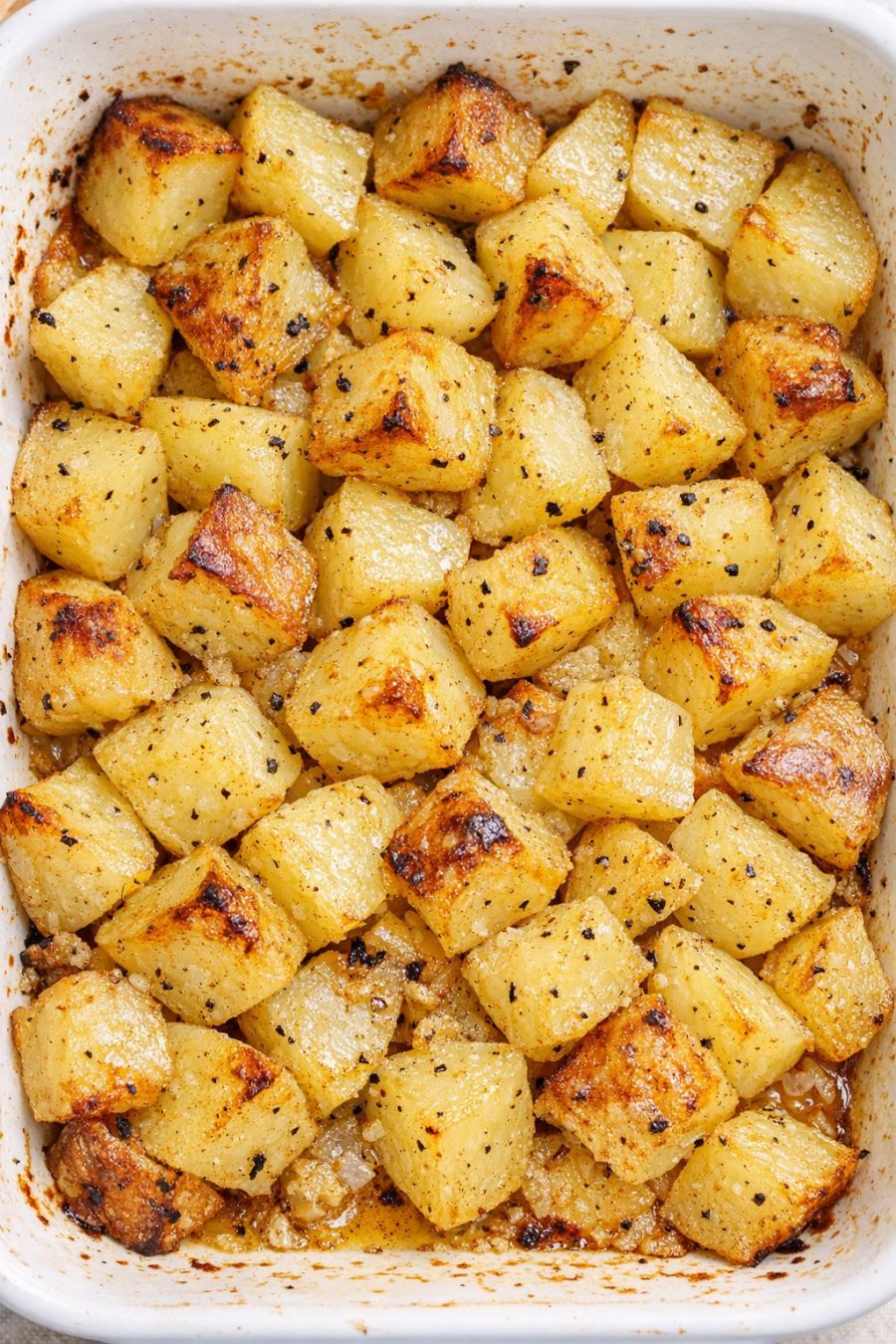
Serve: Bring the casserole dish straight to the table and serve warm. The potatoes should look tender and glossy from the butter, with browned edges and a gentle tang from the vinegar.
Variations & Tips
Because this recipe leans on just three core ingredients, small tweaks can make it feel new without complicating the shopping list. If you prefer a softer tang, use half white vinegar and half water, or swap in apple cider vinegar for a rounder, fruitier flavor. For a bolder hit of acidity, reserve a tablespoon of the vinegar and drizzle it over the potatoes right after baking, then toss gently. You can also play with the potato type: Yukon Golds give a creamier, almost buttery texture, while russets roast up a bit drier with more crisp edges. If you don’t have a 9x13-inch dish, use any shallow baking dish that allows the potatoes to sit in one even layer; crowded potatoes will steam instead of brown, so consider using two smaller dishes. To make the casserole ahead, toss the potatoes with the vinegar and salt up to 2 hours in advance and keep them refrigerated, then stir in the melted butter just before baking. For a slightly richer version that’s still essentially the same recipe, dot the top with a few extra bits of butter before the final 20 minutes of roasting to encourage more browning and gloss. Leftovers can be crisped in a skillet with a splash of vinegar from the pantry to wake them back up or folded into a quick frittata with whatever odds and ends you have on hand.
