
This carrot sheet cake is my best attempt at putting real measurements to the way my Grandma Helen baked for Sunday dinners out on the farm. She never wrote a thing down, just scooped flour with her coffee cup and grated carrots until the bowl looked “right.” It took me a few tries, but this pan of softly set, creamy, slightly lumpy goodness is the closest I’ve come to that comforting, not-too-fancy cake she’d carry to the table in a glass baking dish. It’s moist from the carrots, not overly spiced, and topped with a fluffy cream cheese frosting that settles into all the little bumps and bits, just the way I remember.
Serve this carrot sheet cake right from the glass baking dish, still in the center of the table, with a pot of hot coffee or a pitcher of cold milk. It’s lovely slightly warm or at cool room temperature so the cream cheese frosting is soft and a little smudgy at the edges. For a Sunday-style spread, pair it with a simple pot roast or baked ham, a pan of scalloped potatoes, and a bowl of green beans. Leftovers make a fine breakfast alongside scrambled eggs or a slice of sharp cheddar, which is exactly the sort of practical sweetness Grandma would have approved of.
Carrot Sheet Cake with Cream Cheese Frosting
Servings: 12
Ingredients
2 cups all-purpose flour, lightly spooned and leveled
2 teaspoons baking powder
1 teaspoon baking soda
1 teaspoon fine salt
2 teaspoons ground cinnamon
1/2 teaspoon ground nutmeg (optional but homey)
1 1/2 cups granulated sugar
1 cup neutral oil (such as canola or vegetable)
4 large eggs, at room temperature
2 teaspoons vanilla extract
3 cups finely grated carrots, lightly packed (about 4–5 medium carrots)
1/2 cup chopped walnuts or pecans (optional, for that uneven homemade texture)
4 ounces cream cheese, softened (for the cake, optional but gives a tender crumb)
8 ounces cream cheese, softened (for frosting)
1/2 cup unsalted butter, softened (for frosting)
3 cups powdered sugar, sifted if lumpy (for frosting)
1 teaspoon vanilla extract (for frosting)
2–3 tablespoons milk or cream, as needed to make a fluffy, spreadable frosting
Directions
Preheat your oven to 350°F (175°C). Set a 9x13-inch glass baking dish on the counter. Lightly grease the dish with butter or oil, then dust with a little flour, tapping out the excess. This is exactly the kind of pan Grandma would have used, no fuss.
In a medium bowl, whisk together the flour, baking powder, baking soda, salt, cinnamon, and nutmeg. Set this aside so it’s ready when the wet ingredients come together.
In a large mixing bowl, whisk the granulated sugar and oil until they look a bit creamy and thickened. Add the 4 eggs one at a time, whisking well after each until the mixture is smooth and a little pale. Stir in the vanilla.
If you’re using the cream cheese in the cake batter, beat the 4 ounces of softened cream cheese into the egg mixture until mostly smooth. Don’t worry if there are a few small soft bits; they’ll bake into the cake and help give that tender, slightly uneven texture Grandma’s cakes always had.
Add the dry ingredients to the wet ingredients in two additions, stirring gently with a wooden spoon or spatula just until you no longer see streaks of dry flour. The batter will be fairly thick and a bit rustic-looking.
Fold in the grated carrots and, if you like, the chopped nuts. Don’t overmix; you want to see little flecks of orange and bits of nuts throughout so the baked cake has that cozy, homemade look with soft-set, uneven mix-ins.
Scrape the batter into the prepared glass baking dish, smoothing it out gently with the back of a spoon or spatula. It doesn’t need to be perfectly even—part of the charm is how it bakes up with a few bumps and dips.
Bake on the center rack for 30–35 minutes, or until the top is set and lightly golden and a toothpick inserted in the center comes out with just a few moist crumbs clinging to it. The cake should look softly set rather than dry. Let the cake cool completely in the glass dish on a wire rack before frosting.
While the cake cools, make the cream cheese frosting. In a medium bowl, beat the 8 ounces of softened cream cheese and the softened butter together until smooth and fluffy. Gradually add the powdered sugar, a cup at a time, beating well after each addition.
Beat in the vanilla, then add milk or cream, a tablespoon at a time, until the frosting is creamy, fluffy, and easily spreadable. It should hold soft peaks but still be loose enough to settle slightly into the top of the cake.
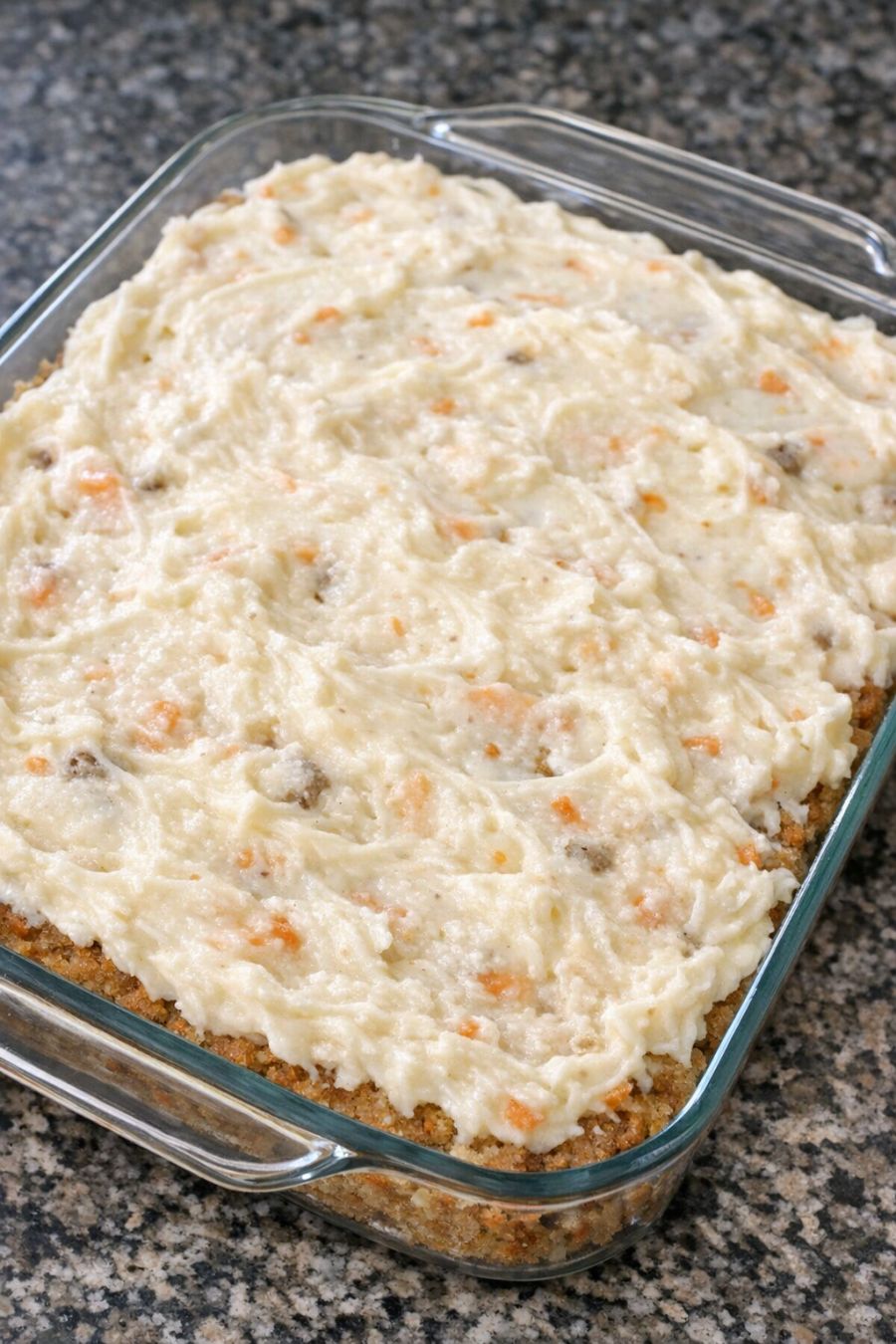
Once the cake is completely cool, dollop the frosting over the top and spread it with a spatula or the back of a spoon. Don’t aim for bakery-smooth; let it swirl and dip and catch on the little carrot and nut pieces. That soft, slightly uneven frosting is what makes it feel like Grandma just set it down on the counter.
Leave the frosted cake in the glass baking dish and let it sit at room temperature for about 20–30 minutes so the frosting can soften into the top a bit. Serve straight from the pan with a big serving spoon or cut into squares. Store leftovers covered in the refrigerator for up to 4 days, letting slices sit out a bit before serving so the frosting turns creamy again.
Variations & Tips
If your memories of carrot cake lean sweeter, you can swap 1/2 cup of the granulated sugar for packed light brown sugar to add a hint of molasses depth. For more texture, fold in up to 3/4 cup total of chopped nuts and/or raisins, or even a small handful of shredded coconut, keeping in mind that extra mix-ins will make the top even more rustic and bumpy, just like a well-loved family recipe. If you prefer a lighter spice, cut the cinnamon in half and skip the nutmeg; for a cozier, fall-like cake, add a pinch of ground cloves or ginger. To make this feel more like a snack cake, skip the cream cheese in the batter and bake as directed; the cake will be a touch lighter but still moist from the carrots. For a slightly tangier frosting, use a heaping 8 ounces of cream cheese and reduce the butter to 6 tablespoons, thinning with milk as needed. This recipe also works in two 8-inch square pans or a 10x15-inch jelly roll pan—just keep an eye on the baking time, as thinner cakes will bake a bit faster. And if you’re cooking for a smaller household, the baked, unfrosted cake freezes well: cool completely, wrap tightly, and freeze up to 2 months, then thaw, frost, and serve when you’re ready for a taste of Sunday dinner at Grandma’s.
