
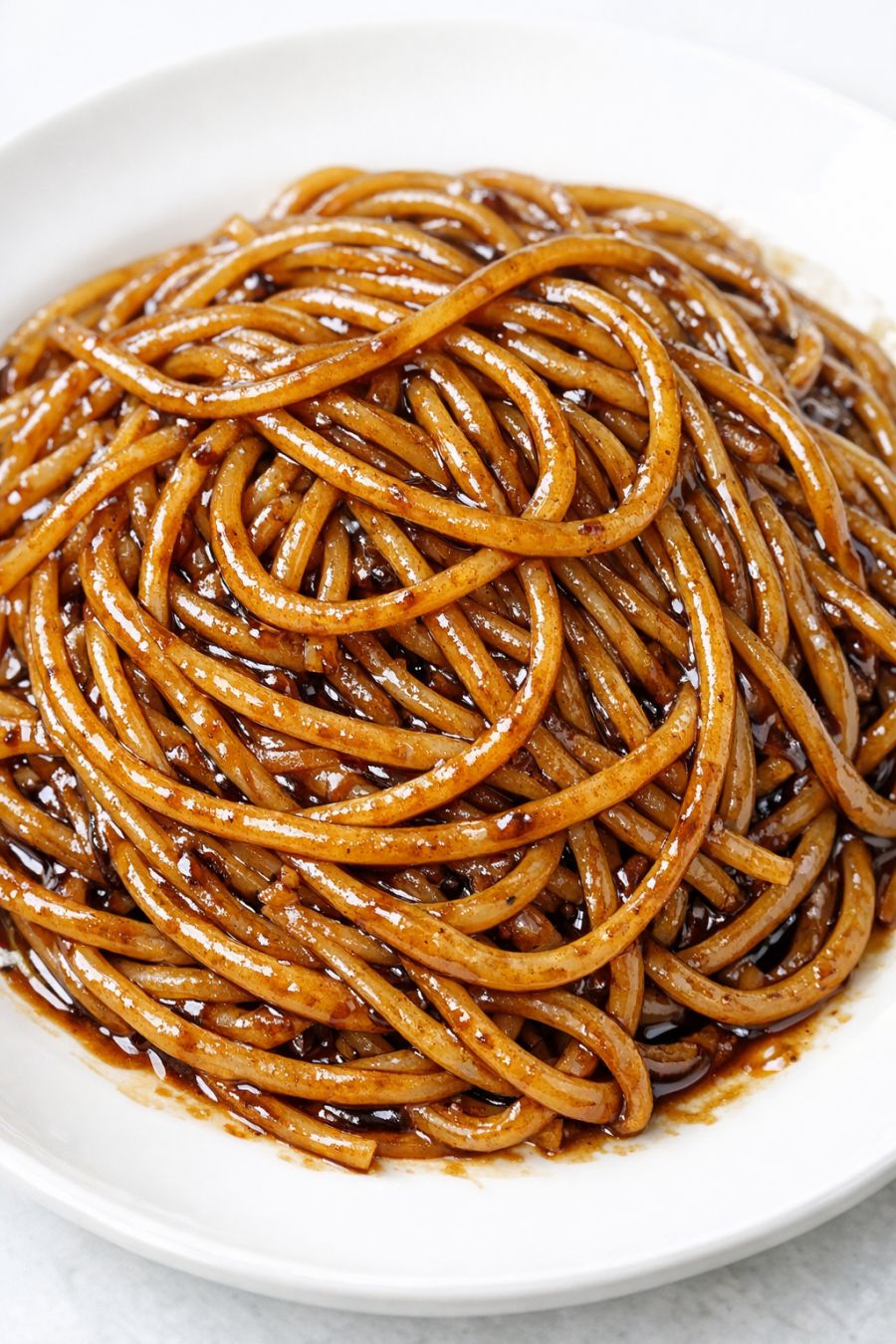
This slow cooker 3-ingredient soy butter spaghetti is exactly the kind of make-do supper my husband and I would pull together when the pantry was looking bare and payday was still a few days off. My dad first tossed this idea together one winter night when we were down to dry spaghetti, a stick of butter, and a dusty bottle of soy sauce at the back of the cupboard. Somehow those three simple staples melt into a glossy, salty, deeply savory dish that tastes far fancier than it has any right to. It’s the kind of meal you throw in the slow cooker and forget, then come back to a pot of slick, umami-packed noodles that feel like a little bit of magic on a lean weeknight.
Serve this soy butter spaghetti piled high on warm plates with a generous spoonful of the dark, glossy sauce drizzled over the top. It’s rich and salty, so it pairs nicely with something fresh and simple: sliced cucumbers, a basic green salad, or steamed frozen vegetables dressed with a little vinegar. If you’ve got a heel of bread or a leftover dinner roll, use it to mop up any sauce left on the plate. A glass of iced tea or a cold beer sits comfortably alongside this no-fuss pantry supper.
Slow Cooker Soy Butter Spaghetti
Servings: 4
Ingredients
12 oz dry spaghetti
1/2 cup (1 stick) unsalted butter, cut into pieces
1/3 cup soy sauce (regular, not low-sodium)
Directions
Lightly grease the inside of a 4- to 6-quart slow cooker with a small dab of butter to keep the spaghetti from sticking.
Break the dry spaghetti in half so it fits more easily in the slow cooker. Lay the spaghetti in the crock in a crisscross pattern, fanning and layering the strands so they don’t clump together in one tight bundle.
In a small saucepan or microwave-safe bowl, gently melt the butter with the soy sauce just until the butter is fully liquid and the mixture looks smooth and dark brown. Stir well so it’s evenly combined.
Pour the hot soy-butter mixture slowly and evenly over the dry spaghetti in the slow cooker, lifting the strands gently with tongs or a fork as you pour so the sauce can work its way between the layers.
Add 2 cups of very hot tap water to the slow cooker, pouring it around the edges and over the noodles. Use tongs to toss the spaghetti lightly so the liquid and sauce are as evenly distributed as possible. The noodles will not be fully submerged; that’s fine, as they will steam and absorb the liquid as they cook.
Cover the slow cooker with the lid and cook on HIGH for 1 hour. After 30 minutes, open the lid, use tongs to gently separate and toss the spaghetti, pulling any strands off the bottom and stirring them through the darkening sauce. Replace the lid and continue cooking.
After 1 hour total, check the spaghetti. It should be tender but not mushy, with most of the liquid absorbed into a thick, glossy brown sauce clinging to the strands. If the noodles are still too firm, add 1/4 cup hot water, toss again, cover, and cook on HIGH for another 10–15 minutes, checking once more.
When the spaghetti is cooked to your liking and coated in a slick, shiny soy-butter sauce, turn off the slow cooker. Toss the noodles well from bottom to top so every strand is evenly coated and the sauce looks smooth and glossy.
Serve the soy butter spaghetti immediately, twirling generous portions onto plates and spooning any remaining dark, buttery sauce from the bottom of the crock over the top. Eat hot, while the noodles are silky and the sauce is at its glossiest.
Variations & Tips
Because this recipe was born from pantry scraping, it’s very forgiving. If you like a little heat and happen to have it on hand, a pinch of black pepper or red pepper flakes stirred in with the soy and butter will give the noodles a gentle kick without changing the basic three-ingredient spirit. If your soy sauce is very strong, you can swap a tablespoon or two of it for water to keep the salt level in check. For a slightly richer sauce, use 3/4 cup butter and an extra splash of soy, then add a few tablespoons more hot water so the spaghetti can still soften properly in the slow cooker. If your slow cooker runs hot and the edges of the pasta start to dry, just stir in a bit more hot water and toss well. Leftovers reheat nicely in a skillet with a spoonful of water, bringing the sauce back to that smooth, slick texture. Once you’ve tried the base version and fallen for it, you can dress it up on less lean nights with grated cheese, chopped green onion, or leftover cooked vegetables, but the beauty of this dish is how satisfying it is with just the original three ingredients.
