
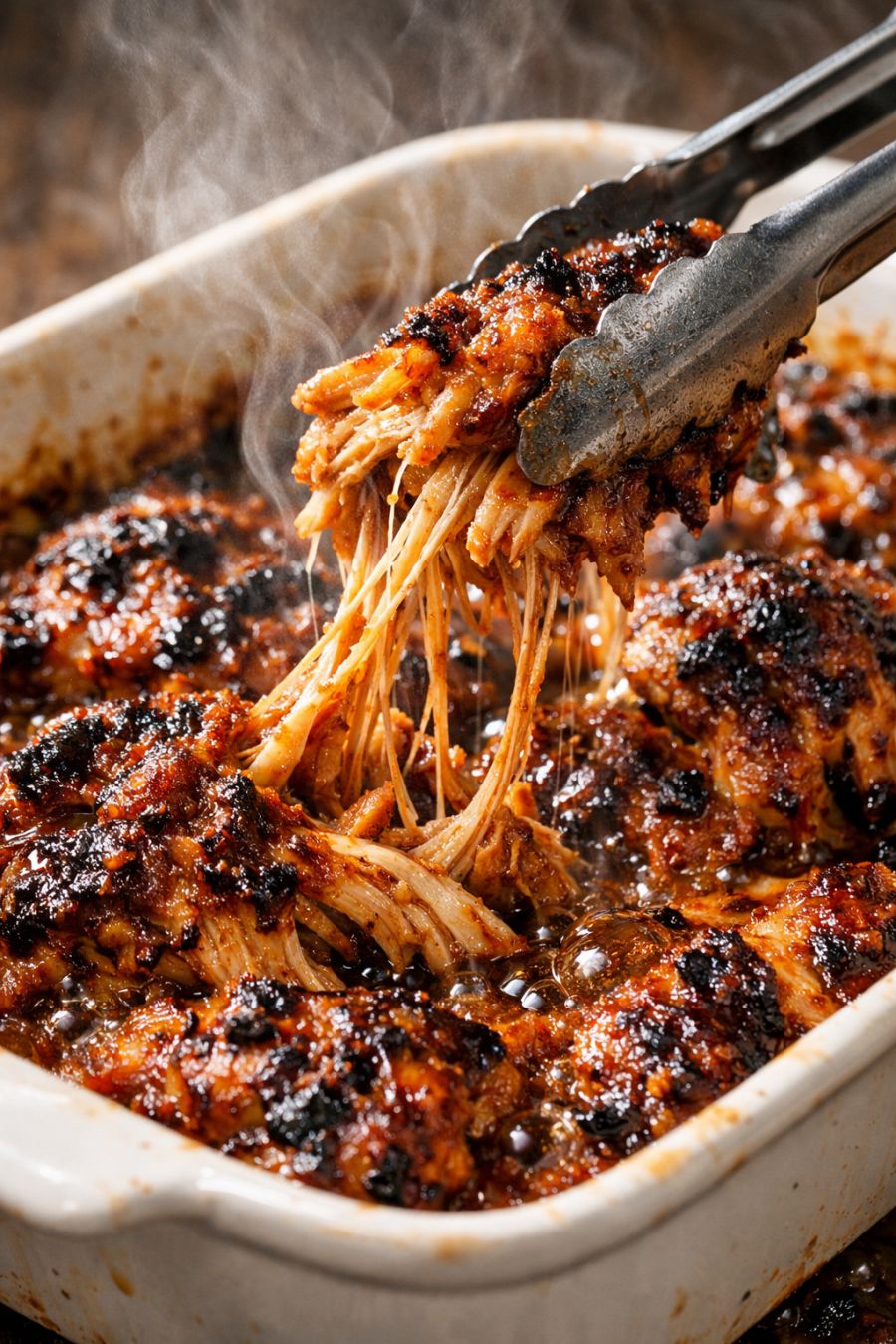
This 4-ingredient Spring Recovery Bake is what I lean on after a long holiday weekend when I want dinner handled hours ahead and zero decisions at 5 p.m. It’s basically a hands-off, slow-baked, glistening, charred-at-the-edges protein that bubbles away in the oven while you reset the house, catch up on laundry, or just sit with a book. The inspiration is part Midwestern pot roast comfort, part sheet-pan simplicity: toss everything in a ceramic baking dish, cover, walk away, then finish it uncovered so the top gets those caramelized, pull-apart strands that feel way fancier than the effort it took.
Serve the shredded, saucy protein over fluffy rice, mashed potatoes, or buttered egg noodles to soak up all the juices. For something lighter after a rich weekend, pile it onto a bed of spring greens or roasted asparagus and carrots. It also makes great next-day lunches tucked into soft rolls or wraps with a handful of crunchy lettuce. A simple green salad with lemony vinaigrette or a side of steamed green beans balances the richness without adding much work.
4-Ingredient Spring Recovery Bake
Servings: 4
Ingredients
2 lb boneless skinless chicken thighs (or pork shoulder), trimmed
1 cup low-sodium chicken or vegetable broth
1 cup thick tomato-based barbecue sauce or tomato passata
1 lb baby potatoes, halved (or quartered if large)
Directions
Preheat your oven to 325°F (165°C). Grab a medium to large ceramic baking dish that’s deep enough to hold everything in a snug, even layer.
Add the baby potatoes to the baking dish and spread them out in an even layer so they’ll cook in the juices and get creamy inside.
In a small bowl or measuring cup, whisk together the broth and barbecue sauce (or tomato passata) until smooth and combined. This is your braising liquid and sauce in one.
Nestle the chicken thighs (or pork shoulder pieces) on top of the potatoes in a single layer. Pour the sauce mixture evenly over the meat and potatoes, making sure everything is coated. No need to be perfect here—this is a recovery meal.
Cover the baking dish tightly with foil or a fitted lid. Bake, covered, for 2 to 2 1/2 hours, until the protein is very tender and easily pulls apart with a fork and the potatoes are soft when pierced.
Increase the oven temperature to 425°F (220°C). Uncover the baking dish and gently turn the protein pieces so more of the surface is exposed. Spoon some of the sauce over the top.
Return the uncovered dish to the oven and bake for 15 to 25 minutes, or until the top of the protein is deeply browned in spots, bubbling, and slightly charred at the edges. The sauce should be thickened and glossy, and you should see steam rising when you open the oven.
Remove from the oven and let the dish rest for about 10 minutes so the juices settle. Using two forks, gently pull the protein into fibrous strands right in the baking dish, tossing it with the potatoes and sauce until everything is coated and glistening.
Taste and adjust with a pinch of salt or splash of broth if needed. Serve hot, scooping the shredded, saucy protein and potatoes straight from the ceramic dish onto plates or bowls.
Variations & Tips
For a lighter spring feel, swap the baby potatoes for 1 lb of thick-cut carrot coins or a mix of carrots and parsnips; they’ll sweeten and soften in the sauce. If you prefer a less smoky flavor, use plain tomato passata or crushed tomatoes with a spoonful of honey or maple syrup instead of barbecue sauce, then season generously with salt and pepper before baking (optional fifth ingredient if you don’t count pantry staples). To keep it extra-lean, use boneless, skinless chicken breasts, but check for doneness around the 1 1/2 to 2 hour mark so they don’t dry out—still finish uncovered for the char. For more char and texture, flip the broiler on for the last 2 to 4 minutes and watch closely until the top is deeply caramelized. Meal prep tip: assemble the dish in the morning, cover, and refrigerate; when you get home, slide it straight into the oven (add about 15 extra minutes to the covered bake time to account for the cold dish). Leftovers reheat beautifully in a covered dish with a splash of broth, or can be turned into sandwiches, quesadillas, or a quick grain bowl with whatever veggies you have on hand.
