
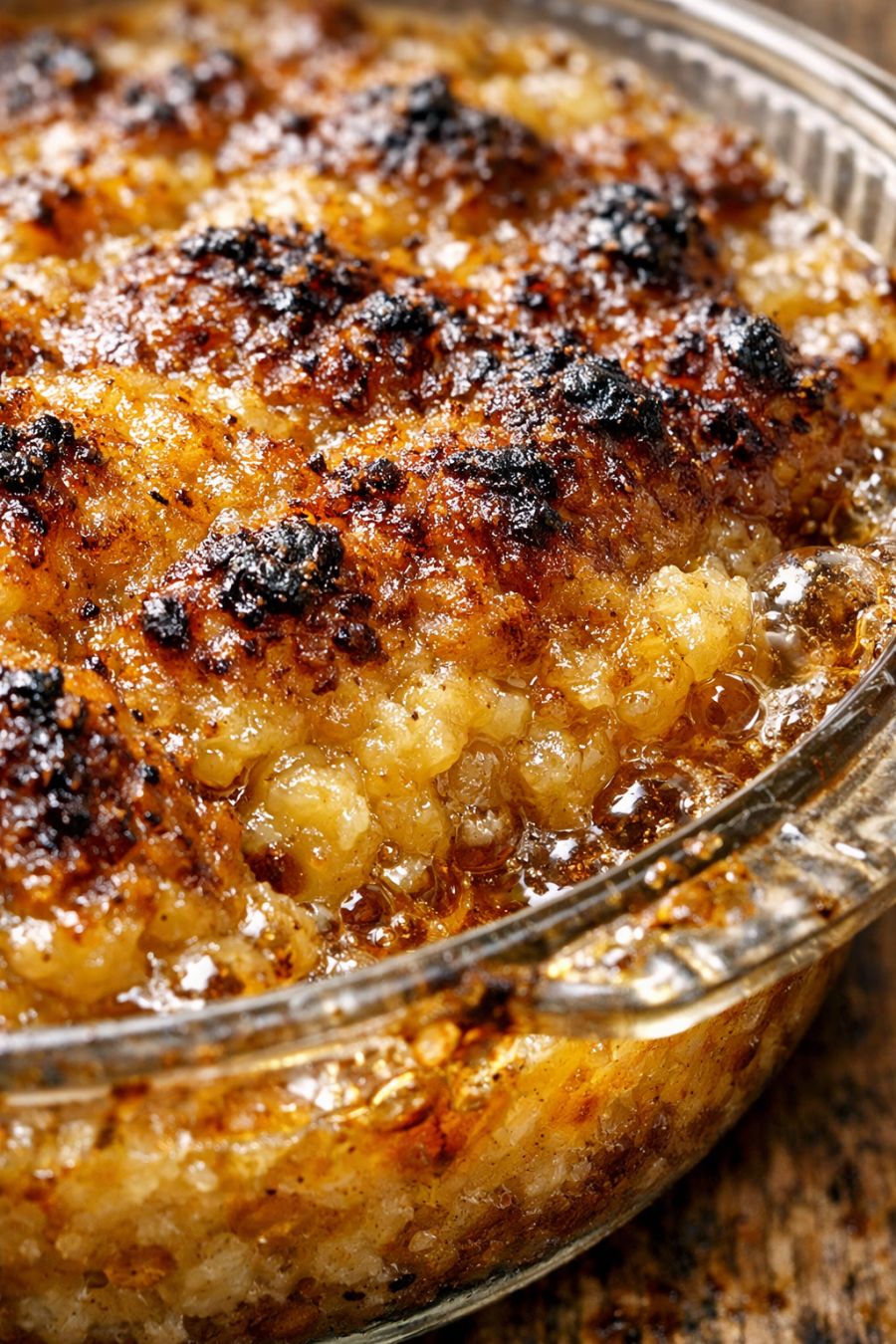
This 4-ingredient oven depression-era crust bake is my modern nod to the thrifty, filling casseroles Midwestern families leaned on when money was tight but company still came over. A simple starchy base is slowly baked until it turns into a bubbling, caramelized mass with a deeply golden crust on top and around the edges. The oven does all the heavy lifting while you get the satisfaction of feeding a crowd on a budget. It’s the kind of dish I throw together on a spring Sunday when I want something comforting, unfussy, and guaranteed to stretch across the table.
Serve generous scoops of this crusty, caramelized bake alongside a simple green salad with a tangy vinaigrette to balance the richness. It also pairs nicely with roasted or steamed vegetables, sliced ham, roast chicken, or grilled sausages if you want to add protein. For a brunch spread, offer it with scrambled or fried eggs and some fresh fruit. I like to set the vintage casserole dish right on the table and let everyone dig in family-style while the edges are still bubbling and the top is crackling.
4-Ingredient Depression-Era Crust Bake
Servings: 8-10
Ingredients
2 lb russet potatoes, peeled and thinly sliced
1 large yellow onion, thinly sliced
1 1/2 cups whole milk
4 tbsp salted butter, plus extra for greasing the dish
Directions
Preheat your oven to 375°F (190°C). Generously grease a 9x13-inch vintage-style glass casserole dish (or similar oven-safe glass dish) with butter, making sure to coat the bottom and sides so the edges can caramelize and crisp.
Pat the sliced potatoes dry with a clean kitchen towel to remove excess moisture; this helps them brown and form that golden, slightly charred crust. Keep the slices as even as you can so they cook at the same rate.
Layer half of the potatoes in the prepared dish, spreading them into an even layer. Scatter half of the sliced onions over the potatoes, tucking some down between the slices so the sweetness can permeate the dish as it bakes.
Repeat with the remaining potatoes and onions, arranging the top layer fairly flat so it browns evenly. Gently press down with your hands to compact the layers slightly; this helps the starches bind into that cohesive, sliceable mass as it cooks.
Slowly pour the milk over the layered potatoes and onions, tilting the dish slightly so the liquid seeps down and around the edges. You should see the milk just peeking up around the sides but not completely covering the top layer.
Dot the top evenly with the 4 tablespoons of butter, breaking it into small pieces so it can melt, baste the surface, and encourage caramelization. Make sure some butter lands near the edges, where the best bubbling and browning will happen.
Cover the dish tightly with foil and bake for 45 minutes. This covered stage allows the potatoes to soften and release their starch into the milk, creating a thick, creamy base without drying out.
After 45 minutes, carefully remove the foil and continue baking, uncovered, for 35–45 minutes more, or until the top is deeply golden-brown with some darker, almost charred spots, and the edges are bubbling vigorously. The milk will have reduced and thickened into a glossy, caramelized, starchy mass.
To encourage extra browning on top, move the dish to the upper third of the oven for the last 10–15 minutes of baking. If your oven runs cool, you can increase the temperature to 400°F (200°C) for this final stretch, watching closely so the crust doesn’t burn.
Remove the casserole from the oven and let it rest for at least 15–20 minutes. This rest is important: the starches firm up as it cools slightly, making it easier to scoop or cut into squares while keeping that glistening, custardy interior and crisp, caramelized crust intact.
Bring the glass casserole dish to the table while still warm. Use a large spoon or spatula to serve, making sure everyone gets some of the browned top and the bubbling, glossy edges where the flavor is most concentrated.
Variations & Tips
To stay true to the four-ingredient spirit, think in terms of simple swaps rather than add-ons. For a slightly richer version, replace part of the milk with evaporated milk or half-and-half; this will give you an even silkier interior and a more pronounced caramelization on top. If you prefer a milder onion flavor, use a sweet onion or slice the onion extra thin so it almost melts into the potatoes. For a firmer, sliceable bake that holds its shape like a cake, cut the potatoes a bit thicker and let the dish rest closer to 30 minutes before serving. If you’re working with what you have, Yukon Gold potatoes can stand in for russets and will give a naturally buttery flavor and a slightly creamier texture. You can also scale this up for a bigger crowd by using a deeper casserole and extending the covered baking time by 10–15 minutes before uncovering; just watch the top closely once it’s uncovered so you still get that dark golden crust without burning. Finally, if your oven doesn’t brown well, finish the bake under the broiler for 2–4 minutes, rotating the dish as needed until the surface is deeply caramelized and lightly charred in spots.
