
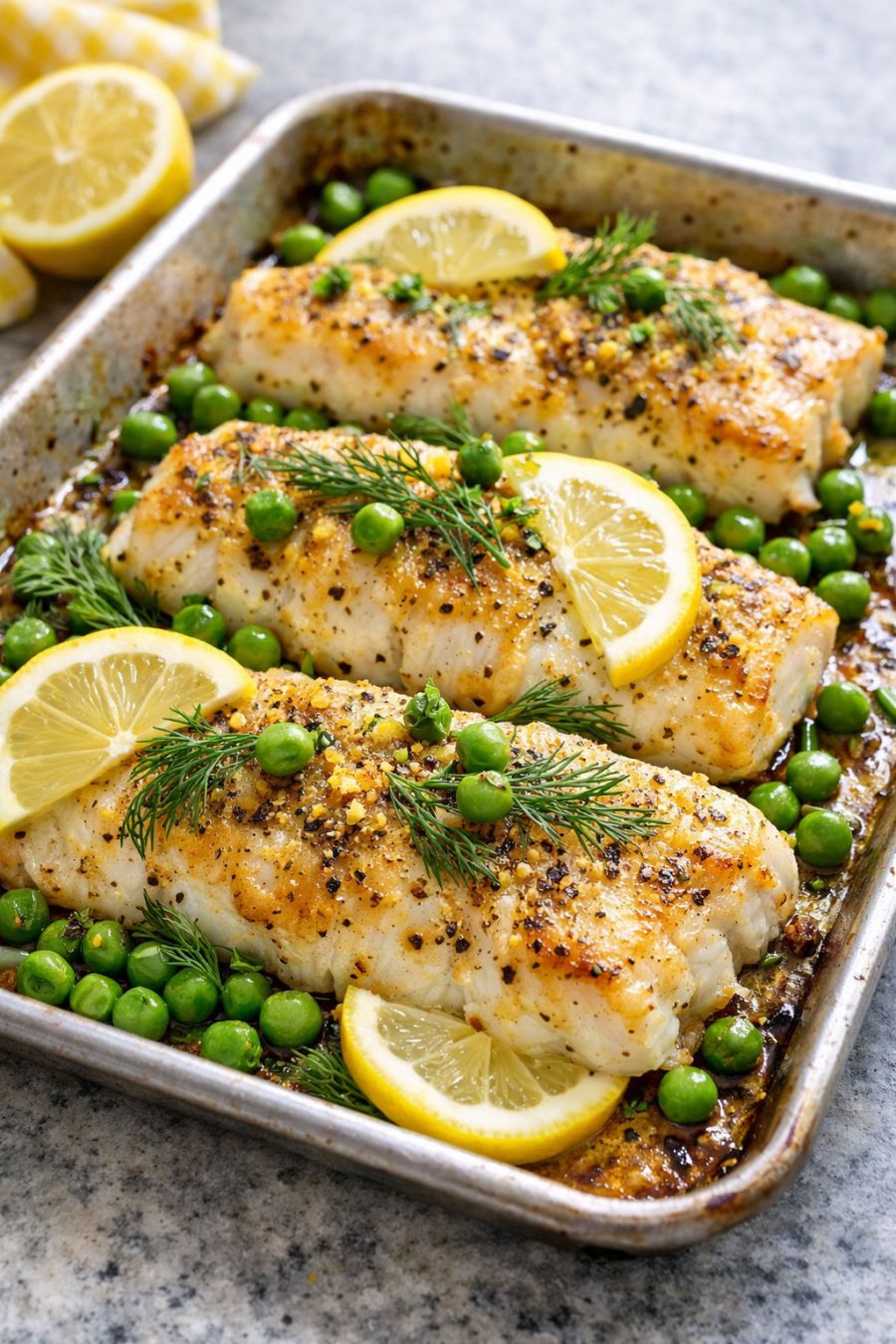
This 4-ingredient oven baked spring pollock is the kind of weeknight recipe I lean on when the day has gotten away from me, but I still want dinner to feel intentional. We start with rock-solid frozen raw pollock fillets—no thawing, no fuss—tossed straight onto a sheet pan with three pantry staples: olive oil, lemon pepper seasoning, and frozen peas. The result is a bright, flaky fish with tender, sweet peas that tastes like it took much more effort than it did. Pollock is a mild, lean white fish commonly used in Northern European and American cooking, and it takes beautifully to high-heat roasting, which is exactly what makes this method work so well.
Serve the pollock and peas right from the sheet pan with crusty bread or warm dinner rolls to soak up the lemony juices. A simple green salad with a sharp vinaigrette or a cabbage slaw with plenty of acidity balances the richness of the olive oil. If you want something heartier, spoon everything over steamed rice, buttered egg noodles, or roasted baby potatoes. A crisp white wine like Sauvignon Blanc or a light lager pairs nicely with the clean, bright flavors.
4-Ingredient Oven Baked Spring Pollock
Servings: 4
Ingredients
4 frozen raw pollock fillets (about 4–5 ounces each, rock-solid frozen)
3 tablespoons olive oil
2 teaspoons lemon pepper seasoning
2 cups frozen green peas
Directions
Preheat your oven to 425°F (220°C). Place a metal sheet pan on the middle rack while the oven heats so it gets hot; this helps the frozen fish start cooking quickly and evenly.
Once the oven is hot, carefully remove the preheated sheet pan and place it on a heatproof surface. Immediately arrange the completely frozen raw pollock fillets in a single layer on the hot pan, leaving a little space between each fillet so the heat can circulate.
Drizzle the olive oil evenly over the tops of the frozen fillets, then sprinkle the lemon pepper seasoning over the fish, dividing it as evenly as you can. The heat of the pan will start to sizzle the oil and seasoning around the edges of the fish—that’s what you want.
Scatter the frozen green peas all around the pollock fillets on the sheet pan, keeping most of them in a single layer so they roast rather than steam. Use a spatula or spoon to gently toss the peas in any oil that’s pooled on the pan so they’re lightly coated.
Place the sheet pan back in the oven and bake for 15 minutes without opening the door. During this first stretch, the pollock will begin to release moisture and the peas will start to soften.
After 15 minutes, carefully remove the pan and use a spoon to gently baste the tops of the fillets with some of the seasoned oil and juices from the pan. Give the peas a quick stir to expose any still-frozen spots. Return the pan to the oven and continue baking for another 7–10 minutes, or until the pollock flakes easily with a fork and is opaque all the way through (an instant-read thermometer should read 145°F / 63°C in the thickest part).
Taste a few peas and, if needed, sprinkle a small pinch of extra lemon pepper or salt over the pan to brighten the flavors. Let the fish rest on the hot pan for 2–3 minutes so the juices settle, then serve the fillets with plenty of peas and pan juices spooned over the top.
Variations & Tips
For a slightly richer dish, whisk 1 tablespoon of softened butter into the hot pan juices right after baking, then spoon that over the fillets. If you like a little heat, add 1/4 teaspoon red pepper flakes along with the lemon pepper. You can swap the peas for a frozen vegetable blend—think peas and carrots or a spring mix with green beans—as long as the pieces are small enough to cook in the same time frame; just keep the total amount to about 2 cups so the pan isn’t overcrowded. If you don’t have lemon pepper, mix 1 1/2 teaspoons kosher salt, 1 teaspoon black pepper, and 1 teaspoon dried lemon zest (or very finely grated fresh zest added at the end) and use that instead. For extra browning, switch the oven to broil for the last 2–3 minutes of cooking, watching closely so the fish doesn’t overcook. Leftovers are excellent flaked over a green salad the next day; serve at room temperature and drizzle with a bit more olive oil and lemon juice to refresh the flavors.
