
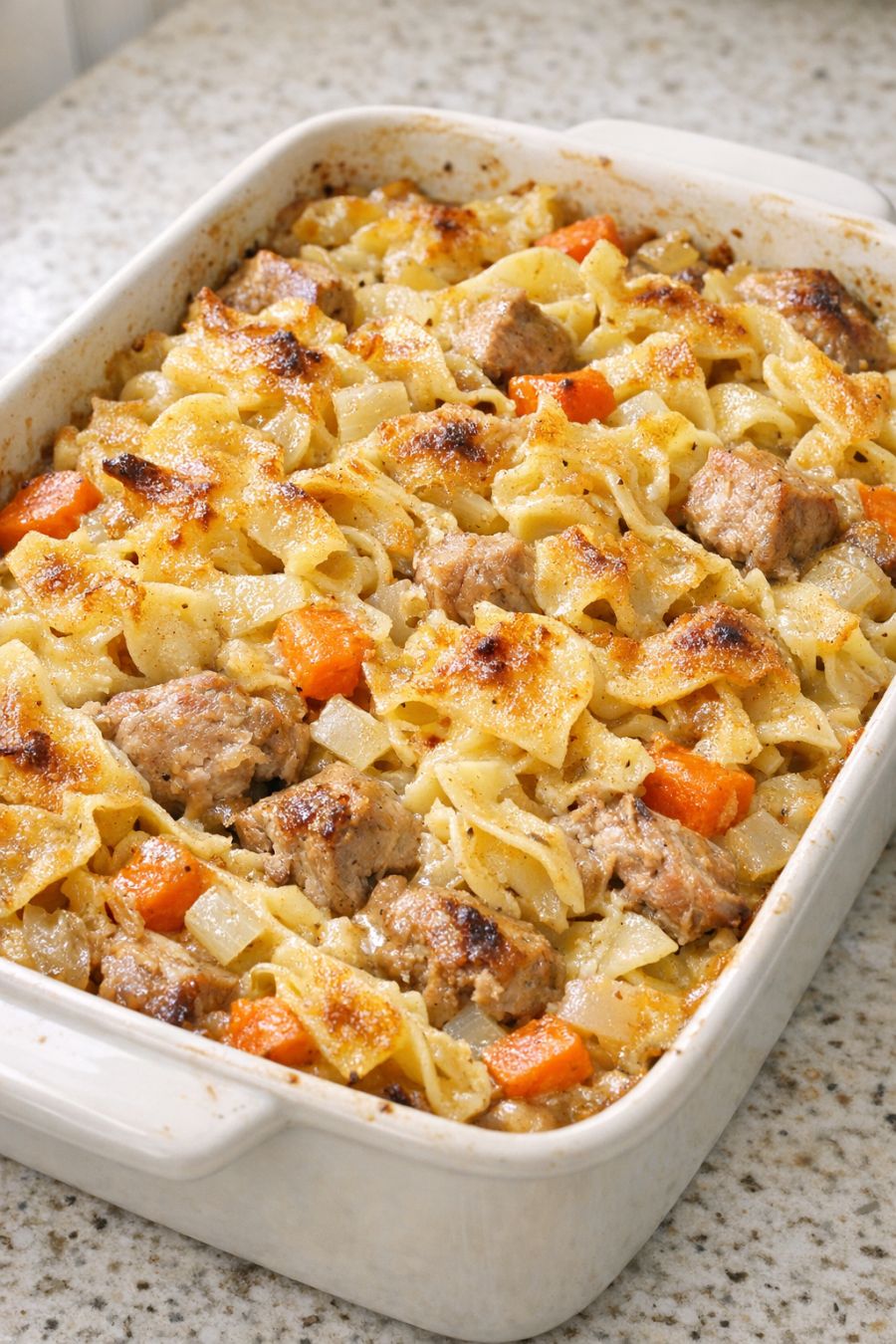
This rustic pork shoulder noodle bake is one of those dishes I can throw together on autopilot after a long day. It leans on an old Amish-style approach: hearty pork, simple dumpling-style egg noodles, and just a few pantry staples, all baked slowly until the meat is tender and the noodles soak up a rich, savory broth. You literally lay diced raw pork shoulder over dry noodles in a ceramic baking dish, add three everyday ingredients, and let the oven do the work. It’s the kind of comforting Midwest casserole that feels familiar even if you’ve never made it before.
Serve this pork shoulder noodle bake straight from the ceramic dish, with a big spoon for scooping. I like it alongside a simple green salad with a tangy vinaigrette to cut through the richness, or steamed green beans tossed with a little butter and black pepper. A side of applesauce or pickled beets nods to its Amish-country roots and adds a touch of sweetness and acidity. If you want to stretch the meal, warm dinner rolls or crusty bread are perfect for catching the savory juices at the bottom of the dish.
Oven-Baked Amish Pork Shoulder Noodle Bake
Servings: 4
Ingredients
1 pound boneless pork shoulder, trimmed and cut into 1/2-inch dice
8 ounces dry dumpling-style egg noodles
2 cups low-sodium chicken broth
1 cup whole milk
1 teaspoon kosher salt, plus more to taste
1/2 teaspoon freshly ground black pepper
Directions
Preheat your oven to 350°F (175°C). Lightly grease a medium ceramic baking dish (about 2-quart capacity) with a thin film of oil or butter to help prevent sticking.
Spread the dry dumpling-style egg noodles evenly in the bottom of the ceramic baking dish. Gently shake the dish so the noodles settle into an even layer; this helps them cook uniformly as they absorb liquid.
In a large measuring cup or bowl, whisk together the chicken broth, whole milk, kosher salt, and black pepper until the seasonings are evenly dispersed. This simple mixture will act as both cooking liquid and sauce for the noodles and pork.
Pour the broth-and-milk mixture evenly over the dry noodles in the baking dish, pressing down lightly with a spoon if needed so most of the noodles are moistened. It’s fine if a few edges poke above the liquid; they’ll get a bit toasty in the oven.
Lay the diced raw pork shoulder in an even layer over the top of the noodles, covering as much of the surface as you can without tightly packing the meat. This is the hands-on moment: scatter the cubes with your fingers so they’re evenly distributed, which helps them cook at the same rate.
Cover the ceramic baking dish tightly with foil, making sure to crimp the edges so steam is trapped inside. Place the dish on the middle rack of the preheated oven.
Bake, covered, for 1 hour, then carefully remove the foil, watching for escaping steam. Stir gently from the bottom to loosen any noodles that may be sticking, then spread the pork back out over the top. If the noodles look very dry, add 1/4 cup more broth or water around the edges.
Return the dish to the oven, uncovered, and bake for another 20–30 minutes, or until the pork is tender, the noodles are cooked through, and most of the liquid has been absorbed into a creamy, slightly saucy base. The top should show a few golden, lightly crisped noodle edges.
Remove the baking dish from the oven and let the casserole rest for 10 minutes before serving. This short rest allows the sauce to thicken slightly and makes it easier to scoop tidy portions. Taste and adjust seasoning with a bit more salt and pepper if needed, then serve warm.
Variations & Tips
For extra flavor without adding more ingredients, sear the diced pork shoulder in a hot skillet until lightly browned on a few sides before layering it over the noodles; this adds a deeper, roasty note but does add a few minutes of prep. You can also swap part of the chicken broth for beef broth for a heartier, darker flavor, or use 2% milk instead of whole if that’s what you keep on hand, knowing the finished sauce will be a bit lighter. If you like a slightly thicker, almost dumpling-like texture, reduce the broth by 1/4 cup; for a looser, more spoonable bake, add an extra 1/4–1/2 cup broth. A sprinkle of dried herbs such as thyme or parsley over the top before baking is an easy way to shift the flavor without changing the basic five-ingredient structure. For food safety, always start with fresh, cold pork shoulder, keep it refrigerated until you’re ready to dice, and wash your hands, cutting board, and knife thoroughly after handling the raw meat. Make sure the casserole reaches an internal temperature of at least 145°F (63°C) in the center of a pork piece, though with this longer bake time the pork will typically be well above that and very tender. Leftovers should be cooled promptly, refrigerated within two hours, and reheated until steaming hot before serving.
