
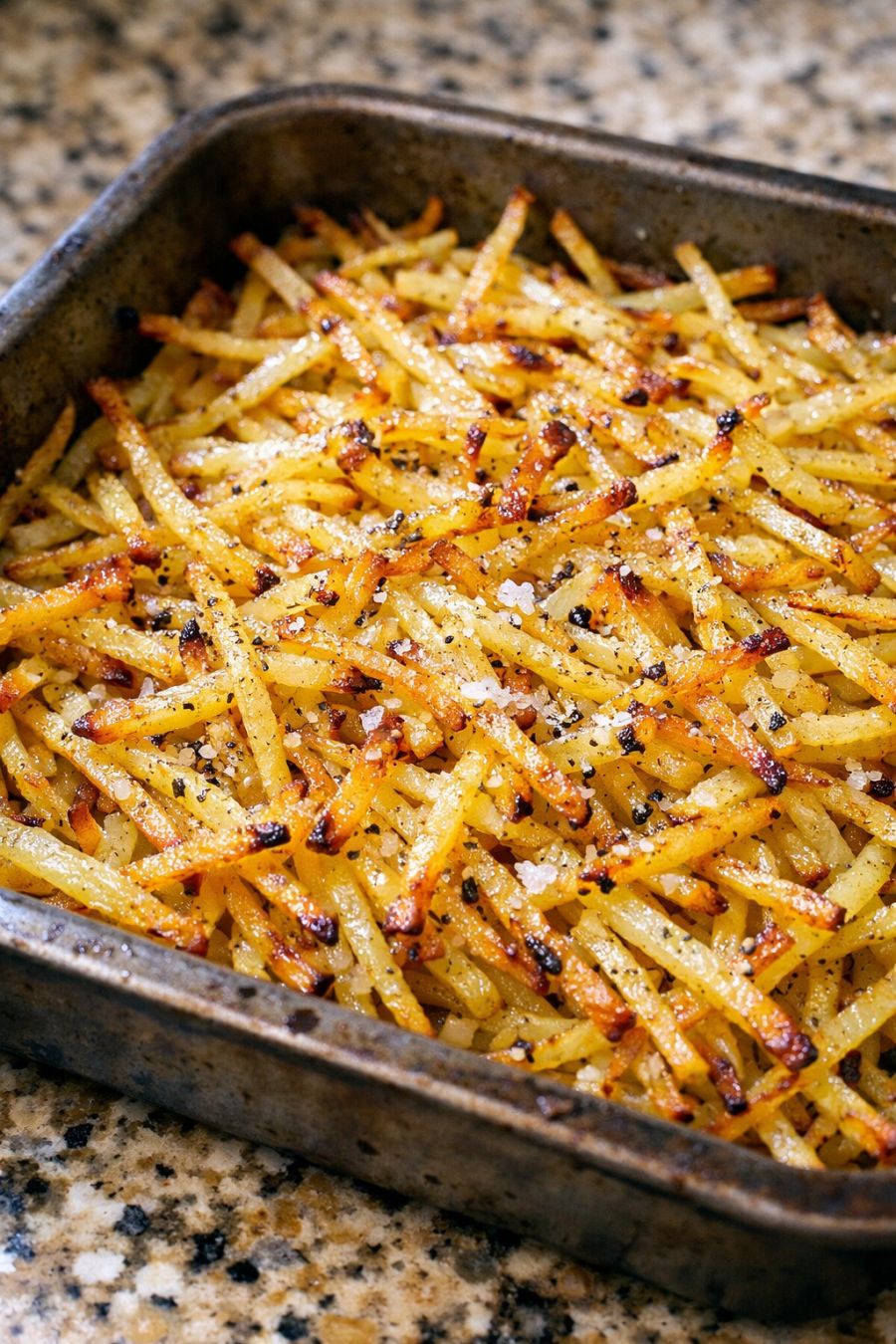
This humble little pan of julienned potatoes comes straight out of the old Depression-era playbook: a few pantry staples, one battered roasting pan, and the patience to let the oven work its quiet magic. You start with raw potatoes cut into thin matchsticks, toss them right in the pan with just three simple ingredients most of us keep on hand, and before long you’ve got a crisp-edged, tender-centered dish that feels like a hug from another time. It’s the kind of frugal, filling food farm families around the Midwest leaned on when money was tight but bellies still needed to be full—and the kind of recipe that has a way of making husbands and grandkids alike come back for seconds.
Serve these oven-browned julienned potatoes straight from the roasting pan while the edges are still crackly and golden. They’re wonderful alongside meatloaf, baked ham, or a skillet-fried pork chop, and they cozy up nicely to scrambled eggs or a simple cheese omelet for supper. A scoop of cottage cheese, sliced tomatoes in summer, or a spoonful of applesauce in winter rounds out the plate the way our mothers and grandmothers used to do it—plain, honest, and satisfying.
4-Ingredient Oven Julienned Potatoes
Servings: 4
Ingredients
2 pounds russet or other starchy potatoes, peeled (if desired) and julienned into matchsticks
3 tablespoons vegetable oil (or other neutral cooking oil)
1 1/4 teaspoons table salt
1/2 teaspoon black pepper
Directions
Preheat your oven to 400°F (200°C). Slide an old metal roasting pan onto the middle rack while the oven heats so the pan gets good and hot; this helps the potatoes brown nicely.
While the oven preheats, scrub and peel the potatoes if you like (you can leave the skins on if they’re thin and clean). Cut the potatoes into thin matchsticks, about 1/4 inch thick, so they cook evenly and crisp at the edges.
Carefully pull the hot roasting pan from the oven and set it on a sturdy surface. Immediately pour the vegetable oil into the pan and tilt it around so the bottom is lightly coated.
Scatter the raw julienned potatoes evenly over the oiled pan in a loose, single layer. Don’t pack them too tightly; a little space helps them brown instead of steam.
Sprinkle the salt and black pepper evenly over the potatoes right in the pan. Use a spatula or clean hands to toss the potatoes in the pan until every little stick is lightly coated with oil, salt, and pepper, then spread them back out into a fairly even layer.
Return the pan to the 400°F (200°C) oven and bake for 20 minutes without stirring, letting the bottoms start to brown and the potatoes soften.
After 20 minutes, pull the pan out and gently toss and turn the potatoes with a spatula, scraping up any browned bits from the bottom of the pan. Spread them back out and return the pan to the oven.
Continue baking for another 15–25 minutes, tossing once or twice more, until the potatoes are tender in the center and the edges are deeply golden and crisp in spots. Total time will depend on how thinly you cut them and how crowded the pan is.
Taste a potato stick and adjust the seasoning with a pinch more salt or pepper if needed. Serve the potatoes hot, right from the well-worn roasting pan, while the edges are still crackly and irresistible.
Variations & Tips
You can dress these up or down depending on what you have in the pantry. For a little extra flavor without straying far from the Depression-era spirit, add 1/2 teaspoon of garlic powder or onion powder along with the salt and pepper. If you’ve got an onion to spare, thinly slice half of it and toss the slices in with the potatoes before baking; they’ll caramelize and sweeten right in the pan. A sprinkle of dried herbs like thyme or parsley at the end is nice if you keep those on hand. To stretch the dish, you can mix in a thinly sliced carrot or two with the potatoes—this was common on farms when potatoes ran low. For a heartier meal, top the finished potatoes with a fried or poached egg, or scatter a little shredded cheese over them in the last 5 minutes of baking and let it melt. Food safety tips: Always start with firm, fresh potatoes; discard any that are very soft, moldy, or have a strong off smell. If your potatoes have green patches, cut those spots away generously, as the green can be bitter. Wash potatoes well if leaving the skins on, and dry them so they don’t add extra moisture to the pan. Use oven mitts when handling the hot roasting pan, and keep it on a stable, heatproof surface when tossing the potatoes. Leftovers should be cooled, then refrigerated within 2 hours and eaten within 3–4 days; reheat in a hot oven so they crisp back up.
