
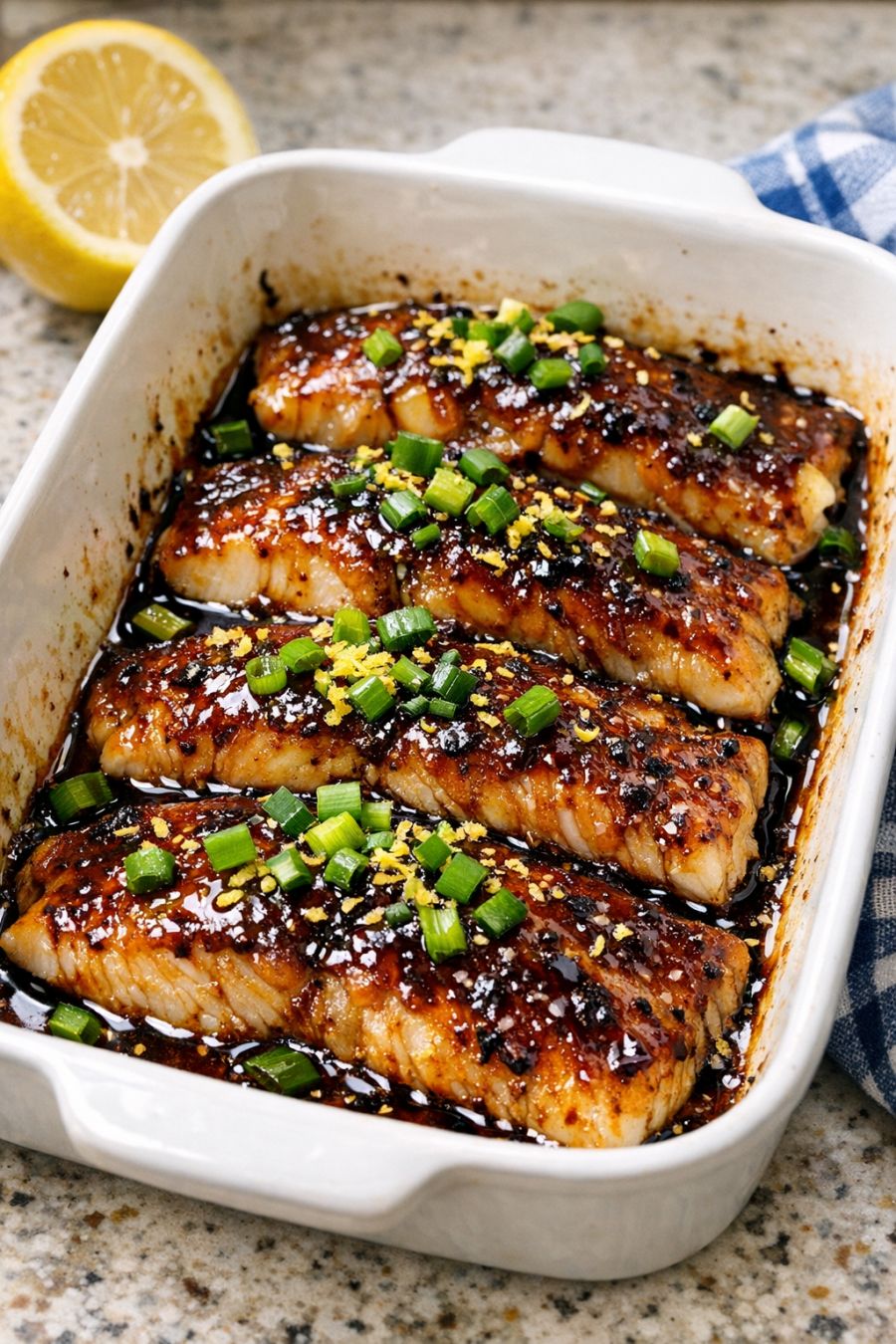
This 5-ingredient oven baked spring haddock is exactly the kind of weeknight dinner I lean on when I’m juggling work, kids’ activities, and a house that never seems to stay clean. You literally throw frozen raw haddock fillets into a baking dish, whisk together four super common pantry items into a dark, glossy sauce, and let the oven do the work. The sauce bakes up savory, a little sweet, and bright from lemon, soaking into the fish so it stays tender and flaky. It feels light and fresh enough for spring, but hearty enough that even picky grandkids will be licking their plates clean.
Serve the haddock straight from the baking dish over fluffy white rice, brown rice, or buttery egg noodles so they can soak up every bit of the dark, savory sauce. Add a bright side like roasted asparagus, green beans, or a simple spring salad with cucumbers and cherry tomatoes. A loaf of crusty bread or dinner rolls is great for sopping up the extra sauce, and a squeeze of extra fresh lemon at the table makes everything pop.
5-Ingredient Oven Baked Spring Haddock
Servings: 4
Ingredients
4 frozen raw haddock fillets (about 4–6 oz each, no need to thaw)
1/3 cup soy sauce (low-sodium if preferred)
1/4 cup honey (or packed light brown sugar)
2 tablespoons olive oil (or any neutral cooking oil)
2 tablespoons fresh lemon juice (about 1 lemon)
Directions
Preheat your oven to 400°F (200°C). Lightly grease a medium oven-safe baking dish with a little olive oil or nonstick spray so the fish doesn’t stick.
Arrange the frozen raw haddock fillets in a single layer in the baking dish. It’s okay if they’re slightly touching, but try not to overlap them so they cook evenly.
In a small bowl, whisk together the soy sauce, honey, olive oil, and fresh lemon juice until the mixture is smooth, glossy, and dark. Taste and adjust: add a touch more honey if you like it sweeter or a squeeze more lemon for extra brightness.
Pour the dark sauce evenly over the frozen haddock fillets, making sure every piece is completely coated and there’s sauce pooling slightly around them in the dish. Use a spoon to scoop sauce over the tops if needed so all visible fish is covered.
Cover the baking dish tightly with foil to help the frozen fish cook through gently and stay moist. Place the dish on the middle rack of the preheated oven.
Bake covered for 20 minutes, then carefully remove the foil (watch for steam). Spoon some of the hot dark sauce from the bottom of the dish over the tops of the fillets to baste them.
Return the uncovered dish to the oven and continue baking for another 10–15 minutes, or until the haddock is opaque, flakes easily with a fork, and reaches an internal temperature of 145°F (63°C) in the thickest part. The sauce should be bubbling and slightly thickened.
Once done, let the haddock rest in the baking dish for 3–5 minutes so the juices settle. Spoon more of the dark sauce over each fillet before serving, making sure everyone gets plenty of sauce on their plates for dipping and drizzling.
Variations & Tips
To add a little extra spring flair without changing the core 5 ingredients, you can sprinkle chopped fresh herbs like parsley, chives, or dill over the baked fish right before serving. If your family likes a bit of heat, stir a pinch of red pepper flakes or a small spoonful of sriracha into the sauce before baking. For a slightly richer flavor, swap half of the olive oil for melted butter. You can also use this exact method with other mild white fish like cod or pollock; just keep an eye on the cook time, as thinner fillets may cook a few minutes faster. For a more complete one-pan meal, scatter thinly sliced carrots or green beans around the fish before pouring on the sauce (they’ll cook in the same time as the haddock if sliced thin). Food safety tips: Always start with properly frozen, high-quality raw haddock; keep it in the freezer until you’re ready to cook. Do not leave the fish out at room temperature to thaw for long periods. Because you’re baking from frozen, make sure the internal temperature of the thickest part of the fillet reaches 145°F (63°C) before serving. Use a clean fork or thermometer when checking doneness, and avoid reusing any utensils that touched the raw fish unless they’ve been washed. Refrigerate leftovers within 2 hours and reheat thoroughly before eating.
