
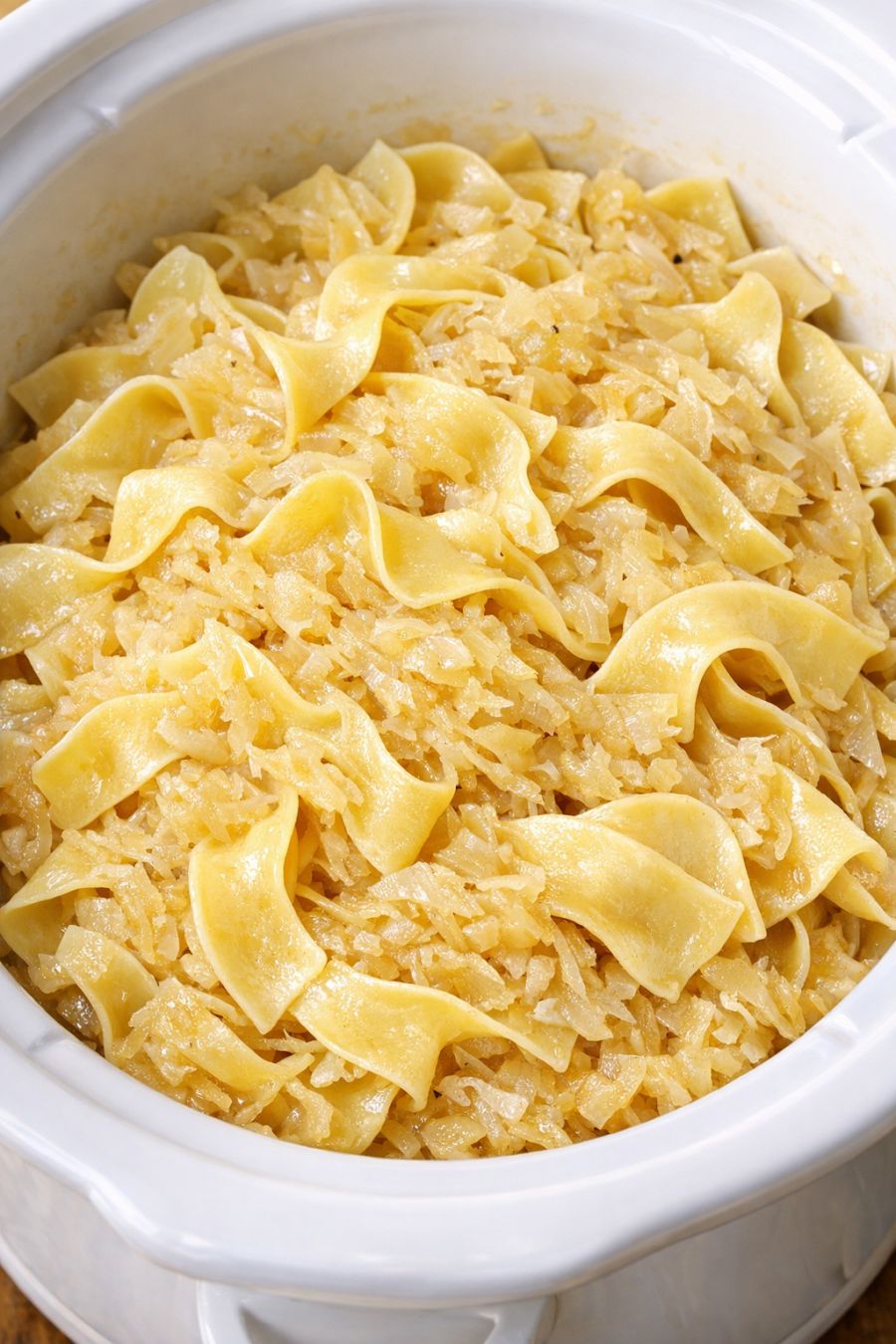
This slow cooker 3-ingredient sauerkraut noodles recipe is the kind of thrifty, pantry-based comfort food my grandfather leaned on during hard times. It takes humble staples—dry egg noodles, jarred or canned sauerkraut, and butter—and lets them slowly mingle into a tangy, buttery, stick-to-your-ribs bowl of noodles. The long, gentle cooking softens the fermented cabbage into silky golden ribbons and allows the starch from the noodles to thicken the buttery sauce. It’s practical, cheap, and deeply nostalgic, with roots in Central and Eastern European peasant cooking where sauerkraut and flour-based noodles were true survival foods.
Serve these sauerkraut noodles straight from the slow cooker while they’re hot and glossy, with a crack of black pepper if you like. They pair well with simple protein sides like pan-fried sausages, roasted kielbasa, or a fried egg on top if you want to keep things frugal. A sharp green salad or sliced raw cucumbers help cut through the richness and tang. If you drink alcohol, a crisp lager or a dry Riesling works nicely with the fermented cabbage notes. Leftovers reheat well in a skillet with a splash of water or broth, making them an easy side dish the next day.
Slow Cooker Sauerkraut Noodles
Servings: 4
Ingredients
12 oz (about 6 cups) wide dry egg noodles
24 oz jar sauerkraut with its brine (about 3 cups, not drained)
1/2 cup (1 stick) unsalted butter, cut into pieces
Directions
Lightly grease the inside of a 4- to 6-quart slow cooker with a small dab of the butter to help prevent sticking.
Add the sauerkraut with all of its brine directly to the slow cooker and spread it into an even layer. The brine is important here; it provides both seasoning and just enough liquid to help the noodles cook and steam.
Scatter the dry egg noodles evenly over the sauerkraut. Do not stir; keeping the noodles mostly on top allows them to steam and absorb moisture gradually instead of turning mushy.
Dot the remaining butter pieces evenly over the noodles, covering as much surface area as you can. As the butter melts, it will drip down through the noodles and sauerkraut, creating a simple, glossy sauce.
Cover the slow cooker and cook on LOW for 2 to 2 1/2 hours, until the noodles are tender but not falling apart. About halfway through the cooking time, quickly lift the lid and gently toss the mixture from the bottom up with tongs or two forks, making sure the noodles that were on top get some contact with the sauerkraut and melted butter. Replace the lid promptly to keep heat in.
If, near the end of cooking, the noodles look dry before they are fully tender, sprinkle in 2 to 4 tablespoons of hot water, then gently toss again. Continue cooking on LOW, checking every 15 minutes until the noodles are soft and the sauerkraut is silky.
Once the noodles are tender and coated in a glossy butter-sauerkraut mixture, taste and adjust the seasoning if needed. Traditionally this dish relies on the salt in the sauerkraut and the richness of the butter, so you may not need extra salt. If the flavor is too sharp for your taste, you can let it sit on WARM for 10 to 15 minutes; the residual heat will mellow the tang slightly.
Serve the sauerkraut noodles hot, straight from the slow cooker, making sure each portion gets plenty of both noodles and tender cabbage ribbons in the buttery sauce.
Variations & Tips
To keep the spirit of a three-ingredient, hard-times dish, the base recipe stays very simple, but there are still ways to adapt it. For a richer flavor, you can brown the butter on the stovetop until nutty before adding it to the slow cooker. If you prefer a milder tang, rinse the sauerkraut briefly under cold water and squeeze out some of the liquid before adding it; just know you may need to add a few tablespoons of water to make up for the lost brine. If your sauerkraut is very salty, taste a strand before using and consider a quick rinse to avoid over-salting the dish. For extra protein while still keeping the pantry feel, stir in leftover cooked sausage slices or shredded rotisserie chicken during the last 20 to 30 minutes of cooking so they warm through without drying out. You can also finish the dish with a spoonful of sour cream off the heat for a richer, creamier texture. Food safety tips: Always use clean utensils and a clean slow cooker insert. Keep the slow cooker covered as much as possible to maintain a safe cooking temperature. Do not leave the finished dish at room temperature for more than 2 hours; cool leftovers promptly and refrigerate in shallow containers. Reheat leftovers until steaming hot throughout, adding a splash of water or broth to loosen if needed.
