
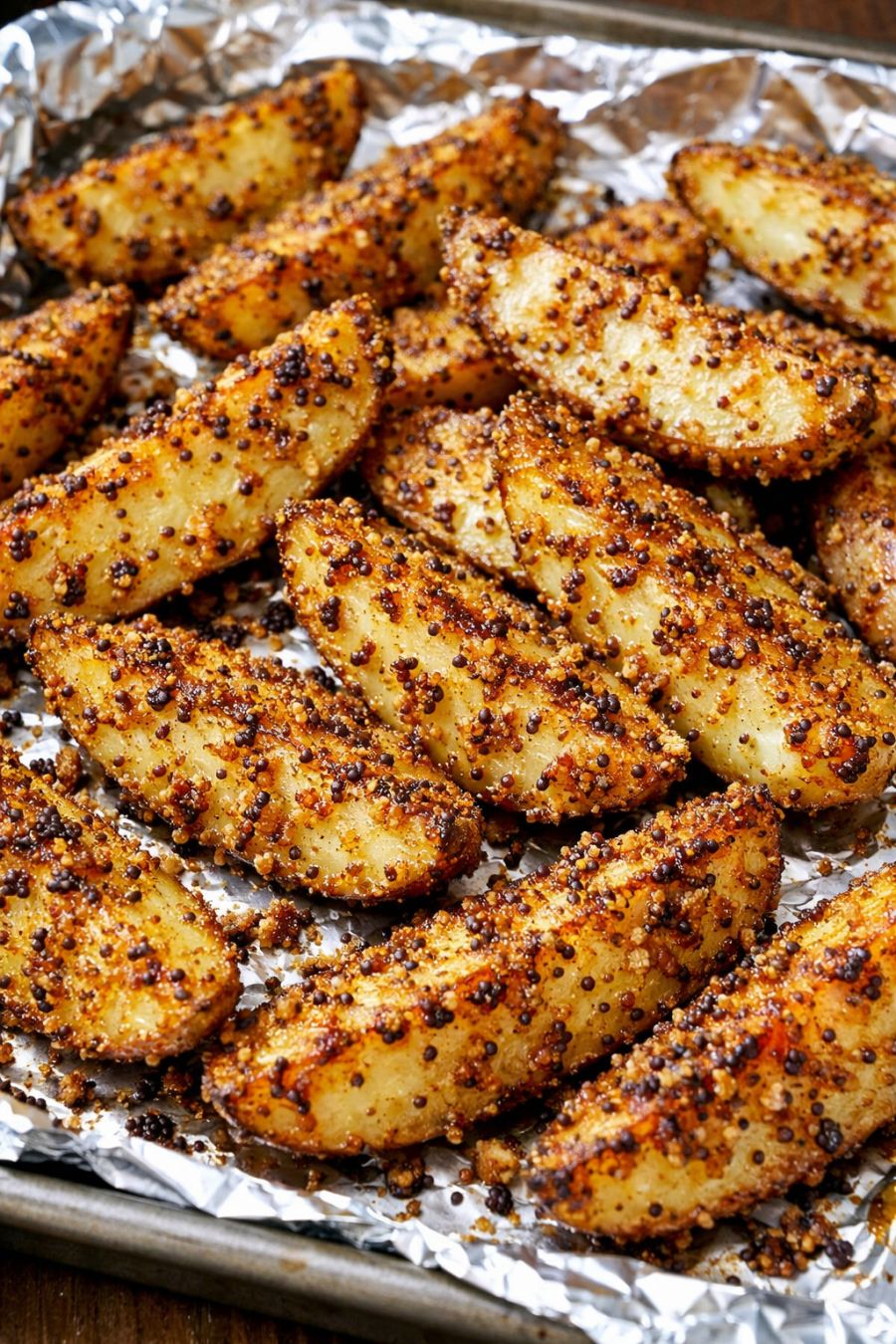
My grandmother always said that a good spring side dish shouldn’t keep you tied to the stove. This simple Amish-style mustard crusted potato recipe is one she shared with me when the fields were just turning green and the first new potatoes showed up at the farm stand. It uses only four humble ingredients, but the result is a pan of golden-brown wedges with a crisp, tangy mustard seed crust that feels right at home on any Midwestern table. Everything bakes together on a foil-lined sheet, so it’s as practical as it is comforting—perfect for busy weeknights, Sunday dinners, or Easter ham alike.
These potatoes are lovely alongside baked ham, roast chicken, or pork chops, especially in the spring when you might also have fresh peas or asparagus on the table. I like to serve them straight from the foil-lined pan while they’re still sizzling, with a simple green salad or coleslaw to balance the richness. They’re also sturdy enough to tuck into a plate of leftover sliced meats or to round out a simple supper of scrambled eggs and toast. If you enjoy dipping, a little extra mustard or a spoonful of sour cream on the side works nicely without stealing the spotlight from the crust.
Oven Baked 4-Ingredient Amish Mustard Crusted Potatoes
Servings: 4
Ingredients
2 pounds small to medium potatoes, scrubbed and cut into thick wedges
1/4 cup coarse-grain or whole-grain mustard (with visible mustard seeds)
3 tablespoons vegetable oil or other neutral cooking oil
1 teaspoon kosher salt (or 3/4 teaspoon fine table salt)
Directions
Heat your oven to 425°F (220°C). Line a large baking sheet with aluminum foil, shiny side up, and lightly crumple and smooth it back out so the potatoes don’t stick as easily.
Scrub the potatoes well and pat them dry with a clean towel. Cut into thick wedges, about 6–8 wedges per potato, so they roast up with a tender center and crisp edges.
In a large bowl, whisk together the coarse-grain mustard, vegetable oil, and salt until the mixture looks creamy and the mustard is loosened and glossy.
Add the potato wedges to the bowl and toss thoroughly with your hands or a sturdy spoon, making sure every surface is coated. The mustard seeds should cling to the potatoes in a light, even layer.
Spread the coated potato wedges out in a single layer on the foil-lined baking sheet, with a little space between each piece so the edges can crisp. Turn any bare spots face-down into the mustard mixture that has pooled on the foil.
Place the baking sheet on the middle rack of the preheated oven and bake for 25–30 minutes, until the bottoms are starting to brown and the potatoes are just tender when pierced with a fork.
Using a spatula or tongs, carefully turn each wedge so a new side is facing down against the foil. Return the pan to the oven and bake for another 10–15 minutes, or until the potatoes are deep golden brown with a crisp, speckled mustard crust.
Remove the pan from the oven and let the potatoes sit for 3–5 minutes so the crust sets slightly. Taste one wedge and sprinkle a pinch more salt over the pan if needed. Serve the potatoes hot, straight from the foil-lined sheet or transferred to a warm platter.
Variations & Tips
If you grew up in the country, you know that a recipe like this often changed with whatever was on hand. You can swap in red potatoes, Yukon golds, or even small new potatoes; just keep the wedges about the same size so they roast evenly. If you prefer a gentler tang, use half coarse-grain mustard and half mild yellow mustard, keeping the total amount the same so the crust still forms properly. For a slightly richer flavor, you can replace 1 tablespoon of the oil with melted butter, but don’t omit the oil entirely or the potatoes may stick and brown unevenly. If you like a touch of heat, a pinch of black pepper or crushed red pepper can be stirred into the mustard mixture without changing the spirit of the dish. These reheat well in a hot oven (around 400°F/200°C) for 8–10 minutes, spread back out on a foil-lined sheet to re-crisp. For food safety, always scrub potatoes well to remove dirt, trim away any green or heavily sprouted spots, and store raw potatoes in a cool, dark place rather than the refrigerator. Leftover cooked potatoes should be cooled promptly, refrigerated within 2 hours, and eaten within 3–4 days; reheat until piping hot all the way through before serving.
