
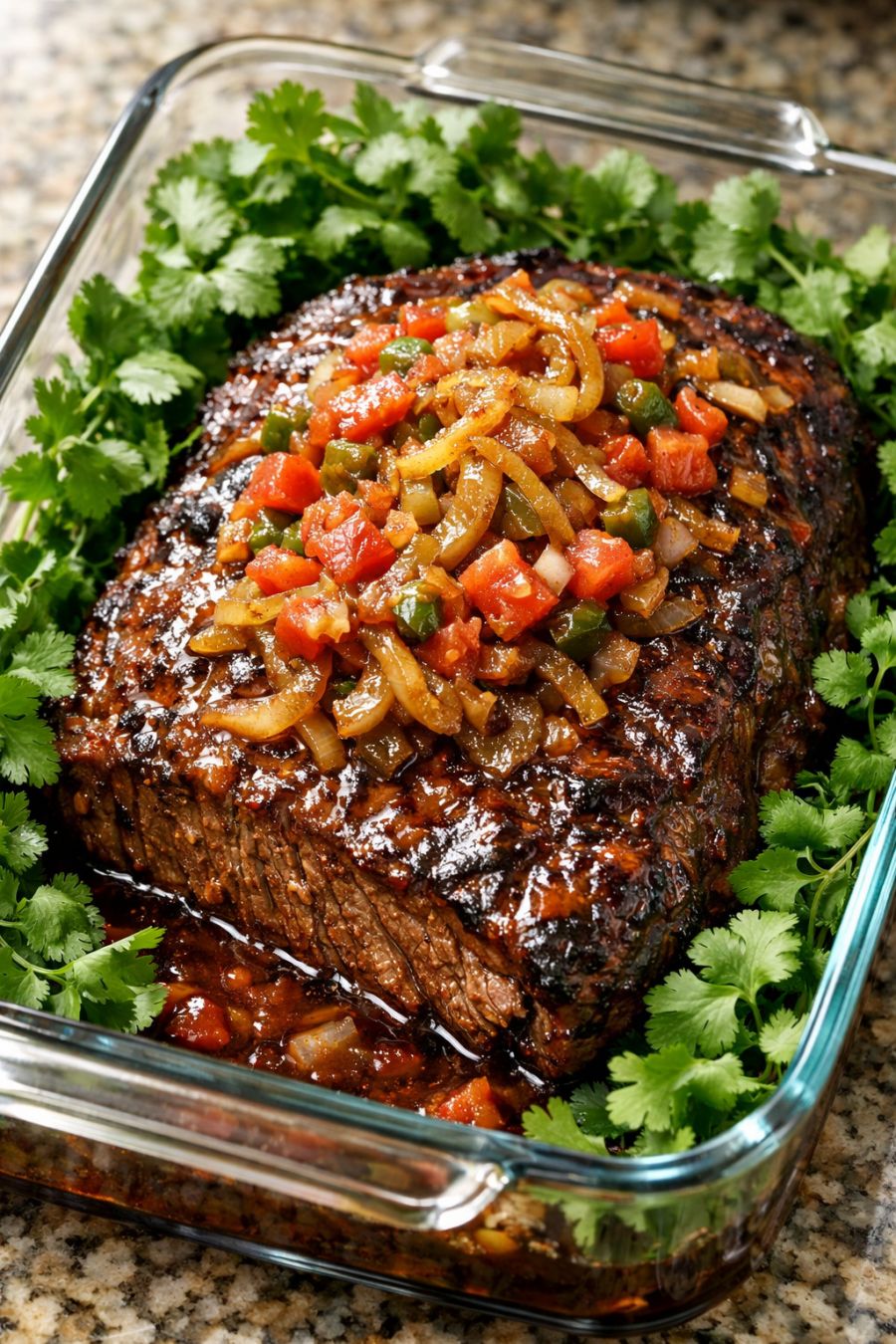
This 4-ingredient oven beef using raw beef brisket is the kind of set-it-and-forget-it meal that busy weeknights are made for. You literally lay the brisket in a glass casserole dish, surround it with a dark, savory liquid and a handful of chunky vegetables, and let the oven quietly transform everything into something deeply flavorful. Brisket has roots in Eastern European Jewish cooking and Texas barbecue, but here we’re borrowing the low-and-slow principle and adapting it to a simple Midwestern-style oven braise—no smoker, no special tools, just everyday pantry staples.
Serve the tender brisket sliced or shredded with its vegetables and plenty of the pan juices spooned over the top. It’s especially good over mashed potatoes, buttered egg noodles, or simple steamed rice to catch all that savory sauce. A crisp green salad or roasted green beans add freshness alongside this rich, slow-cooked beef. Leftovers make excellent sandwiches on crusty rolls with a swipe of mustard or horseradish and a spoonful of the cooked onions and peppers.
4-Ingredient Oven Beef Brisket
Servings: 6
Ingredients
3 to 4 pounds raw beef brisket, trimmed of excess hard fat
2 cups beef broth (low-sodium preferred)
1 cup chunky salsa (mild or medium, any style you like)
1 large onion, cut into thick wedges
Directions
Preheat your oven to 300°F (150°C). Place a rack in the center position so there is room for your glass casserole dish.
Place the raw beef brisket, fat side up, into a 9x13-inch glass casserole dish. If the brisket is very long, you can tuck the ends under to fit it snugly.
Scatter the onion wedges around and on top of the brisket. These will soften and sweeten as they cook, adding body to the sauce.
In a medium bowl or large measuring cup, stir together the beef broth and chunky salsa until combined. This mixture should be dark and slightly opaque, with colorful vegetable pieces from the salsa.
Pour the broth-and-salsa mixture evenly over and around the brisket in the glass dish, making sure some of the chunky pieces land on top and along the sides of the meat. The brisket will not be fully submerged; you’re creating a shallow braising liquid.
Cover the glass casserole dish tightly with a double layer of aluminum foil to trap moisture and heat. Make sure the foil is crimped well around the edges so steam cannot escape easily.
Transfer the covered dish to the preheated oven and bake for 3 to 3 1/2 hours, or until the brisket is very tender when pierced with a fork. The exact time will depend on the size and thickness of your brisket.
Carefully remove the dish from the oven and peel back the foil away from you to avoid steam burns. Let the brisket rest in the hot liquid for 15 to 20 minutes so the juices redistribute.
Transfer the brisket to a cutting board. Slice it across the grain into thin slices, or shred it with two forks if it is very tender. Skim any excess fat from the surface of the cooking liquid in the glass dish.
Return the sliced or shredded brisket to the glass casserole dish, nestling it back into the onions and sauce so every piece is coated. Serve warm, spooning the dark, flavorful liquid and chunky vegetables over each portion.
Variations & Tips
For a slightly sweeter, more Midwestern pot-roast profile, replace 1/2 cup of the beef broth with apple juice or cola and add a teaspoon of dried thyme or smoked paprika (this keeps you at four core ingredients if you consider herbs optional rather than primary). For extra vegetables, tuck thick chunks of carrot or bell pepper around the brisket with the onion, understanding that this technically adds ingredients but keeps the method identical. If you prefer a thicker sauce, after cooking, remove the brisket and simmer the liquid in a saucepan on the stove for 5 to 10 minutes to reduce, or whisk in a slurry of 1 tablespoon cornstarch mixed with 1 tablespoon cold water and heat until lightly thickened. You can also swap the chunky salsa for fire-roasted salsa for a smokier flavor, or use a black bean and corn salsa for more texture. Food safety tips: Always start with fully thawed brisket; cooking from frozen can lead to uneven heating and potential bacterial survival in the center. Keep raw meat and its juices away from ready-to-eat foods, washing hands, cutting boards, and knives with hot, soapy water after contact. Use a food thermometer if you’re unsure about doneness; the brisket should reach at least 190°F internally for optimal tenderness in this style of braise. Allow leftovers to cool slightly, then refrigerate in shallow containers within 2 hours of cooking, and reheat to at least 165°F before serving again.
