
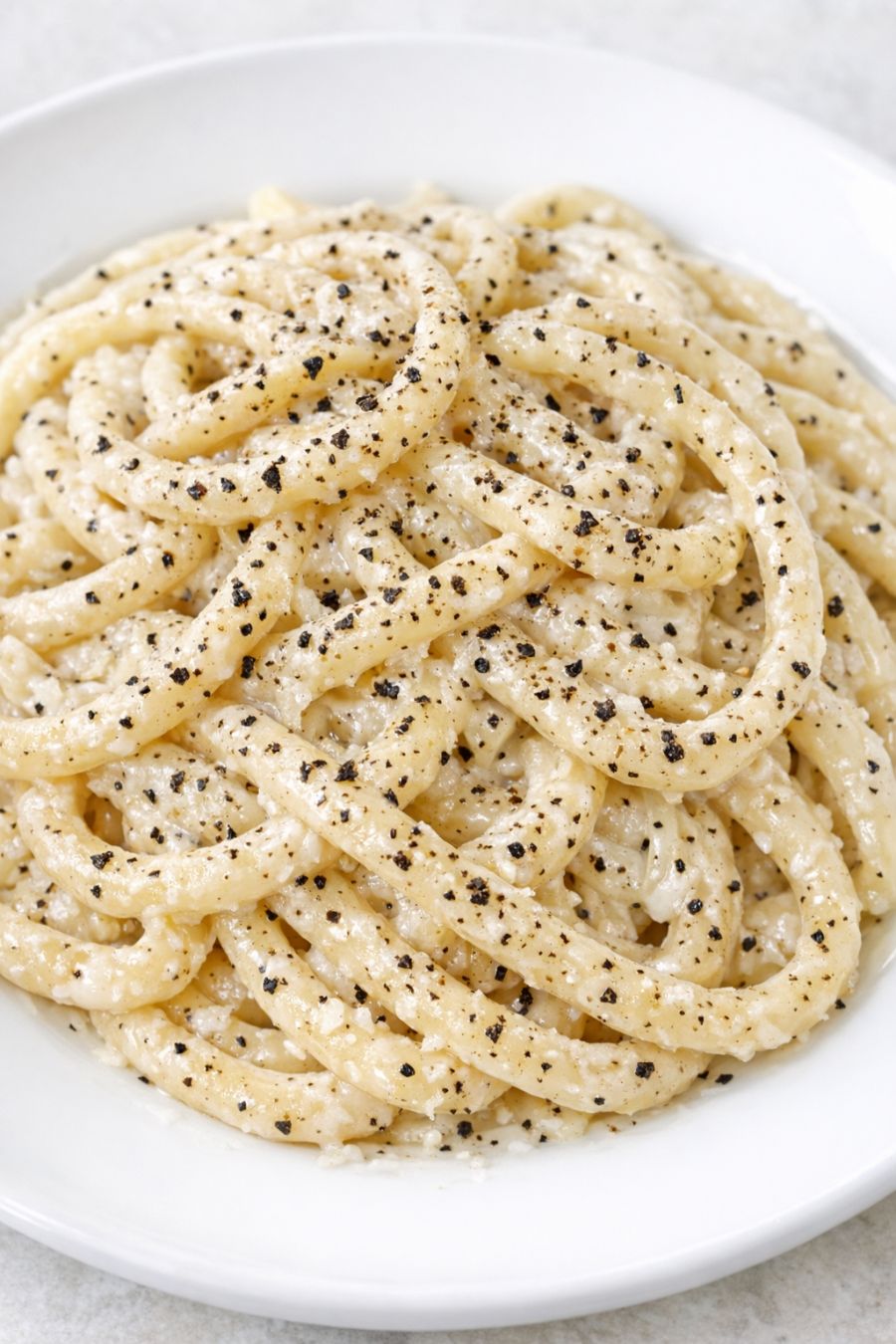
This slow cooker 3-ingredient black pepper spaghetti is my take on a classic poor man’s pasta trick my cousin picked up while traveling through Europe on a shoestring budget. It’s loosely inspired by cacio e pepe, the Roman pasta that relies on pantry staples—pasta, cheese, and black pepper—to create something far greater than the sum of its parts. Here, we adapt the idea for a slow cooker: the spaghetti simmers directly in seasoned water, releases its starch, and that starchy liquid binds with sharp cheese and plenty of coarse black pepper to form a silky, spicy, deeply flavored sauce. It’s comforting, costs pennies to make, and uses only three ingredients you probably already have on hand.
Serve this black pepper spaghetti hot on warm plates so the cheese stays creamy. It’s lovely on its own for a minimalist, budget-friendly dinner, but you can round it out with a simple green salad dressed in lemon and olive oil, or some steamed or roasted vegetables. A hunk of crusty bread is great for mopping up the extra sauce, and if you enjoy wine, a light red or a crisp white pairs nicely with the sharp cheese and peppery bite.
Slow Cooker 3-Ingredient Black Pepper Spaghetti
Servings: 4
Ingredients
12 oz (340 g) dry spaghetti
6 cups (1.4 L) water
1 1/2 cups (about 4 oz / 115 g) finely grated hard cheese such as Parmesan or Pecorino Romano, divided
Directions
Lightly oil the inside of your slow cooker crock if it tends to stick. Break the dry spaghetti in half so it fits more easily into the slow cooker and can be submerged in liquid.
Add the water to the slow cooker. Stir in 1 teaspoon of the finely grated cheese to lightly season the water; this mimics the salty, savory character of traditional pasta water without adding extra ingredients. Nestle the dry spaghetti into the water, pressing it down so most of the pasta is covered. It’s fine if some strands stick out at first—they’ll soften and sink as they heat.
Cover and cook on HIGH for 1 1/2 to 2 hours, stirring every 30 minutes. Each time you stir, separate any clumping strands by gently lifting and tossing with tongs or a long fork. The goal is for the spaghetti to become just tender (al dente) and for some, but not all, of the water to be absorbed. You should still see a shallow pool of starchy liquid in the bottom when the pasta is done.
Once the spaghetti is al dente and there is about 1/2 to 3/4 cup of starchy cooking liquid left in the slow cooker, turn the heat to WARM (or turn the cooker OFF if it runs very hot). Working quickly while everything is still steaming, add the remaining grated cheese in 3 to 4 small handfuls, tossing thoroughly after each addition so the cheese melts gradually and emulsifies with the starchy liquid instead of clumping.
As you toss in the cheese, grind in a generous amount of coarse or freshly cracked black pepper directly over the spaghetti. Start with about 2 teaspoons of cracked pepper and toss well so every strand is coated in the pale, creamy, pepper-flecked sauce. Taste and add more black pepper to reach a spicy, sharply flavored finish—the pepper should be assertive but not harsh.
If the spaghetti looks too tight or dry, splash in a tablespoon or two of hot water from the kettle and toss again until the sauce loosens and lightly coats the noodles. If it seems too soupy, let it sit uncovered on WARM for a few minutes, tossing occasionally, until the sauce thickens and clings to the pasta.
Serve immediately, twirling the thick, creamy spaghetti onto plates and spooning any extra peppery cheese sauce from the bottom of the slow cooker over the top. Finish with an extra pinch of cracked black pepper on each portion for visual contrast and a final hit of spice.
Variations & Tips
Because this dish relies on only three ingredients, each one matters. Use a hard, aged cheese that grates finely and melts smoothly—Parmesan gives a nutty, mellow profile, while Pecorino Romano is saltier and more intense. If your cheese is very salty, you may want to season the water only lightly with that initial teaspoon of cheese and avoid adding additional salt. For a bolder pepper flavor, use a mix of coarsely cracked black pepper and finely ground pepper, adding some at the end so the aroma stays vivid. If you prefer a slightly looser, creamier sauce, reserve a bit more of the starchy cooking liquid and add it a spoonful at a time during the final tossing. To stretch this into more servings without changing the base recipe, serve smaller portions alongside a generous salad or cooked vegetables. Food safety tip: Keep the pasta out of the temperature danger zone (40°F–140°F / 4°C–60°C) by serving promptly once it is sauced. Do not leave the finished spaghetti on the warm setting for more than 1 to 1 1/2 hours, as the cheese can break and the texture will suffer; refrigerate leftovers within 2 hours in a shallow container and reheat gently with a splash of water to loosen the sauce.
