
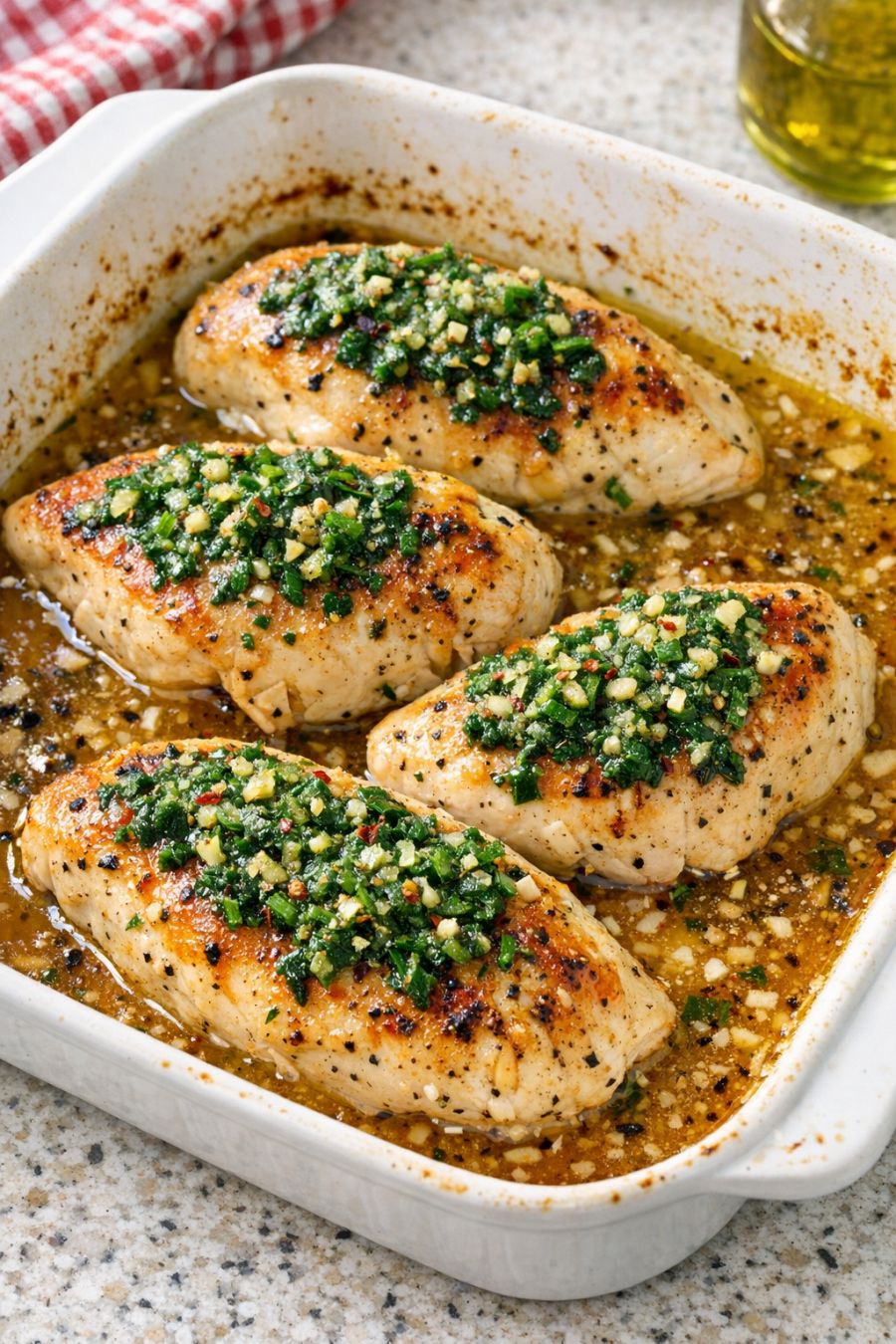
This 5-ingredient oven chicken is my go-to on nights when I walk in the door, realize the chicken is still rock-solid in the freezer, and absolutely refuse to order takeout again. You literally dump frozen raw chicken breasts into a glass casserole dish, pour on a few pantry staples, and let the oven do the work. The result is juicy, flavorful chicken with a built-in sauce that tastes like you fussed, even though you barely touched a cutting board. It’s very Midwest weeknight energy: practical, cozy, and totally family-friendly.
I love serving this saucy chicken over fluffy white rice or buttered egg noodles so all that garlicky, herby goodness has something to soak into. Add a simple green side—steamed broccoli, roasted green beans, or a bagged salad mix—and dinner is done. If you’re thinking meal prep, portion the chicken and sauce into containers with rice and a handful of frozen mixed veggies; they’ll reheat beautifully for work lunches. A slice of crusty bread or garlic toast on the side is perfect for swiping up every last bit of sauce.
5-Ingredient Oven Chicken with Frozen Breasts
Servings: 4
Ingredients
4 frozen raw boneless skinless chicken breasts (about 2 to 2 1/2 pounds total)
1 cup low-sodium chicken broth
1/2 cup bottled Italian salad dressing
1 teaspoon garlic powder
1 teaspoon dried Italian seasoning (or dried oregano and basil blend)
Optional: 1/2 teaspoon kosher salt and 1/4 teaspoon black pepper, to taste
Directions
Preheat your oven to 400°F (200°C). Place a rack in the center of the oven. While the oven heats, grab a 9x13-inch glass casserole dish.
Arrange the frozen raw chicken breasts in a single layer in the glass casserole dish. They can touch slightly, but avoid stacking them on top of each other so they cook evenly.
In a medium bowl or large measuring cup, whisk together the chicken broth, Italian salad dressing, garlic powder, and dried Italian seasoning until well combined. If using, stir in the salt and pepper.
Pour the mixture evenly over the frozen chicken breasts, making sure each piece is coated and there is liquid pooled around the chicken in the bottom of the dish. It should look like the chicken is surrounded by colorful, seasoned liquid.
Cover the glass casserole dish tightly with aluminum foil. This traps steam and helps the frozen chicken cook through gently and stay juicy.
Bake the covered dish at 400°F (200°C) for 30 minutes. Carefully remove the foil (watch out for hot steam), spoon some of the sauce over the tops of the chicken, and return the dish to the oven uncovered.
Continue baking uncovered for another 20 to 30 minutes, or until the chicken is cooked through. The total time will be about 50 to 60 minutes from frozen, depending on thickness. The thickest part of each breast should reach an internal temperature of 165°F (74°C) when checked with an instant-read thermometer.
Once the chicken is done, let it rest in the dish for 5 to 10 minutes. This helps the juices settle and slightly thickens the sauce. Spoon the flavorful liquid over the chicken when serving, and taste the sauce to see if you’d like an extra pinch of salt or pepper.
Variations & Tips
Make it creamy: After the chicken is fully cooked, remove the dish from the oven and stir in 1/4 to 1/3 cup heavy cream or half-and-half into the hot sauce, then spoon it back over the chicken. Cheesy twist: In the last 5 to 10 minutes of baking, sprinkle 1/2 to 1 cup shredded mozzarella or Italian blend cheese over the chicken and return to the oven until melted and bubbly. Lemon-herb version: Swap 1/4 cup of the chicken broth for freshly squeezed lemon juice and add a few lemon slices to the dish before baking. Extra veggies: Scatter 2 cups of quick-cooking vegetables (like thinly sliced bell peppers, zucchini rounds, or halved cherry tomatoes) around the frozen chicken before pouring the sauce on. Make sure everything stays mostly in a single layer so it cooks evenly. Spicier option: Add 1/4 to 1/2 teaspoon red pepper flakes to the sauce mixture for a little heat. Meal prep tip: Cook a double batch in two glass dishes at once and use the leftovers for salads, grain bowls, wraps, or quick pasta tosses later in the week.
Food safety tips: Always start with fully frozen, individually separated chicken breasts—do not cook large frozen clumps, as the centers may not reach a safe temperature. Use a food thermometer to confirm the thickest part of each breast reaches 165°F (74°C) before serving; color alone is not reliable. If some pieces are thicker than others, you can remove the thinner ones when they reach 165°F and return the dish to the oven until the thicker pieces finish cooking. Do not leave the cooked chicken out at room temperature for more than 2 hours (1 hour if your kitchen is very warm); refrigerate leftovers promptly in shallow containers. Reheat leftovers to 165°F (74°C) before eating, and use refrigerated leftovers within 3 to 4 days.
