
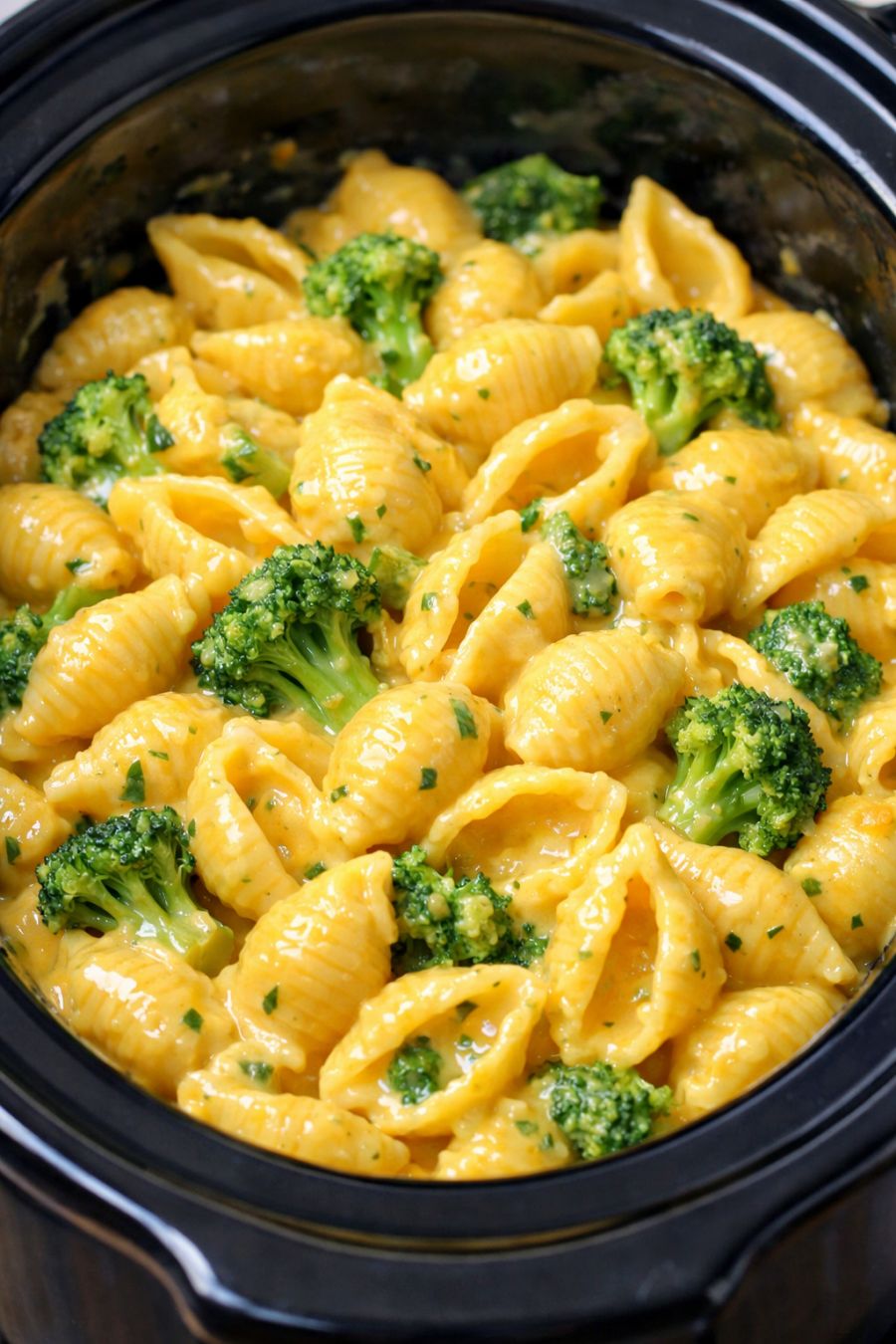
This slow cooker 3-ingredient broccoli cheese pasta is exactly the kind of rainy day secret my aunt swore by. She’d toss everything straight into the pot before heading off to work, and by the time the storm rolled in and everyone was home, there’d be this rich, creamy, ridiculously comforting bowl waiting. No roux, no fancy cheeses, no extra steps—just three grocery-store staples that melt together into a thick, glossy cheese sauce clinging to tender shells with little green bites of broccoli. It’s the kind of dump-and-go dinner that feels cozy and homemade, even on the busiest days.
Serve this broccoli cheese pasta straight from the slow cooker with a big spoon and deep bowls—it’s hearty enough to stand on its own. I like it with a simple green salad or sliced cucumbers and cherry tomatoes for something crisp and fresh on the side. Warm garlic bread, breadsticks, or even buttered toast are great for swiping up any extra cheese sauce. If you’re feeding a crowd, pair it with rotisserie chicken or baked sausages and a sheet pan of roasted veggies to round out the meal without adding much extra work.
Slow Cooker 3-Ingredient Broccoli Cheese Pasta
Servings: 4
Ingredients
8 oz (about 3 cups) dry medium shell pasta
3 cups frozen broccoli florets
24 oz jar prepared cheese sauce (such as Cheez Whiz-style or jarred queso-style cheese sauce)
Directions
Spray the inside of a 4- to 6-quart slow cooker lightly with nonstick cooking spray to help prevent sticking and make cleanup easier.
Pour the dry shell pasta into the bottom of the slow cooker in an even layer.
Add the frozen broccoli florets right on top of the dry pasta. There is no need to thaw the broccoli first; just break up any large clumps with your hands so it’s scattered evenly.
Pour the entire jar of cheese sauce over the pasta and broccoli. Use a spatula to spread it around so most of the pasta and broccoli are coated or at least touched by the sauce. Do not add water or broth—the moisture from the cheese sauce and broccoli will be enough.
Cover the slow cooker with the lid and cook on LOW for 2 to 2 1/2 hours, until the pasta is tender but not mushy and the broccoli is bright green and soft. Avoid opening the lid during the first 90 minutes so the heat and steam stay trapped inside.
After about 2 hours, quickly lift the lid and gently stir from the bottom, folding the melted cheese sauce through the pasta and broccoli until everything is evenly coated in a thick, glossy sauce. If the pasta still has a firm bite, replace the lid and cook for another 15 to 30 minutes on LOW.
Once the pasta is tender and the sauce is smooth and creamy, turn the slow cooker to WARM. Give it one final stir, then serve the pasta straight from the crock while it’s hot and ultra-cheesy.
If the pasta sits on WARM for a while and the sauce thickens too much, stir in a splash of milk or hot water, a tablespoon at a time, until it loosens back into a creamy consistency.
Variations & Tips
To bulk this up a bit while still keeping the spirit of the recipe, you can stir in cooked, shredded rotisserie chicken or diced ham right at the end of cooking so it warms through without overcooking. For extra flavor without changing the core three ingredients, top each bowl with black pepper, red pepper flakes, or a sprinkle of grated Parmesan you already have on hand. If you prefer a bit more bite to your broccoli, use larger florets and stir them in halfway through the cook time so they steam but don’t get too soft. For a slightly lighter version, choose a lighter-style cheese sauce and use whole-grain or high-fiber pasta; just know that different pasta shapes and brands can cook at slightly different speeds, so start checking for doneness around the 1 3/4-hour mark the first time you try it. Food safety tips: Make sure the pasta and broccoli reach a safe, steaming-hot temperature throughout before serving; slow cookers can vary, so if your unit runs cool, allow a little extra time. Do not leave the finished dish sitting on the counter at room temperature for more than 2 hours—switch the slow cooker to WARM if you’re serving over time, and refrigerate leftovers in a shallow container within that 2-hour window. Reheat leftovers thoroughly until piping hot, adding a splash of milk or water if the sauce has thickened in the fridge.
