
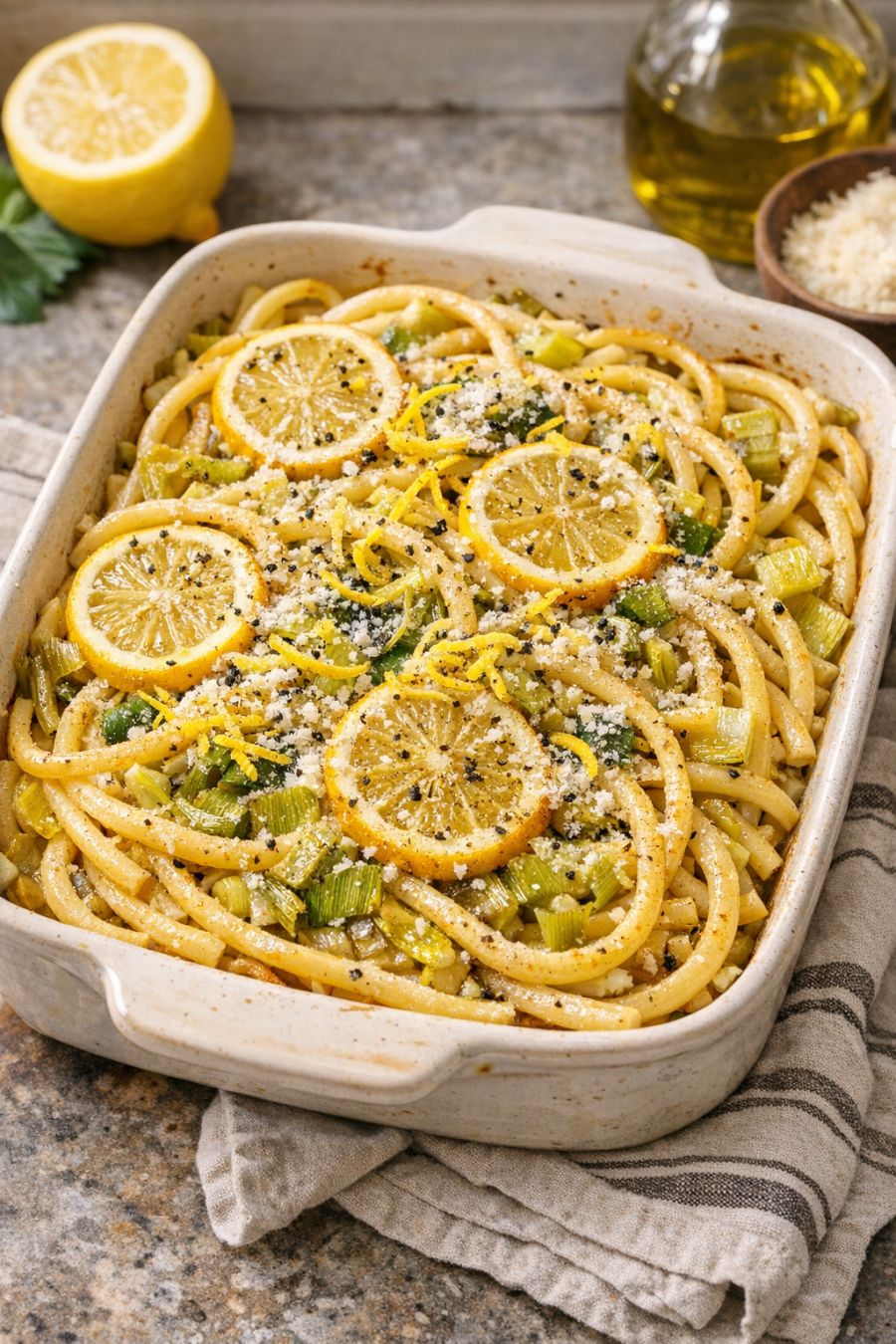
This oven-baked lemon leek pasta is the dish I lean on when I’m staring into the pantry at 6 p.m. with no plan. Everything happens in one ceramic casserole dish: you scatter raw sliced leeks over raw dry bucatini, add just two more ingredients—lemon and good olive oil—plus water and salt from the pantry, then let the oven do the rest. The starch from the pasta mingles with the tender, sweet leeks to create its own silky sauce, brightened with lemon. It feels like a simple, modern cousin of classic Italian one-pan pasta techniques, but with a very Midwestern practicality: minimal shopping, maximum comfort, and almost no dishes.
Serve this lemon leek pasta straight from the casserole dish while it’s still glossy and hot, topped with extra lemon zest and a drizzle of olive oil. It pairs nicely with a simple green salad—think arugula or mixed spring greens with a sharp vinaigrette—to balance the richness of the starchy sauce. A side of roasted or steamed asparagus, green beans, or peas echoes the spring vibe of the leeks. If you enjoy wine, a crisp white like Sauvignon Blanc or Pinot Grigio works well, or pour a chilled sparkling water with a lemon wedge for a non-alcoholic option.
Oven-Baked 4-Ingredient Lemon Leek Bucatini
Servings: 4
Ingredients
12 oz dry bucatini pasta
3 medium leeks, white and light green parts only, thinly sliced (about 4 cups loosely packed)
1 large lemon, zested and juiced (about 1 tablespoon zest and 3 tablespoons juice)
1/4 cup extra-virgin olive oil
4 1/2 cups hot water
1 1/4 teaspoons kosher salt, plus more to taste
1/2 teaspoon freshly ground black pepper (optional, but recommended)
Directions
Preheat your oven to 400°F (200°C). Place a rack in the center of the oven. Lightly oil a 9x13-inch (or similar) ceramic casserole dish so the pasta doesn’t stick.
Prepare the leeks: Trim off the dark green tops and root ends. Slice the leeks in half lengthwise, then cut into thin half-moons. Place the sliced leeks in a large bowl of cool water, swish them around to release any grit, then lift them out with your hands or a slotted spoon to leave the dirt behind. Drain well and pat dry with a clean towel or paper towels.
Scatter the dry bucatini evenly into the oiled ceramic casserole dish, arranging the strands so they lie mostly flat. It’s fine if they overlap; just try to keep them spread out so they cook evenly.
Scatter the sliced, cleaned leeks evenly over the dry bucatini, making sure they’re distributed into the corners and between some of the pasta strands. This layering helps the leeks soften and flavor the pasta as everything bakes.
In a large measuring cup or bowl, whisk together the hot water, olive oil, lemon zest, lemon juice, kosher salt, and black pepper (if using). Taste the liquid—it should be pleasantly seasoned and lemony, a bit like a light broth. Adjust with a pinch more salt or lemon if needed.
Pour the lemon-olive oil mixture evenly over the leeks and bucatini in the casserole dish. Use the back of a spoon or tongs to gently press the pasta down so it is mostly submerged in the liquid. Some pieces may poke up slightly; they will soften as they bake.
Cover the casserole dish tightly with foil to trap the steam. Transfer to the preheated oven and bake for 25 minutes, until the pasta has started to soften and the leeks are turning tender and pale gold at the edges.
Carefully remove the foil (watch for steam). Using tongs, gently toss and stir the pasta and leeks together in the dish, pulling any drier top strands down into the liquid. If the dish looks very dry and the pasta is still quite firm, add 1/4 to 1/2 cup more hot water, stirring it in.
Return the uncovered dish to the oven and bake for another 10–15 minutes, stirring once more halfway through, until the bucatini is al dente and most of the liquid has thickened into a glossy, starchy sauce clinging to the pasta. The leeks should be soft and silky, with lightly caramelized tips.
Remove the casserole from the oven and let the pasta rest for 5 minutes; the sauce will continue to thicken slightly as it cools. Taste and adjust seasoning with a little more salt, pepper, or a squeeze of lemon juice if you like extra brightness.
Serve the lemon leek bucatini hot, straight from the ceramic dish, twirling the pasta with tongs to catch plenty of leeks in each portion. Finish with an extra drizzle of olive oil and a pinch of reserved lemon zest, if desired.
Variations & Tips
For a creamier version, stir in 1/3 to 1/2 cup heavy cream or half-and-half during the final 10–15 minutes of baking, when you remove the foil and toss the pasta; let it bubble and thicken with the starch from the bucatini. To add protein without complicating the method, scatter 1 cup of cooked, shredded chicken or flaked canned tuna over the leeks before pouring on the lemon mixture, or finish the baked pasta with a handful of toasted walnuts or pine nuts for crunch. If you enjoy cheese, shower the finished dish with grated Parmesan or Pecorino Romano, or sprinkle 1/2 cup over the top for the last 5–10 minutes of baking so it melts without drying out the pasta. For extra vegetables, toss in a cup of frozen peas or thin asparagus pieces when you first stir the pasta after removing the foil; they’ll cook through in the remaining baking time and keep the springtime feel. You can also swap bucatini for spaghetti or linguine—just check a few minutes earlier, as thinner pasta can cook faster. Food safety tips: wash leeks thoroughly, as soil often hides between the layers; always use hot tap water or recently boiled water in this recipe to help the pasta come up to temperature quickly and reduce time in the bacterial “danger zone.” Bake until the pasta is piping hot throughout and the liquid is bubbling, and refrigerate leftovers within two hours in shallow containers. Reheat leftovers until steaming hot before eating.
