
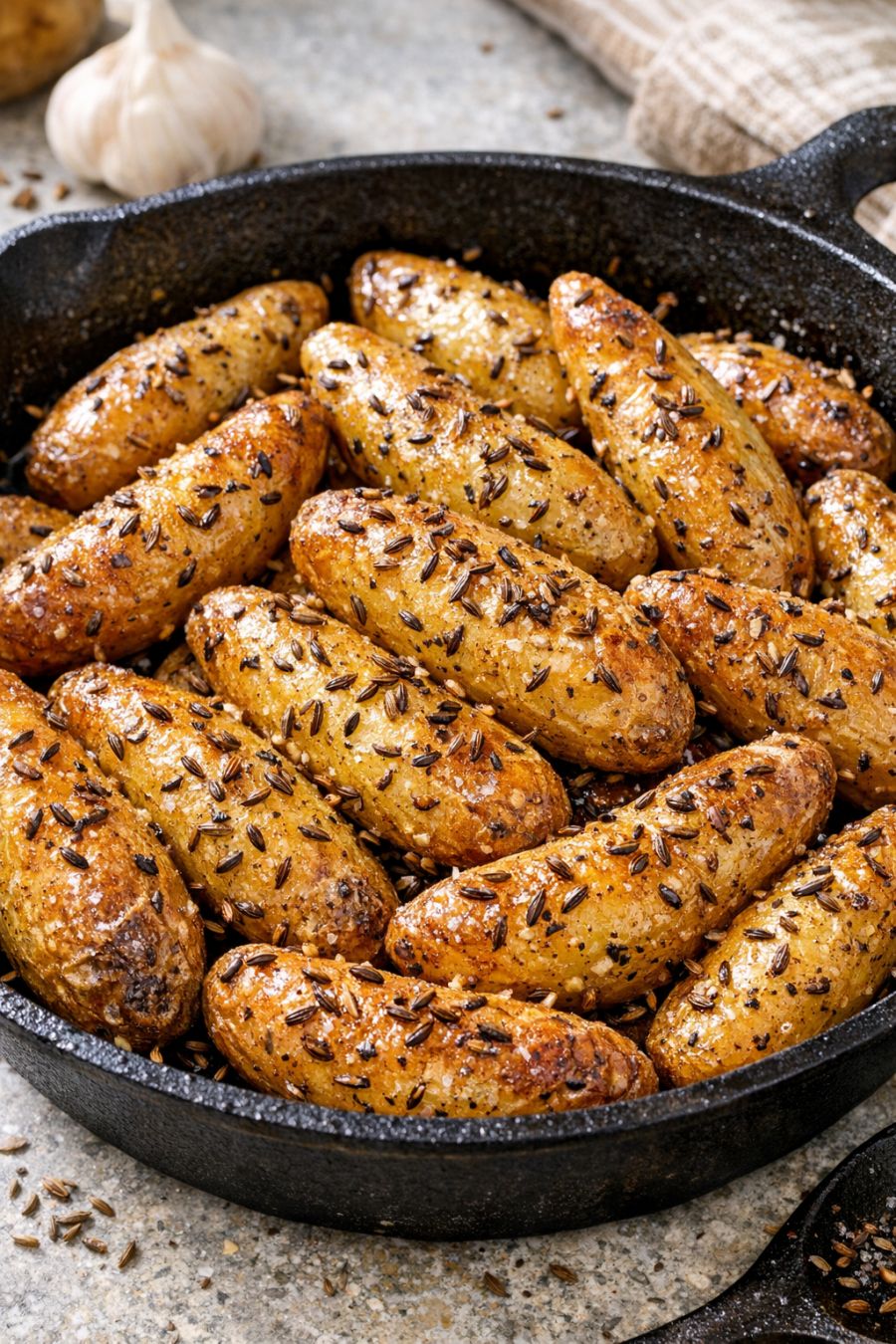
This is my stripped-down, weeknight-friendly version of an old Amish-style potato side: fingerling potatoes baked in a cast iron skillet with nothing more than caraway seeds and a good glug of oil. The caraway brings that warm, slightly nutty, almost rye-bread aroma that feels right at home in the Midwest, where hearty, simple sides still hold their own on the table. Everything happens in one pan: you toss the raw cubed fingerlings with oil, sprinkle generously with caraway, and slide the skillet into a hot oven until the edges go crisp and the centers turn creamy. It’s the kind of rustic dish that mysteriously vanishes before anything else on the plate.
Serve these caraway potatoes alongside roasted chicken, pork chops, or grilled sausages—anything that appreciates a sturdy, flavorful side. They’re also excellent with pan-seared fish and a simple green salad dressed with a sharp vinaigrette. For brunch, pair them with scrambled or fried eggs and a few slices of smoked salmon or bacon. A dollop of sour cream or plain yogurt on the side, plus a sprinkle of chopped fresh herbs, turns them into a satisfying small plate with a glass of crisp white wine or a light beer.
Oven-Baked Amish Caraway Fingerling Potatoes
Servings: 4
Ingredients
2 pounds fingerling potatoes, scrubbed and cut into 1/2-inch cubes
3 tablespoons neutral oil or light olive oil
1 1/2 teaspoons whole caraway seeds
1 teaspoon kosher salt, plus more to taste
1/4 teaspoon freshly ground black pepper (optional)
Directions
Preheat your oven to 425°F (220°C). Place a 10- to 12-inch cast iron skillet on the middle rack while the oven heats so the pan gets hot.
While the skillet heats, scrub the fingerling potatoes and pat them dry. Cut them into roughly 1/2-inch cubes so they cook evenly. Dry potatoes will brown better in the oven.
Carefully remove the hot cast iron skillet from the oven and set it on a heatproof surface. Add the oil to the skillet and tilt it gently so the bottom is evenly coated.
Add the cubed fingerling potatoes directly into the oiled skillet. Sprinkle the kosher salt and black pepper (if using) over the potatoes, then toss gently with a heatproof spatula or spoon to coat them evenly in the hot oil.
Sprinkle the whole caraway seeds evenly over the surface of the raw, oiled potatoes, letting some seeds fall into the nooks and crannies. You can lightly toss once more, or leave most of the seeds resting on top for extra toasty flavor.
Spread the potatoes into an even layer in the skillet so they roast rather than steam. Return the skillet to the oven.
Roast for 20 minutes, then carefully stir and flip the potatoes so new sides are in contact with the skillet and exposed to the heat. This helps them brown more evenly.
Continue roasting for another 10 to 15 minutes, or until the potatoes are deeply golden in spots, crisp on the edges, and tender when pierced with a fork. Total time will depend on your oven and the exact size of the cubes.
Taste and adjust seasoning with a bit more salt if needed. Serve the potatoes hot, straight from the cast iron skillet, being mindful that the handle will remain very hot.
Variations & Tips
For a richer finish, toss the hot, roasted potatoes with a small knob of butter just before serving; it will melt into the caraway and create a glossy coating. If you enjoy more pronounced caraway flavor, lightly crush some of the seeds with a mortar and pestle before sprinkling them over the potatoes so they release more aroma. You can also add a scattering of chopped fresh parsley, chives, or dill after baking for a bit of color and freshness without changing the core three-ingredient character of the dish. To lean into Eastern European flavors, serve the potatoes with a spoonful of sour cream and a few thinly sliced scallions on top. Food-safety and handling tips: Always preheat the oven fully before roasting so the potatoes cook through safely and evenly. Use a dry kitchen towel or oven mitts when handling the cast iron—its handle stays hot long after leaving the oven. Scrub the potatoes well, especially if you’re leaving the skins on, to remove any grit. Leftover potatoes should be cooled quickly, then refrigerated within 2 hours in a shallow container; reheat thoroughly in a hot skillet or oven until steaming before serving.
