
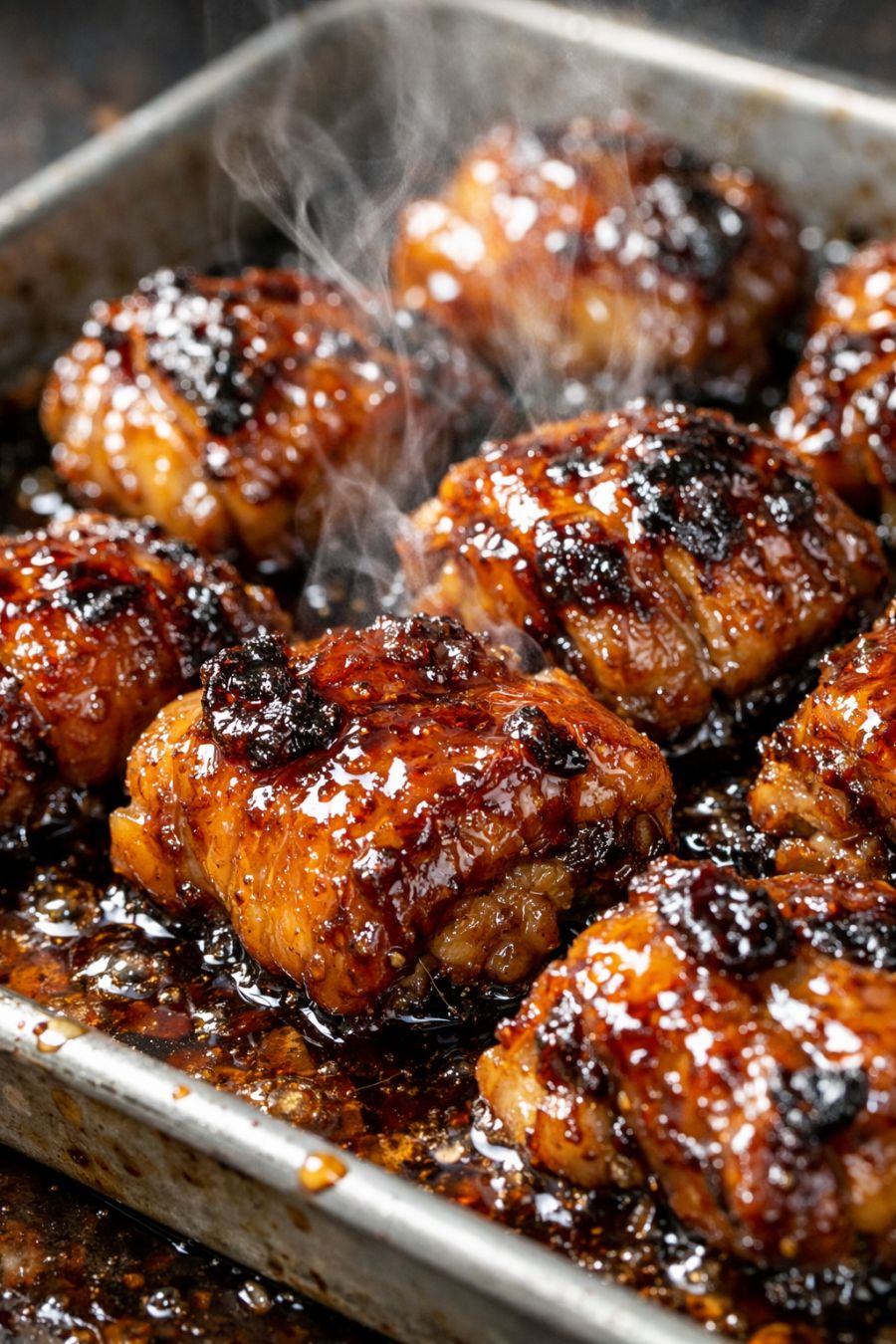
This is my minimalist, mid-April comfort dinner: three ingredients, one pan, and the kind of glistening, gelatinous roasted morsels that look like they came out of a restaurant kitchen. We’re essentially slow-roasting bone-in, skin-on chicken thighs in a dark, slightly sweet soy glaze until the fat renders, the collagen turns silky, and the sauce reduces to a sticky amber sheen. It borrows loosely from Japanese teriyaki and Chinese-style soy-braised chicken, but streamlined for a weeknight: no marinating, no searing, no fuss. I make this when I want dinner handled hours ahead of time—everything goes into a metal baking pan, the oven does the work, and I get to ignore it until the house smells like pure comfort.
Serve the chicken thighs straight from the metal baking sheet, spooning the dark, glossy pan sauce over each piece. I like them over plain steamed rice or buttery mashed potatoes to soak up every drop of rendered fat and glaze. A quick side of roasted carrots, sautéed green beans, or a simple green salad with a sharp vinaigrette balances the richness. If you’re leaning casual, tuck the morsels into warm rice bowls with sliced cucumbers and scallions; for something a bit more special, pair with a crisp white wine or chilled lager and a side of garlicky sautéed greens.
3-Ingredient Glazed Roasted Chicken Thighs
Servings: 4
Ingredients
8 bone-in, skin-on chicken thighs (about 3 pounds total)
1/2 cup dark soy sauce (or regular soy sauce if that’s what you have)
1/3 cup dark brown sugar, packed
Directions
Heat your oven to 325°F (165°C). Choose a metal rimmed baking sheet or shallow roasting pan that holds the chicken in a single snug layer; metal helps the sauce reduce and the thighs roast to those glistening, gelatinous morsels.
Pat the chicken thighs dry with paper towels. This helps the skin render and brown instead of steaming. Arrange them skin-side up on the baking sheet, leaving just a little space between each piece.
In a small bowl, whisk together the dark soy sauce and dark brown sugar until the sugar is mostly dissolved and you have a glossy, dark amber liquid. It will be fairly thin at this stage; the oven will thicken it.
Pour the soy-sugar mixture evenly over and around the chicken thighs, making sure some of the liquid pools on the pan itself. Tilt the pan gently if needed so the sauce runs underneath the pieces; this encourages that gelatinous, sticky finish as it reduces.
Transfer the pan to the oven and roast, uncovered, for 1 hour. During this time the fat will slowly render, the collagen in the skin and joints will soften, and the sauce will begin to darken and thicken.
After 1 hour, baste the chicken by spooning the pan juices and sauce over the tops of the thighs. Return the pan to the oven and continue roasting for another 30 to 45 minutes, basting once or twice more. You are looking for the chicken to be deeply browned, the skin lacquered, and the sauce reduced to a thick, glossy, dark amber glaze with some bubbling fat around the edges.
Start checking doneness at the 1 hour 15 minute mark: the internal temperature at the thickest part of the thigh (not touching bone) should be at least 175°F (80°C) for that tender, almost fall-apart texture, and the juices should run clear. The extra time beyond the usual 165°F helps the connective tissue break down into that luscious, gelatinous mouthfeel.
When the chicken is done, remove the pan from the oven and let the thighs rest for 5 to 10 minutes on the sheet. As they sit, the bubbling subsides and the glaze thickens slightly more, clinging to each morsel. Spoon the glossy sauce and rendered fat from the pan over the chicken just before serving for that shiny, macro-photo finish.
Serve the chicken directly from the metal baking sheet or transfer to a warm platter, drizzling with any remaining dark, sticky juices from the pan.
Variations & Tips
To add aromatics without complicating the ingredient list too much, you can swap the dark brown sugar for a flavored sugar you already have (like a vanilla sugar) or tuck a few pantry aromatics under the chicken if you don’t mind stretching the 3-ingredient spirit: smashed garlic cloves, sliced onion, or a knob of ginger all play beautifully with soy and sugar. For a slightly smokier profile, use a mix of dark soy sauce and regular soy, or line the pan with a few slices of bacon under the chicken, letting them baste the thighs in extra smoky fat (just note that this adds salt, so you may want to reduce the soy slightly). If you prefer a bit of heat, finish the roasted chicken with a sprinkle of crushed red pepper or a drizzle of chili oil at the table so the base recipe stays purely three ingredients. You can also adapt this technique to bone-in, skin-on drumsticks or whole leg quarters; just keep them in a single layer and extend roasting time as needed until the meat is very tender and the glaze is thick and shiny. For food safety, always cook dark meat chicken to at least 165°F (74°C), though for this style I recommend 175–185°F (80–85°C) for optimal texture. Use a clean instant-read thermometer and avoid touching bone for an accurate reading. Do not leave raw chicken at room temperature for more than 1–2 hours total, and wash hands, cutting boards, and knives thoroughly after handling raw poultry to avoid cross-contamination. If you plan to cool and reheat, chill leftovers within 2 hours of cooking, store in an airtight container in the refrigerator for up to 3–4 days, and reheat until piping hot, with the sauce visibly bubbling again.
