
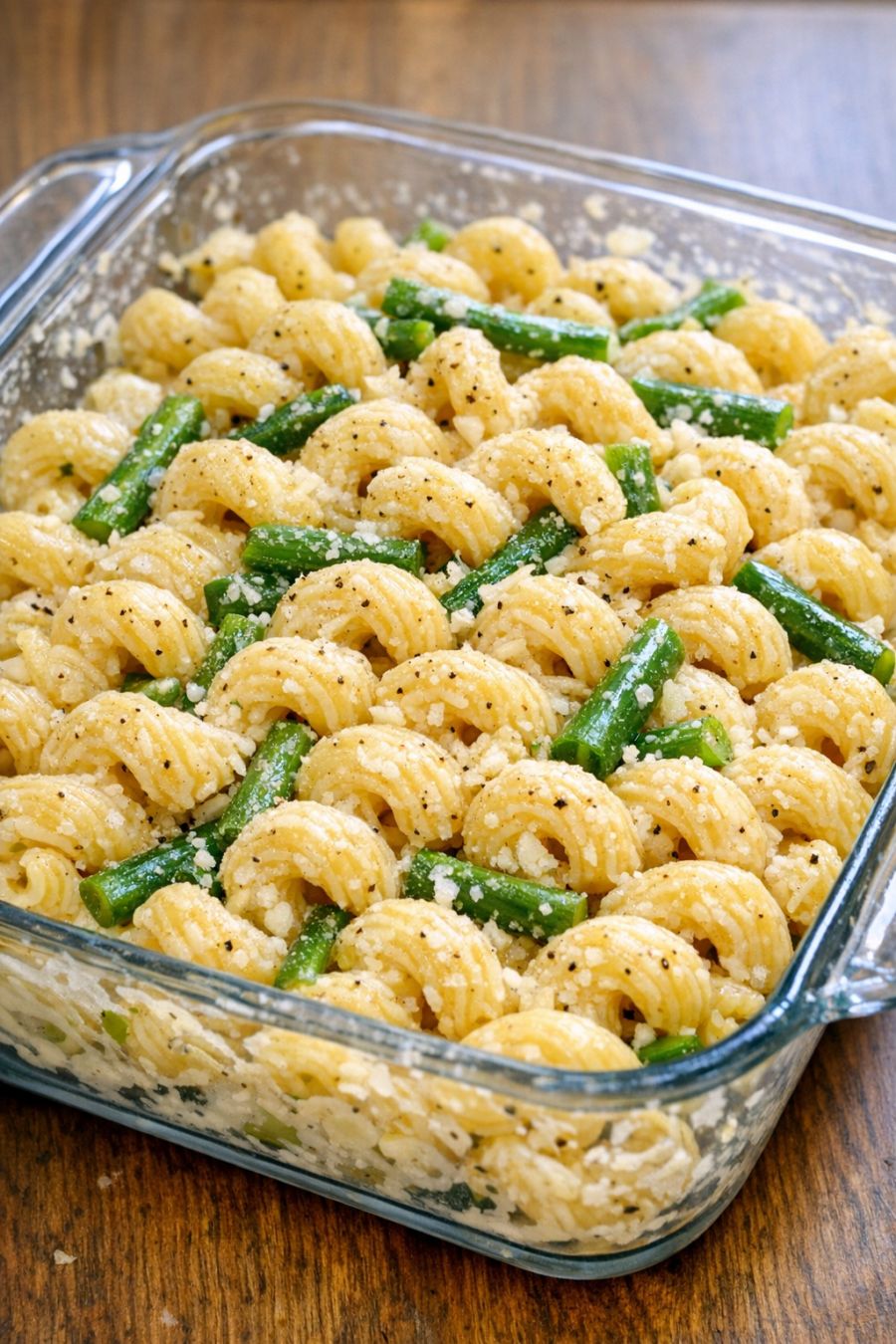
This oven-baked 4-ingredient garlic scape pasta is one of those throw-it-in-a-dish weeknight dinners that somehow tastes like you put in way more effort than you did. I started making it during peak farmers’ market season, when garlic scapes are everywhere and I needed a way to use a big bunch fast. Everything—chopped raw garlic scapes, raw dry cavatappi, broth, and cream—gets mixed together right in a glass casserole dish, then baked until the pasta is tender and the sauce is silky. It’s cozy, simple, and somehow always disappears first at the table.
I like to serve this garlic scape pasta with a big green salad tossed in a lemony vinaigrette to balance the richness, plus some roasted or steamed vegetables if I have them—broccoli, asparagus, or green beans all work. A slice of crusty bread is great for scooping up any extra sauce, and if you’re feeding a hungry crowd, you can add a simple protein on the side like grilled chicken, baked salmon, or sautéed shrimp. A crisp white wine or sparkling water with lemon pairs nicely with the garlicky, creamy flavors.
Oven-Baked 4-Ingredient Garlic Scape Cavatappi
Servings: 4
Ingredients
12 oz dry cavatappi pasta
1 1/2 cups finely chopped fresh garlic scapes (about 6–8 scapes)
3 cups low-sodium vegetable or chicken broth
1 cup heavy cream
Directions
Preheat your oven to 400°F (200°C). Place a 9x13-inch glass casserole dish on the counter so it’s ready to mix everything right in the dish.
Add the dry cavatappi pasta to the empty glass casserole dish, spreading it out in an even layer.
Sprinkle the finely chopped raw garlic scapes evenly over the dry cavatappi. Use your hands to gently toss and mix the scapes amidst the pasta so they’re well distributed throughout. This is the moment that should look like a close-up process shot: hands mixing chopped raw garlic scapes amidst raw dry cavatappi in the glass dish.
Pour the broth evenly over the pasta and garlic scapes, then pour in the heavy cream. Use a spoon or your hands to stir everything together right in the glass casserole dish, making sure all the pasta is submerged or at least moistened.
Cover the glass casserole dish tightly with aluminum foil to trap in the steam, which will help the raw dry cavatappi cook through in the oven.
Bake the covered dish for 30 minutes. Carefully remove the foil (watch out for hot steam), then stir the pasta well, scraping the bottom of the dish to release any pieces that may be sticking.
Return the dish to the oven, uncovered, and bake for another 10–15 minutes, stirring once more halfway through, until the cavatappi is tender and the sauce has thickened slightly. If the pasta looks dry before it’s fully cooked, add a splash more broth and stir.
Once the pasta is al dente and the garlic scapes are tender, remove the dish from the oven. Let it rest for 5–10 minutes; the sauce will continue to thicken as it cools slightly. Taste and add a pinch of salt at the table if your broth was very low-sodium. Serve warm straight from the glass casserole dish.
Variations & Tips
If you want to bulk this up a bit while keeping the core 4-ingredient idea, you can sprinkle grated Parmesan or pecorino over individual servings at the table, or add a squeeze of lemon juice for brightness. For a little heat, a pinch of red pepper flakes on top after baking works well. To make it feel more like a complete meal, you can stir in cooked shredded chicken, cooked Italian sausage, or a can of drained white beans after baking, then let the dish rest for a few extra minutes to warm everything through. If you prefer a lighter version, swap half of the heavy cream for more broth; the sauce will be a bit thinner but still comforting. For meal prep, you can chop the garlic scapes up to 2 days ahead and store them in an airtight container in the fridge so all you have to do on a busy night is mix everything in the glass casserole and bake. Food safety tips: Make sure your glass casserole dish is labeled oven-safe and avoid placing a hot glass dish directly on a very cold or wet surface to prevent cracking. Keep the pasta refrigerated within 2 hours of baking and use leftovers within 3–4 days, reheating until steaming hot before eating. Because this recipe uses dairy, do not leave the finished dish out at room temperature for extended periods.
