
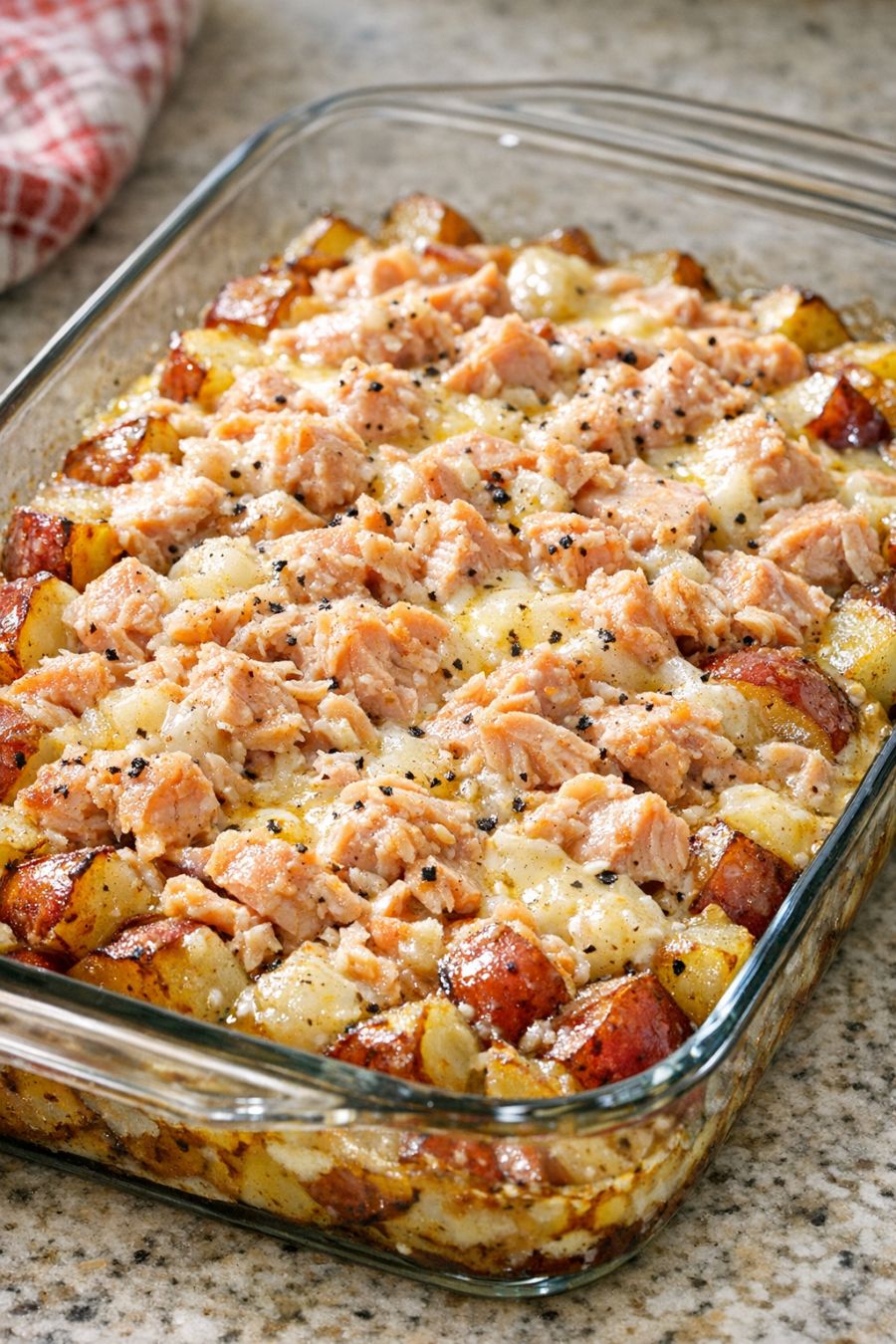
This four-ingredient Amish-style salmon potato bake is the kind of hearty, no-fuss supper that feels like it came from a church basement potluck—humble ingredients, big comfort. The method is as simple as it sounds: scatter flaked canned salmon over raw diced red potatoes in a glass baking dish, add just two more pantry staples, and let the oven do the work. It’s rooted in the thrifty, resourceful cooking of Amish and Midwestern farm kitchens, where canned fish and potatoes were everyday staples that could stretch to feed a crowd.
Serve this salmon potato bake straight from the glass dish with a side of steamed green beans or peas and a crisp green salad dressed with a tangy vinaigrette to balance the richness. Buttered rye bread or a simple dinner roll is perfect for soaking up any juices. A squeeze of fresh lemon over each portion brightens the flavors, and if you enjoy condiments, a spoonful of dill pickle relish or a dollop of tartar sauce on the side fits the old-fashioned, Midwestern feel.
4-Ingredient Amish Salmon Potato Bake
Servings: 4
Ingredients
2 tablespoons unsalted butter, softened (plus a bit more for greasing the dish)
2 pounds red potatoes, scrubbed and diced into 1/2-inch cubes
2 cans (14.75 ounces each) salmon, drained and flaked, skin and bones removed if desired
1 cup whole milk
Directions
Preheat your oven to 375°F (190°C). Lightly grease a 9x13-inch glass baking dish with a thin layer of softened butter to keep the potatoes from sticking and to add flavor.
Dice the scrubbed red potatoes into roughly 1/2-inch cubes so they cook evenly. Pat them dry with a clean towel to remove excess surface moisture, which helps them roast and brown rather than steam.
Spread the raw diced red potatoes evenly in the bottom of the prepared glass baking dish, making sure they’re in a single, fairly even layer for consistent cooking.
Open the canned salmon, drain well, and use a fork or clean hands to break it into bite-sized flakes, removing any large pieces of skin or soft bones if you prefer a smoother texture. (The bones are edible and rich in calcium, so you can leave them in if you like.)
Scatter the flaked canned salmon evenly over the raw diced potatoes in the glass baking dish, making sure every area gets a bit of fish. This layering lets the salmon juices drip down and season the potatoes as they bake.
Dot the top of the salmon and potatoes with the remaining softened butter, breaking it into small pieces and dispersing them across the surface. This helps the top brown and adds richness to the dish.
Pour the whole milk slowly and evenly over the salmon and potatoes, tilting the dish slightly if needed so the milk seeps down through the layers. The milk will create a simple, creamy broth as it bakes, keeping everything moist.
Cover the glass baking dish tightly with foil to trap steam and help the raw potatoes cook through. Place the dish on the middle rack of the preheated oven.
Bake covered for 45 minutes, then carefully remove the foil (watch for hot steam). Continue baking uncovered for an additional 20–25 minutes, or until the potatoes are tender when pierced with a fork and the top has light golden spots.
Remove the dish from the oven and let it rest for 5–10 minutes before serving. This short rest allows the hot milk and juices to settle slightly so the bake is easier to scoop and the flavors meld. Serve warm, spooning down to the bottom so each portion includes both salmon and potatoes.
Variations & Tips
For extra flavor while keeping the four-ingredient spirit, you can choose slightly salted butter instead of unsalted and season the potatoes lightly with kosher salt and black pepper before baking (this technically adds ingredients, but many Amish-style cooks consider basic seasonings a given). If you’d like more color and sweetness, stir in 1 cup of finely diced onion or carrot with the potatoes—these will soften as the dish bakes. To lean into a creamier texture, substitute half-and-half for part of the milk or stir in 1/2 cup of sour cream with the milk before pouring it over the dish.
If you prefer a more gratin-like top, sprinkle up to 1 cup of shredded mild cheese (such as Colby, mild cheddar, or farmer’s cheese) over the salmon before baking uncovered for the last 20 minutes. For a subtle herb note that still feels traditional, add a pinch of dried dill or parsley to the milk.
Food safety tips: Always use canned salmon that is within its expiration date and whose cans are not bulging, rusted, or badly dented. Once opened, do not leave the salmon at room temperature for more than 2 hours; assemble the casserole and get it into the oven promptly. Bake until the center of the dish is piping hot and the potatoes are fully tender; while canned salmon is already cooked, the potatoes need sufficient time and temperature to be safe and palatable. Refrigerate leftovers within 2 hours of baking in a shallow container, and reheat thoroughly before eating, using within 3–4 days. Because this recipe uses a glass baking dish, avoid placing the hot dish directly on a very cold surface or under cold water to prevent thermal shock and potential breakage.
