
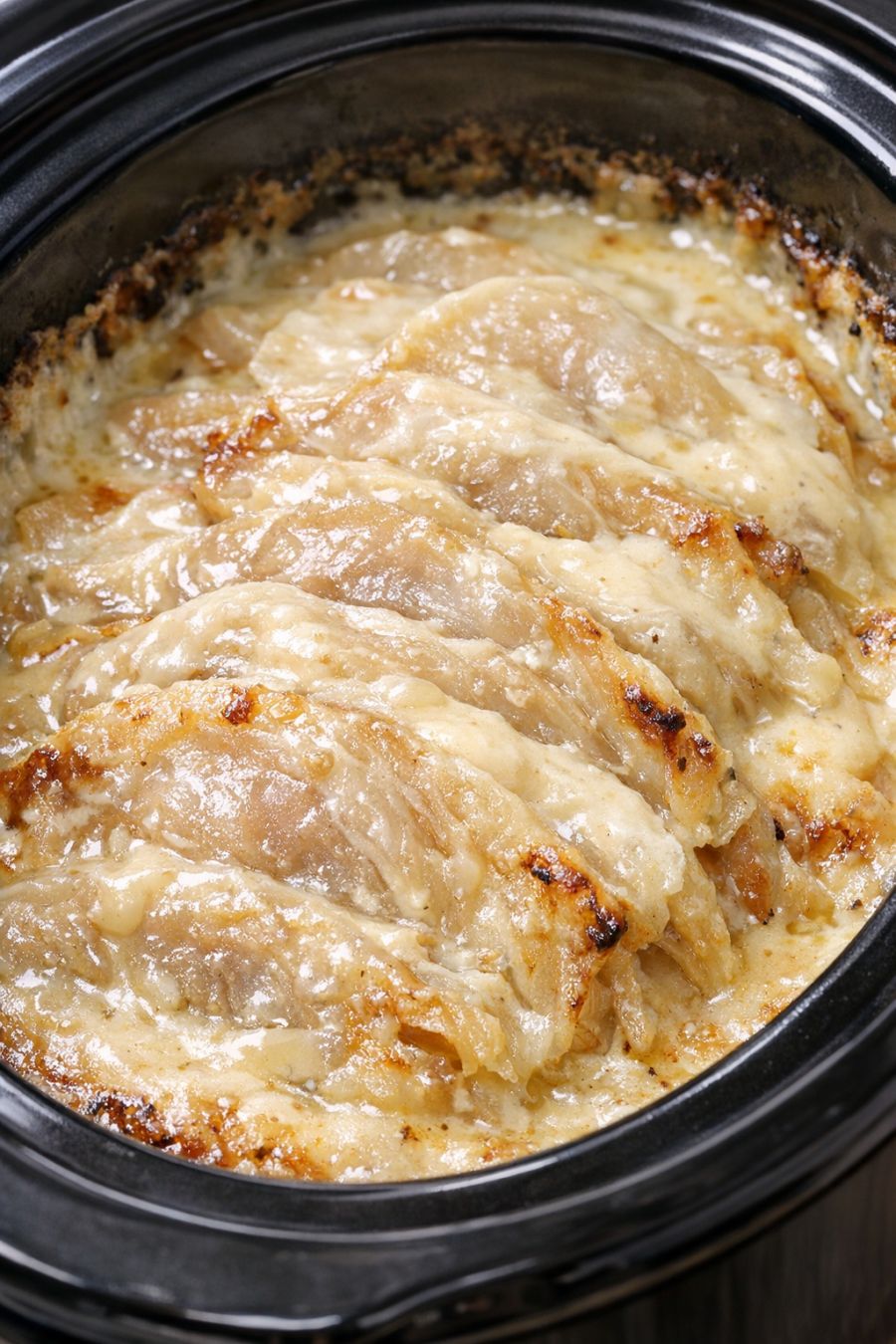
This slow cooker take on Amish quilting bee potatoes turns a pantry staple—dehydrated potato slices—into a springtime comfort dish with almost no effort. Traditional quilting bees were all about community and big pans of creamy, oven-baked potatoes that could sit and stay warm while everyone worked. Here, we lean on the slow cooker and just four core ingredients so you can set it up at lunchtime and come back to soft, umami-rich layers bathed in a velvety ivory sauce by late afternoon. It is my absolute favorite choice for busy spring days when I want something cozy and hands-off, but still rooted in that old-fashioned Midwestern church-basement style cooking.
Serve these potatoes as a creamy side with simple roasted or grilled chicken, ham, or pork chops—anything that benefits from a rich, starchy companion. For a lighter spring plate, pair them with steamed green beans or asparagus and a crisp salad with a tangy vinaigrette to cut through the richness. They also sit beautifully on a potluck table next to baked beans and a vegetable casserole, and leftovers reheat well alongside eggs for a hearty brunch.
Slow Cooker Amish Quilting Bee Potatoes (4-Ingredient, Using Dehydrated Slices)
Servings: 6
Ingredients
4 cups dehydrated potato slices (about 8 ounces dry)
3 cups low-sodium chicken broth (or vegetable broth for meatless)
1 1/2 cups heavy cream
1 1/2 teaspoons kosher salt, plus more to taste
Directions
Lightly grease a 4- to 6-quart slow cooker crock with a thin film of neutral oil or nonstick spray to help prevent sticking and scorching around the edges.
Spread half of the dehydrated potato slices evenly in the bottom of the slow cooker, forming a loose, even layer without packing them down.
In a large measuring cup or bowl, whisk together the chicken broth, heavy cream, and kosher salt until the salt is mostly dissolved and the liquids look uniform.
Pour about half of the cream-and-broth mixture over the potatoes in the slow cooker, making sure the liquid seeps down through the slices.
Add the remaining dehydrated potato slices in an even layer on top, then pour the rest of the cream-and-broth mixture over them. Gently press down with the back of a spoon so most of the potatoes are submerged; a few poking up at the surface is fine and will brown slightly.
Cover the slow cooker with the lid and cook on HIGH for 3 1/2 to 4 hours, or on LOW for 6 to 7 hours, until the potatoes are fully tender and easily pierced with a spoon or butter knife. The liquid will thicken into a velvety, ivory-colored sauce and the edges around the crock may turn lightly golden-brown.
Once the potatoes are tender and the sauce has thickened, turn the slow cooker to WARM. Let the potatoes sit with the lid slightly ajar for 10 to 15 minutes to allow the sauce to settle and thicken a bit more.
Taste and adjust seasoning with a pinch more salt if needed. Spoon directly from the slow cooker to serve, making sure to dig down so each serving includes multiple layers of potatoes and plenty of creamy sauce.
Variations & Tips
To keep the spirit of the headline, try to keep any additions modest so the recipe stays close to four core ingredients. For gentle onion flavor without chopping, add 1 to 2 teaspoons of dried minced onion or onion powder to the cream-and-broth mixture. For a subtle garlic note, whisk in 1/2 teaspoon garlic powder. If you prefer a vegetarian version, use vegetable broth and check the label on your dehydrated potatoes to be sure they contain only potatoes and seasonings. For a richer, almost gratin-like finish, stir in 1/2 cup finely grated hard cheese (such as Parmesan or a sharp aged cheddar) during the last 30 minutes of cooking so it melts into the sauce without breaking. If your slow cooker runs hot and you notice heavy browning at the borders before the potatoes are tender, switch from HIGH to LOW and give the crock a gentle stir, then continue cooking. Food-safety-wise, keep the lid on during cooking as much as possible so the temperature stays in a safe zone; avoid starting with frozen broth or cream, as this can slow the climb to a safe cooking temperature. Once cooked, do not leave the potatoes on WARM for more than 2 hours; cool leftovers promptly, store them in a shallow container in the refrigerator, and reheat thoroughly until steaming before serving.
