
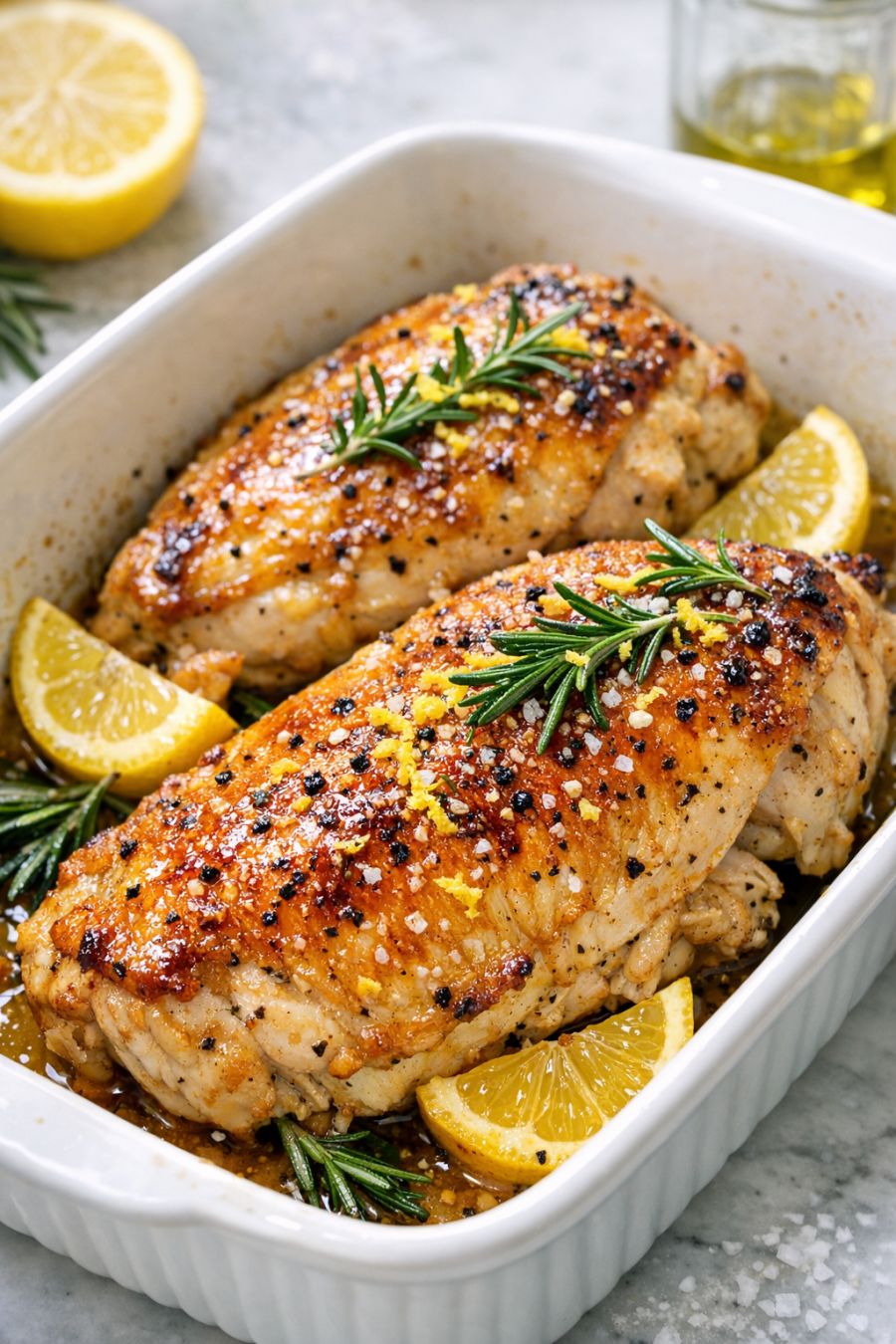
This 4-ingredient oven chicken using raw bone-in chicken breasts is the sort of no-fuss, high-reward dish I lean on during busy weeks. Everything happens right in a simple white ceramic baking dish: you toss in the raw chicken, drizzle on olive oil, add a generous sprinkle of seasoning, and finish with fresh lemon for brightness. Bone-in breasts stay juicier than boneless, and roasting them uncovered lets the skin turn beautifully golden. While roasted chicken is timeless and found in nearly every cuisine, this pared-down version is geared toward the home cook who wants a hands-off, weeknight-friendly meal that still tastes special enough that your family will ask for it again and again.
Serve these lemon-herb roasted bone-in chicken breasts with simple sides that soak up the flavorful pan juices: roasted potatoes or a buttered rice pilaf, and a green vegetable like steamed green beans, roasted broccoli, or a crisp salad with a tangy vinaigrette. A crusty baguette is lovely for sopping up the juices in the bottom of the baking dish. If you enjoy wine, a light Chardonnay or a dry rosé pairs nicely with the citrus and herbs, while sparkling water with a lemon slice keeps the meal refreshingly simple.
4-Ingredient Oven Chicken (Bone-In Breasts)
Servings: 4
Ingredients
4 bone-in, skin-on chicken breasts (about 2 1/2 to 3 pounds total)
2 tablespoons extra-virgin olive oil
1 1/2 teaspoons kosher salt (or 1 teaspoon fine sea salt)
1 large lemon, zested and juiced (about 2 tablespoons juice)
Directions
Preheat your oven to 400°F (200°C). Place a white ceramic baking dish (large enough to hold the chicken breasts in a single layer) on the counter so it’s ready for tossing everything together.
Pat the raw bone-in chicken breasts dry with paper towels. This helps the skin roast instead of steam and encourages better browning.
Place the chicken breasts directly into the ceramic baking dish, skin side up. Drizzle the olive oil evenly over the chicken, then sprinkle the kosher salt over the tops and sides.
Zest the lemon directly over the chicken so the fragrant oils fall into the dish. Then cut the lemon in half and squeeze the juice over the chicken, catching any seeds with your hand or a small strainer. Toss the chicken right in the baking dish, turning each piece to coat well with the oil, salt, lemon zest, and juice, then return them skin side up and snug in a single layer.
Slide the baking dish into the preheated oven and roast, uncovered, for 35 to 45 minutes, depending on the size of the chicken breasts. The chicken is done when the skin is golden, the juices run clear, and an instant-read thermometer inserted into the thickest part of the breast (without touching bone) registers 165°F (74°C).
Once cooked, remove the baking dish from the oven and let the chicken rest in the dish for 5 to 10 minutes. This allows the juices to redistribute and the pan juices to slightly thicken. Spoon some of the lemony juices from the bottom of the dish over the chicken just before serving, and serve directly from the ceramic baking dish.
Variations & Tips
You can keep the 4-ingredient framework and still play a bit within it. For a more herb-forward version, swap half of the salt for a seasoned salt or a favorite poultry seasoning blend (just be sure it includes salt so you don’t need extra). If you prefer a touch of heat, use a lemon-pepper seasoning in place of plain salt and add a few grinds of black pepper, keeping the total count at four ingredients. For a slightly richer profile, replace the olive oil with melted unsalted butter; the butter will brown around the edges of the dish and deepen the flavor of the pan juices. If you have extra lemons, tuck a few thin slices around the chicken before roasting for a more pronounced citrus aroma.
Food safety tips: Always start with fully thawed chicken; roasting from frozen leads to uneven cooking and potential food safety issues. Keep raw chicken and its juices away from ready-to-eat foods, and wash your hands, cutting boards, and any utensils that have touched the raw chicken with hot, soapy water. Use an instant-read thermometer to confirm the internal temperature has reached at least 165°F (74°C) in the thickest part of each breast without touching the bone. Do not rely solely on color of juices. Once cooked, avoid leaving the chicken at room temperature for more than 2 hours (or 1 hour if your kitchen is very warm). Leftovers should be cooled promptly and stored in the refrigerator in a covered container for up to 3 to 4 days, and reheated to 165°F (74°C) before eating.
