
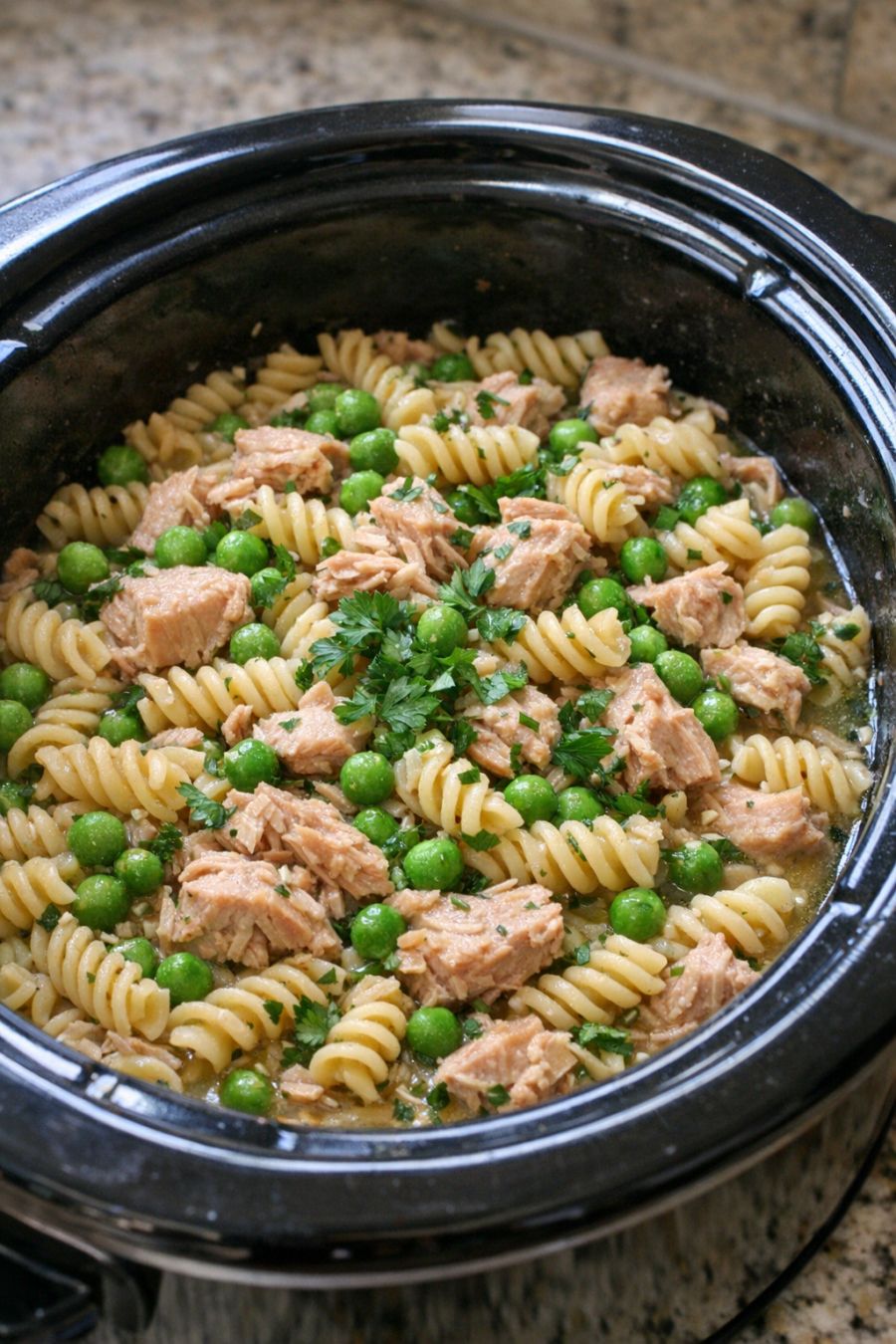
This 4-ingredient slow cooker springtime tuna pasta is the kind of thrifty, no-fuss supper that would have fit right into my mother’s farmhouse kitchen. We start by tossing undrained canned tuna straight into the slow cooker, then add just three more everyday items to coax out a creamy, comforting pasta that tastes like it took all afternoon—because it did, but the slow cooker did the work. It’s a gentle nod to the tuna casseroles that showed up at every church basement potluck in the Midwest, brightened up for spring with peas and a lighter touch. Perfect for busy days when you still want something that feels like home.
Serve this tuna pasta straight from the slow cooker into warm bowls, with a simple green salad or sliced garden tomatoes on the side if they’re in season. A basket of buttered dinner rolls, garlic toast, or even just plain crackers fits right in with this kind of cozy dish. A sprinkle of extra black pepper or a little grated Parmesan at the table lets everyone dress up their own bowl. For dessert, something simple and old-fashioned—like fruit salad or a pan of brownies—rounds out the meal without much extra effort.
4-Ingredient Slow Cooker Springtime Tuna Pasta
Servings: 4
Ingredients
2 (5-ounce) cans tuna in water, undrained
3 cups low-sodium chicken broth
12 ounces dry short pasta (such as rotini, penne, or shells)
1 1/2 cups frozen peas (no need to thaw)
Directions
Set a 4- to 6-quart slow cooker on LOW. Open the cans of tuna and pour them, undrained, into the bottom of the slow cooker. Use a fork to gently break the tuna into chunky flakes, spreading it in an even layer across the bottom. The juices from the tuna will help flavor and moisten the pasta as it cooks.
Pour the chicken broth evenly over the tuna. Do not stir too much; just make sure the tuna is mostly covered by the broth so it doesn’t dry out around the edges.
Add the dry pasta to the slow cooker, spreading it out so it’s mostly submerged in the broth. Gently press the pasta down with the back of a spoon to help it sink into the liquid. It’s fine if a few pieces stick up; they’ll soften as the pasta cooks and you stir it later.
Cover the slow cooker and cook on HIGH for 1 1/2 to 2 hours, or on LOW for about 3 hours, until the pasta is just tender. About halfway through the cooking time, remove the lid and give everything a gentle stir, making sure to scrape along the bottom so no pasta sticks. Replace the lid quickly so you don’t lose too much heat.
Once the pasta is nearly tender (it should still have a slight bite in the center), stir in the frozen peas. They will drop the temperature a bit, so stir well to distribute them and to loosen any pasta that may have settled on the bottom.
Cover again and cook on HIGH for 10 to 15 minutes, just until the peas are bright green and tender and the pasta is fully cooked. The broth should be mostly absorbed, leaving a moist, saucy mixture. If it seems too brothy, leave the lid off for 5 to 10 minutes on WARM or LOW and stir occasionally to let a little steam escape.
Taste and adjust the seasoning with a pinch of salt and freshly ground black pepper if you like. Give the pasta a final stir to distribute the tuna and peas evenly, then serve hot straight from the slow cooker.
Variations & Tips
For a creamier version, stir in 1/2 to 3/4 cup of sour cream, plain Greek yogurt, or a small splash of heavy cream right at the end of cooking, after the peas have warmed through. If you enjoy a bit of richness and tang, you can also melt in 1/2 to 1 cup of shredded cheddar or Parmesan cheese as a fifth ingredient, though that moves beyond the basic 4-ingredient idea. To add more spring vegetables, fold in a handful of fresh spinach or chopped asparagus tips along with the peas and cook just until they’re tender. You can swap in vegetable broth for chicken broth if you prefer, or use whole wheat pasta for a heartier, nuttier bite—just check a little earlier, as different shapes and brands can cook at slightly different rates. If your slow cooker tends to run hot, start checking the pasta 15 to 20 minutes earlier than the times listed so it doesn’t overcook or turn mushy; adding an extra splash of broth or water can rescue a batch that seems too thick or dry. For food safety, keep canned tuna stored in a cool pantry and check the expiration date before using. Never leave the finished dish sitting on the WARM setting for more than 2 hours; refrigerate leftovers promptly in shallow containers and use within 3 to 4 days, reheating until steaming hot before serving. If you’re cooking on HIGH, avoid leaving the house for long stretches the first time you try this recipe, so you can learn how quickly your particular slow cooker brings the pasta to tenderness without overcooking.
