
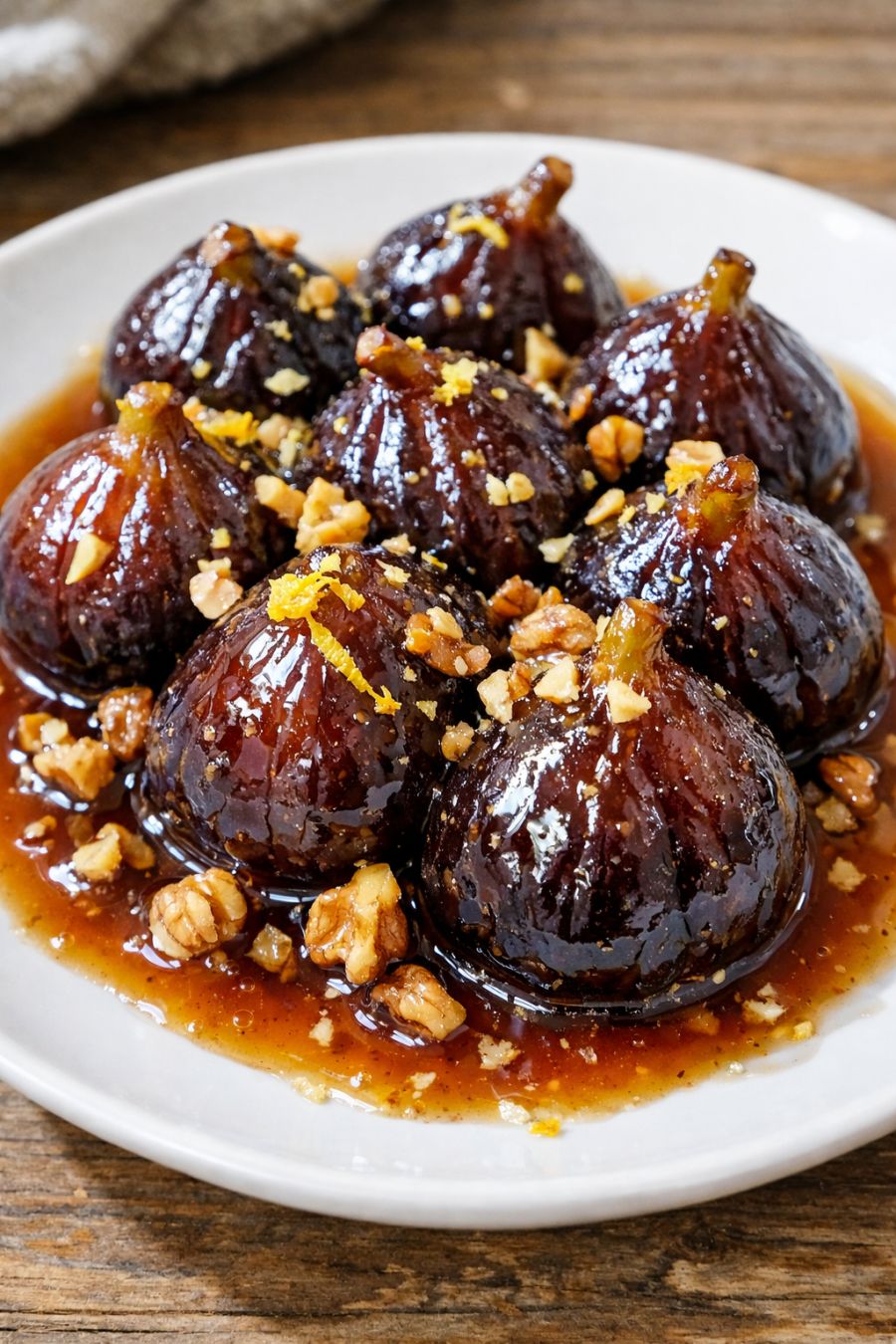
This slow cooker fig dessert is the kind of recipe you pull out on a busy May day when company’s coming and you don’t have time to fuss, but you still want something that feels special and a little old-fashioned. You start by pouring whole, raw, unpeeled figs straight into the crock pot—just like we used to do with orchard fruit when the trees were heavy and the canning jars were already full. With only five more simple “secret” ingredients, the figs turn jammy and tender, swimming in a buttery, caramel-like sauce that tastes like a cross between a cobbler and a bread pudding. It’s a farm-kitchen kind of dessert: humble to look at, but so good your guests will be chasing you down for the recipe.
Serve this warm right out of the slow cooker, spooned into shallow bowls. A scoop of vanilla ice cream, a dollop of lightly sweetened whipped cream, or even a splash of cold heavy cream over the top makes the sauce extra luxurious. It’s lovely with a cup of coffee after Sunday dinner, or a small glass of dessert wine if you’re feeling fancy. A handful of toasted nuts or a crisp butter cookie on the side adds a bit of texture against the soft, saucy figs.
Slow Cooker May Day Figs
Servings: 6
Ingredients
2 pounds whole fresh figs, raw and unpeeled, stems trimmed if long
1 cup packed light brown sugar
1/2 cup unsalted butter, cut into small pieces
1 teaspoon ground cinnamon
1 teaspoon pure vanilla extract
1/4 teaspoon kosher salt
Directions
Place the whole, raw, unpeeled figs in an even layer on the bottom of a 4- to 6-quart slow cooker. The figs should cover the bottom but not be piled too high; a little overlap is fine.
Sprinkle the brown sugar evenly over the figs, letting some fall down between the fruit so it can melt into a syrup.
Dot the figs and sugar with the pieces of butter, scattering them over the top so they melt evenly as the crock pot heats.
Sprinkle the cinnamon and salt over everything, then drizzle the vanilla extract across the top. Do not add water; the figs will release plenty of juice as they cook.
Cover the slow cooker with the lid and cook on LOW for 4 to 5 hours, or until the figs are very soft, collapsing, and surrounded by a thick, glossy sauce. Try not to lift the lid during the first few hours so the heat and steam stay trapped inside.
Once the figs are tender, gently stir them just enough to baste them with the caramel-like sauce, keeping as many figs whole as possible for a pretty presentation.
Turn the slow cooker to WARM and let the dessert sit, covered, for 15 to 20 minutes to let the sauce thicken slightly. Serve the figs warm, spooned into bowls with plenty of sauce over the top.
Variations & Tips
For a deeper flavor, substitute dark brown sugar for light brown sugar, or use half brown sugar and half granulated sugar. A pinch of ground nutmeg or cloves alongside the cinnamon gives a more old-fashioned spice profile, while a teaspoon of grated orange zest stirred in at the end brightens the whole dish. If you enjoy a hint of tang, splash in a tablespoon of lemon juice or balsamic vinegar during the last 30 minutes of cooking to balance the sweetness. For a richer dessert, stir in 2 to 3 tablespoons of heavy cream right before serving to make the sauce extra silky. You can also scatter a handful of chopped toasted walnuts or pecans over each serving for crunch. If you prefer less sugar, reduce the brown sugar to 3/4 cup; the figs will still be sweet and jammy, just not quite as syrupy. For an overnight version, cook on LOW for about 3 hours in the evening, then turn the slow cooker off and let it sit, covered, for up to an hour before refrigerating; gently rewarm on LOW or WARM before serving. Food safety tips: Always start with fresh, ripe figs that are free from mold, off smells, or excessive soft spots. Rinse the figs under cool running water and pat them dry before placing them in the slow cooker, even though you are leaving the skins on. Keep the slow cooker covered while cooking to maintain a safe, even temperature, and do not leave the cooked dessert at room temperature for more than 2 hours. Refrigerate leftovers in a covered container within that time frame and use within 3 to 4 days, reheating only the portion you plan to serve.
