
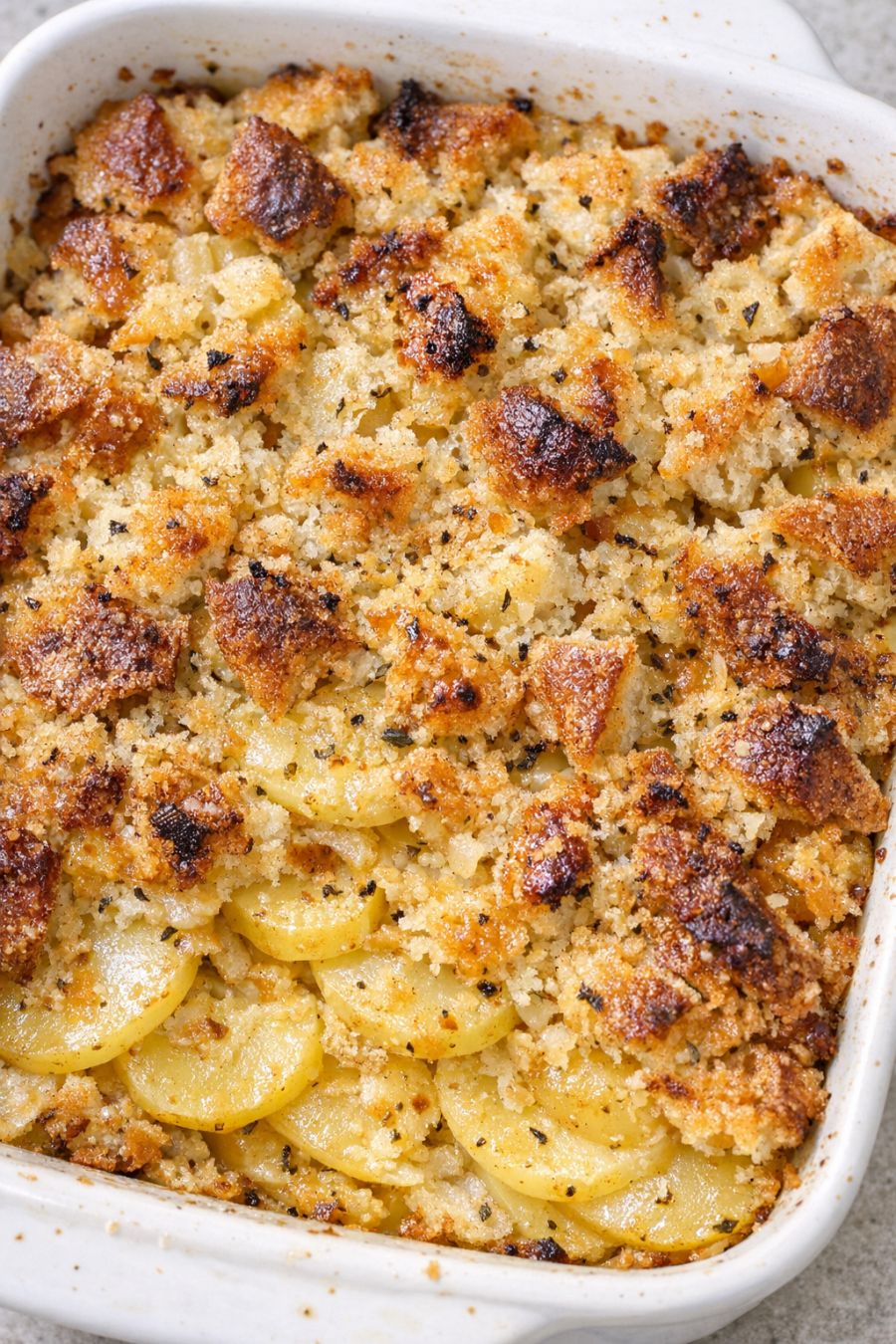
This oven baked 3-ingredient stale bread and potato casserole is exactly the kind of thrifty comfort food my grandma leaned on when I was growing up in the Midwest. It’s built from two staples she always had on hand—potatoes and day-old bread—plus a splash of milk to bind everything together. The result is a simple, golden-topped casserole with tender, creamy potatoes underneath and a crisp, deeply savory bread crust on top. It’s the kind of humble, practical dish that made sense in a frugal kitchen then and still tastes incredible today.
Serve this casserole piping hot with a crisp green salad dressed in a tangy vinaigrette to balance the richness of the potatoes and bread. It also pairs well with simply cooked vegetables—steamed green beans, roasted carrots, or sautéed cabbage all work nicely. For a heartier meal, offer it alongside roasted chicken, baked sausage, or a pan-seared pork chop. Leftovers reheat well in the oven and make a cozy lunch the next day with a fried or poached egg on top.
Oven-Baked 3-Ingredient Stale Bread and Potato Casserole
Servings: 4
Ingredients
1 1/2 pounds russet or Yukon Gold potatoes, peeled and thinly sliced
4 cups stale bread, torn or cut into small cubes
2 cups whole milk
Salt, to taste (optional, not counted as an ingredient)
Freshly ground black pepper, to taste (optional, not counted as an ingredient)
Butter or oil, for greasing the dish (optional, not counted as an ingredient)
Directions
Preheat your oven to 375°F (190°C). Lightly grease a medium-sized white casserole dish (about 8x8 inches or similar) with a little butter or oil to help prevent sticking and encourage browning.
Peel the potatoes and slice them into thin rounds, about 1/8-inch thick. Try to keep the slices even so they cook at the same rate. If you’re slicing ahead of time, you can keep the potatoes in a bowl of cold water to prevent browning, then drain and pat dry before layering.
Spread half of the sliced potatoes in an even layer in the bottom of the casserole dish. Season lightly with salt and pepper if using. The seasoning is optional but helps bring out the natural flavor of the potatoes.
Scatter half of the stale bread cubes over the potato layer. Use bread that is dry and firm rather than soft; this helps it soak up the milk without turning mushy. Press the bread down gently with your hand to nestle it between the potato slices.
Repeat with the remaining potatoes, arranging them in an even layer over the bread. Season lightly again if desired. Top with the remaining stale bread, spreading it out so you have a fairly even surface that will crisp up in the oven.
Pour the milk slowly and evenly over the entire casserole. You want the milk to seep down through the bread and potatoes; gently press the top with the back of a spoon or your hand so everything settles and the liquid is absorbed throughout. The milk should come almost to the top of the layers but not completely submerge the bread.
Let the casserole sit at room temperature for about 10 minutes to allow the bread and potatoes to start absorbing the milk. This short rest helps the interior turn creamy while still allowing the top layer of bread to crisp as it bakes.
Place the casserole dish on the middle rack of the preheated oven. Bake for 40–50 minutes, until the potatoes are tender when pierced with a knife and the top layer of bread is deeply golden and crisp. If the top is browning too quickly before the potatoes are done, loosely tent the dish with foil and continue baking until the potatoes are soft.
Remove the casserole from the oven and let it rest for at least 10 minutes before serving. This resting time allows the layers to set slightly, making it easier to scoop and helping the flavors meld. Serve warm, making sure each portion includes both the creamy potatoes and the crispy bread crust.
Variations & Tips
This casserole is intentionally pared down to three core ingredients—potatoes, stale bread, and milk—to reflect its frugal, old-fashioned roots, but there’s room to adapt it to your kitchen. For extra richness, you can swap part of the milk for cream or half-and-half, or rub the baking dish with a cut clove of garlic before greasing for a subtle aromatic note. If you’d like more color and flavor on top without adding new main ingredients, use a mix of different breads (white, wheat, or sourdough) so the crust bakes up with varied texture. Leftover heels and crusts work especially well for this. To make it ahead, assemble the casserole, cover, and refrigerate for up to 8 hours; add 5–10 minutes to the baking time if going straight from the fridge to the oven. For food safety, keep the milk refrigerated until you’re ready to assemble, and don’t leave the unbaked casserole at room temperature for more than 1 hour. Bake until the center is hot and the milk is fully absorbed, and refrigerate leftovers within 2 hours of baking. Reheat leftovers in a 350°F (175°C) oven until steaming hot, which helps re-crisp the bread topping better than the microwave.
