
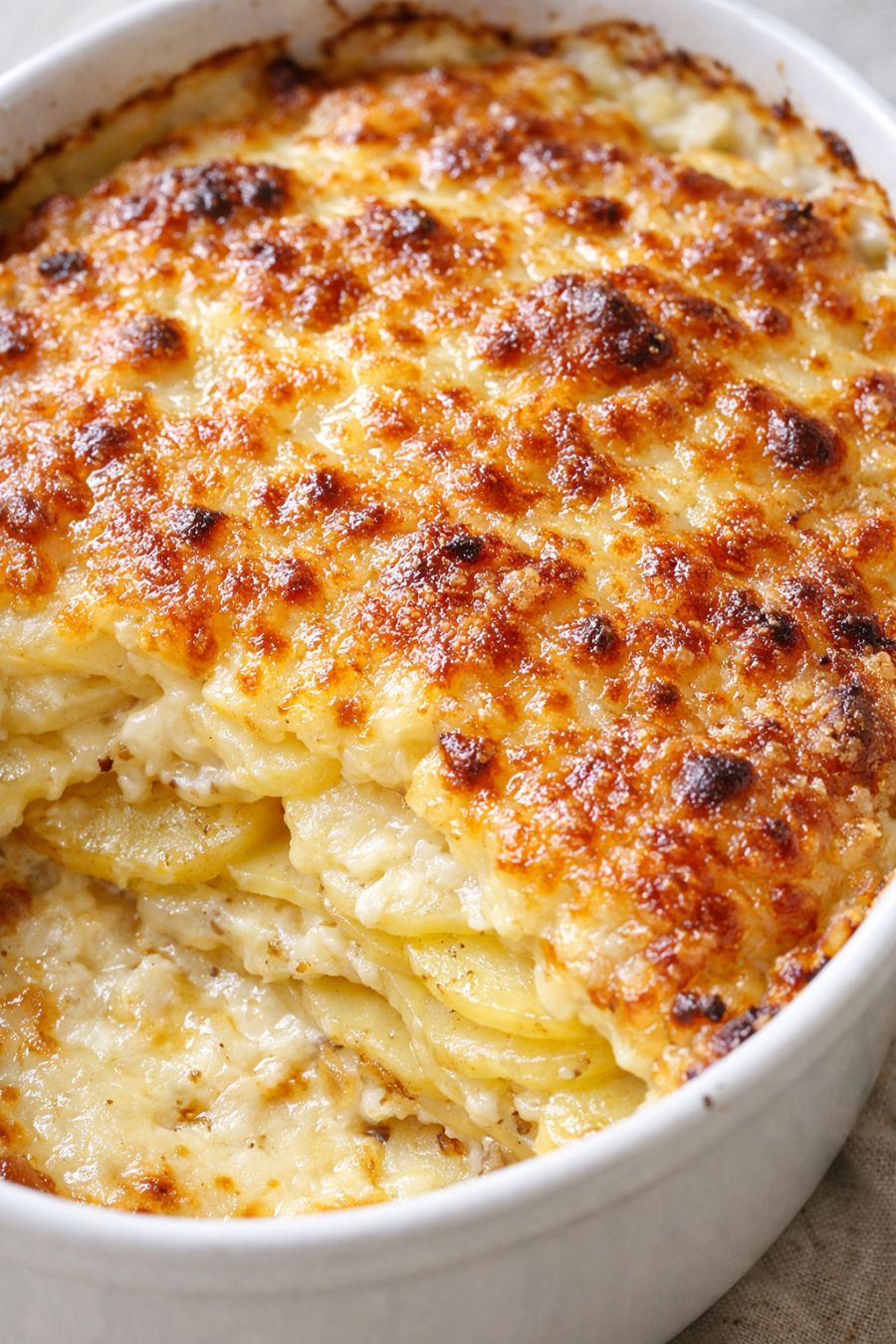
This oven baked 5-ingredients old fashioned potato gratin is the kind of dish you can imagine tucked into a worn recipe box from 1965, written in neat cursive on an index card. It’s simple, cozy, and made with pantry basics, but it comes out of the oven with that golden, bubbly, browned-cheese top that makes everyone hover near the table. My mom made a version of this for every holiday—no fancy cheeses or extra steps—just thin potatoes, cream, a little onion, and cheddar. It’s the kind of comforting, no-fuss side that quietly steals the show and makes the house smell like home.
Serve this potato gratin hot, straight from the oven, when the top is deeply golden and the edges are bubbling. It pairs beautifully with roast turkey, ham, or a simple roasted chicken, but it’s also wonderful alongside meatloaf or pan-seared pork chops for a Sunday supper. Add a bright green vegetable—like steamed green beans, roasted Brussels sprouts, or a simple salad with a tangy vinaigrette—to cut through the richness. For holidays, I like to put it in the center of the table in its white casserole dish so everyone can scoop a little extra crispy edge if they like.
Oven Baked 5-Ingredients Old Fashioned Potato Gratin
Servings: 6
Ingredients
2 1/2 pounds russet potatoes, peeled and very thinly sliced
1 small yellow onion, very thinly sliced
2 cups heavy cream (or half-and-half for a lighter version)
2 cups shredded sharp cheddar cheese, divided
1 1/2 teaspoons kosher salt (or 1 teaspoon table salt), plus more to taste
1/2 teaspoon black pepper (optional, but recommended for seasoning)
Directions
Preheat your oven to 375°F (190°C). Lightly butter or grease a 2- to 2 1/2-quart white oval casserole dish. This helps keep the potatoes from sticking and gives the edges a nice, browned crust.
Peel the russet potatoes and slice them as thinly as you can—about 1/8 inch thick. If you have a mandoline, this is a good time to use it, but a sharp knife and a little patience work just fine. Try to keep the slices even so they cook at the same rate.
Slice the onion very thinly into half-moons. The onion will almost melt into the cream as it bakes, adding that old-fashioned flavor that makes this taste like it came from a 1960s holiday table.
In a medium bowl or large measuring cup, whisk together the heavy cream, salt, and black pepper (if using). Taste a tiny drop (before it touches any raw potatoes) and adjust the salt so the cream is pleasantly seasoned; this is what will flavor all those potato layers.
Layer about one-third of the sliced potatoes in the bottom of the prepared casserole dish, overlapping them slightly like shingles so you can see the layers at the edges. Sprinkle one-third of the sliced onions evenly over the potatoes.
Sprinkle about 2/3 cup of the shredded cheddar cheese over this first layer. Don’t worry if it doesn’t cover every inch; it will melt and spread as it bakes.
Repeat with another one-third of the potatoes, another one-third of the onions, and another 2/3 cup of cheddar cheese. Finish with the last layer of potatoes and onions on top, arranging the potatoes neatly so the edges look pretty and layered against the side of the dish.
Slowly pour the seasoned cream evenly over the top, letting it seep down through the layers. Gently press down on the potatoes with clean hands or the back of a spatula to help everything settle and the cream to distribute.
Sprinkle the remaining cheddar cheese evenly over the top. This will form that classic golden, crispy, browned crust that everyone fights over.
Cover the casserole loosely with foil (try not to press the foil down into the cheese) and bake for 40 minutes. This helps the potatoes soften without the top browning too quickly.
After 40 minutes, carefully remove the foil and continue baking, uncovered, for another 25 to 35 minutes, or until the potatoes are very tender when pierced with a knife and the top is deeply golden brown and bubbly. The exact time will depend on how thinly you sliced the potatoes and your oven.
Once done, remove the gratin from the oven and let it rest for at least 10 to 15 minutes before serving. This resting time lets the creamy sauce thicken slightly and the layers settle, so you can see those pretty, thin potato stacks along the edges when you scoop it out.
Serve warm, making sure each scoop has some of the browned top and creamy center. If you like, sprinkle a tiny pinch of extra salt over the top just before serving to brighten the flavors.
Variations & Tips
For picky eaters, you can reduce or finely mince the onion so it disappears more into the sauce, or even leave it out for kids who don’t like visible onion (just add an extra pinch of salt to make up for the lost flavor). If you’d like a slightly lighter version, swap half of the heavy cream for whole milk or half-and-half, but keep in mind that the full cream gives the most classic, holiday-style richness. For a more pronounced 1960s flavor twist, you can sprinkle a small pinch of dried thyme or paprika over the top cheese layer before baking, though the original version is usually just potatoes, cream, onion, cheese, and salt. If you only have red or Yukon Gold potatoes, you can use them without peeling for a more rustic look; just slice them thinly and keep the same baking time. For make-ahead holidays, you can assemble the gratin up to the point of baking, cover tightly, and refrigerate for up to 24 hours; let it sit at room temperature for 20 to 30 minutes while the oven preheats, then bake as directed, adding 5 to 10 extra minutes if needed. Food safety tips: Always keep the sliced potatoes and cream mixture refrigerated if you’re not baking right away, and don’t leave the finished gratin at room temperature for more than 2 hours. Reheat leftovers thoroughly in a 325°F (165°C) oven until hot in the center (165°F) rather than just warming in a low microwave, which can heat unevenly. Use a sharp knife or mandoline carefully when slicing the potatoes—go slowly and use a cut-resistant glove or guard if you have one to avoid cuts. Finally, be cautious when removing the hot casserole from the oven and when removing foil, as steam can escape quickly and cause burns.
