
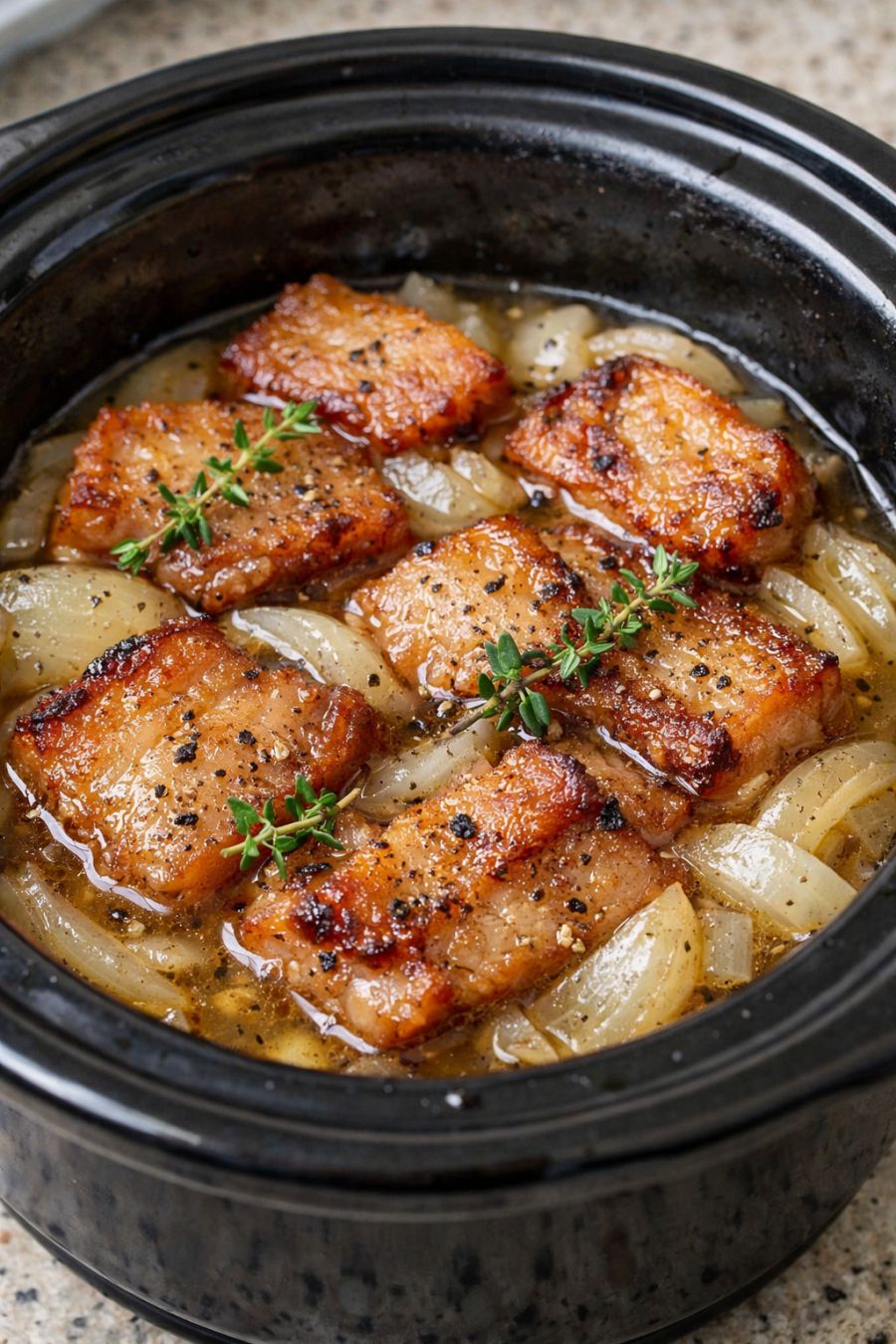
This 4-ingredient slow cooker April comfort dish is the kind of humble, rib-sticking food I grew up with out here in the country. Pork fatback was never wasted on the farm; it was the flavor that carried so many simple meals through the long, muddy weeks of early spring. This recipe is as easy as they come: you dump raw pork fatback into the slow cooker with three pantry ingredients, turn it on, and let time do the work. The fatback slowly melts, turning into silky, seasoned pieces of pork and a rich, savory broth that has my husband going back for thirds every single time. It’s not fancy, but it tastes like a warm memory of Sunday suppers and worn wooden tables.
Serve generous spoonfuls of the tender pork and its rich broth over a big scoop of mashed potatoes or buttered egg noodles, so all that flavor has something to soak into. A simple side of green beans, coleslaw, or a crisp salad helps balance the richness. A slice of soft white bread or cornbread is perfect for mopping up every last drop from the bottom of the bowl. This is the kind of dish that shines on a cool, drizzly evening with a glass of iced tea or a mug of hot coffee nearby.
4-Ingredient Slow Cooker April Comfort with Pork Fatback
Servings: 4
Ingredients
2 pounds raw pork fatback, cut into 1-inch wide strips
1 large onion, sliced into thick rings
1 cup low-sodium chicken broth
1 tablespoon seasoned salt (or your favorite all-purpose seasoning blend)
Directions
Lay the raw pork fatback strips in a single, even layer across the bottom of a 4- to 6-quart slow cooker. The fatback should cover most of the bottom, with the skin side (if attached) facing down against the crock.
Scatter the sliced onion evenly over the top of the fatback, letting some pieces fall down between the strips so they can soften and flavor the rendered fat as it cooks.
Sprinkle the seasoned salt (or all-purpose seasoning) evenly over the onions and exposed fatback, making sure to cover as much surface as you can for good flavor.
Pour the chicken broth gently around the edges of the slow cooker, trying not to wash all the seasoning off the top. The broth should come up just partway on the fatback; it will create a flavorful cooking liquid as the fat renders.
Cover the slow cooker with the lid and cook on LOW for 6 to 8 hours, or until the fatback is very tender, much of the fat has rendered into the broth, and the onions are soft and lightly browned around the edges. Avoid lifting the lid too often so the heat stays consistent.
Once cooked, carefully lift the lid away from you to avoid the hot steam. Use a slotted spoon to transfer the tender pieces of fatback and onions to a serving dish, leaving some of the rich cooking liquid behind if you prefer a less heavy plate.
Taste a small piece and, if needed, adjust the seasoning with a light sprinkle of additional seasoned salt or black pepper. Serve the pork and onions hot, spooning a bit of the savory broth over each portion just before taking it to the table.
Variations & Tips
If you’d like a little more body and less pure richness, tuck 3 to 4 peeled and chunked potatoes under the pork fatback strips before cooking; they’ll soak up the rendered fat and broth and turn incredibly flavorful. For a touch of sweetness, add 1 thinly sliced apple or 1 tablespoon of brown sugar along with the onions. You can also swap the seasoned salt for a mix of 2 teaspoons garlic powder, 1 teaspoon smoked paprika, and 1 teaspoon kosher salt for a smokier profile. If you prefer crisper edges, after slow cooking, lay the cooked fatback strips on a sheet pan and broil them for 2 to 3 minutes, watching closely so they don’t burn. For food safety, always start with fresh, refrigerated raw pork fatback, keep it chilled until you’re ready to cook, and wash your hands, knives, and cutting boards thoroughly after handling the raw meat. Make sure your slow cooker is set to LOW or HIGH (never the “warm” setting) while cooking, and cook until the pork is fully tender and hot throughout. Refrigerate leftovers within 2 hours of serving, and reheat only once, bringing them back up to a good, steamy temperature before eating.
