
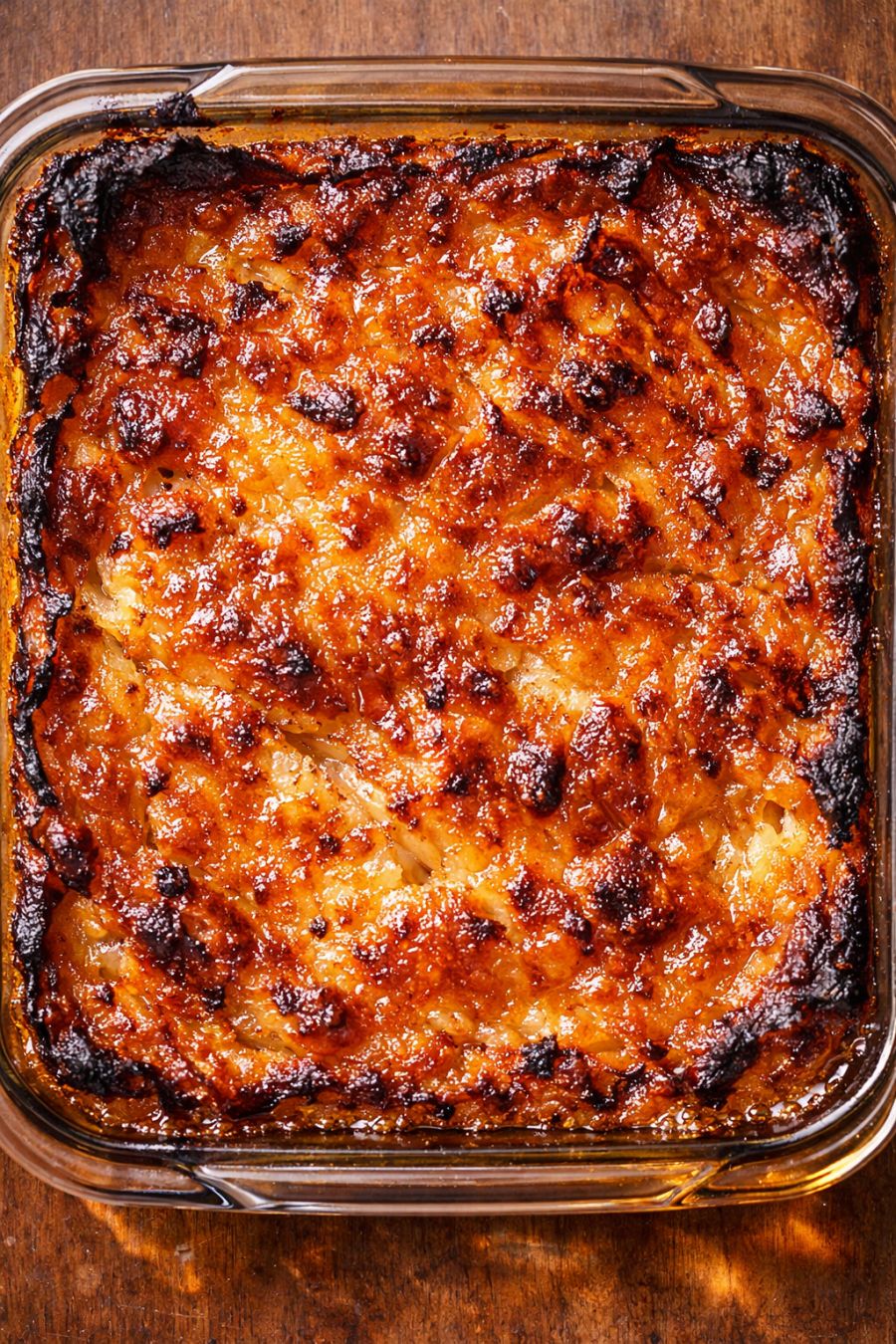
This is my stripped-down, Hard Times-style comfort bake: just potatoes, onions, fat, and a little salt. It came out of me trying to stretch a bag of potatoes at the end of the month, but still wanting something everyone at the table would literally fight over. Think Depression-era practicality—cheap ingredients, long oven time, big payoff. Thinly sliced potatoes and onions get layered into a glass dish, drowned in rendered fat, and roasted until the top turns deeply bronzed and crackly, the edges pull away from the dish, and the inside turns soft and almost creamy. It’s the kind of thing you throw in the oven and forget about while you wrangle work emails and homework, and then suddenly the whole house smells like you’ve been cooking all day.
I serve this as a main with a simple green salad or frozen peas dressed in butter and pepper, plus whatever protein we have around—fried eggs, leftover roast chicken, or even a can of beans warmed with garlic. It’s also great as a side next to meatloaf, sausages, or pork chops. A splash of vinegar or a spoonful of sour cream on the plate cuts through the richness. If you have it, a crust of bread to swipe through the caramelized fat at the edges of the pan is dangerously good.
4-Ingredient Bronzed Potato Supper
Servings: 4
Ingredients
3 pounds russet or Yukon Gold potatoes, scrubbed and very thinly sliced
2 medium yellow onions, very thinly sliced
1/2 cup rendered fat (bacon drippings, chicken schmaltz, or neutral oil)
2 teaspoons kosher salt (or 1 1/2 teaspoons fine salt), plus more to taste
Directions
Preheat your oven to 375°F (190°C). Lightly grease a 9x13-inch glass baking dish with a little of the rendered fat so nothing sticks and the edges can crisp and pull away cleanly.
Prep the vegetables: Using a sharp knife or a mandoline, slice the potatoes and onions as thinly and evenly as you can—about 1/8 inch thick. You want them thin so they cook through and melt together into that soft, fibrous interior under the crispy top.
Layer the potatoes and onions: Scatter a loose, even layer of potatoes over the bottom of the dish, overlapping slightly. Top with a thin scattering of onions. Sprinkle lightly with some of the salt. Repeat with more potatoes, more onions, and more salt, building up layers until everything is used. Try to end with a solid, shingled layer of potatoes on top so it can caramelize into a bronzed crust.
Pour on the fat: Slowly drizzle the rendered fat evenly over the entire surface, making sure to get the corners and edges so they can fry and pull away from the glass as they cook. Tilt the pan gently if needed so the fat seeps down between the layers. The top should look glossy and lightly coated, not dry.
Cover and start baking: Cover the dish tightly with foil. Bake at 375°F (190°C) for 45–60 minutes, until the potatoes in the center are tender when pierced with a knife. At this stage, the top will be pale and steamy—this is about softening everything before we go for deep color.
Uncover and bronze: Remove the foil carefully (watch the steam). Increase the oven temperature to 425°F (220°C). Return the uncovered dish to the oven and continue baking for 35–50 minutes, depending on your oven and how dark you like it. Do not rush this part. You’re aiming for a deeply caramelized, glistening amber surface with crackled edges that have pulled slightly away from the glass dish and visible rendered fat gently bubbling at the sides.
Rest before serving: When the top is deeply bronzed and the edges are very crisp, remove the dish from the oven. Let it rest for at least 10–15 minutes. The bubbling fat will settle, the layers will firm up enough to cut, and the fibrous interior will hold together while the top stays shatteringly crisp.
Serve: Sprinkle with a pinch more salt if needed. Use a sharp spatula to cut generous squares, making sure to scoop up some of the crispy edges and the glossy fat pooling at the sides. Serve hot as a simple supper with whatever vegetables or protein you have on hand.
Variations & Tips
To keep this in the spirit of hard-times cooking, I like to treat the four ingredients as flexible categories: starchy base (potatoes), aromatic (onions), fat, and salt. You can swap Yukon Golds for russets, or even mix in a few sweet potatoes, but keep the slices thin so the interior cooks through before the top burns. If you’re short on onions, use just one, or stretch it with a sliced leek or a handful of green onions. For fat, bacon drippings give a smoky vibe, schmaltz feels old-school and cozy, and neutral oil works if that’s what you have; you can also mix in a spoonful of butter for extra flavor, but be aware butter alone can burn faster, so keep an eye on the top in the last 15 minutes. If you need to reduce salt for health reasons, cut it back and let everyone salt their own portion at the table. For a slightly lighter version, you can use a bit less fat (down to about 1/3 cup), but the top will be a little less glossy and the edges a bit less fried. Food safety tips: Cool leftovers within 2 hours and store them tightly covered in the fridge for up to 4 days; reheat in a hot oven so the top crisps back up. Don’t leave the dish sitting out at room temperature all evening—serve, then get it chilling. When slicing with a mandoline, always use the guard or a cut-resistant glove to protect your fingers. And because the fat will be very hot and bubbling when it comes out of the oven, let the dish rest before serving so no one gets burned by splatters or molten edges.
