
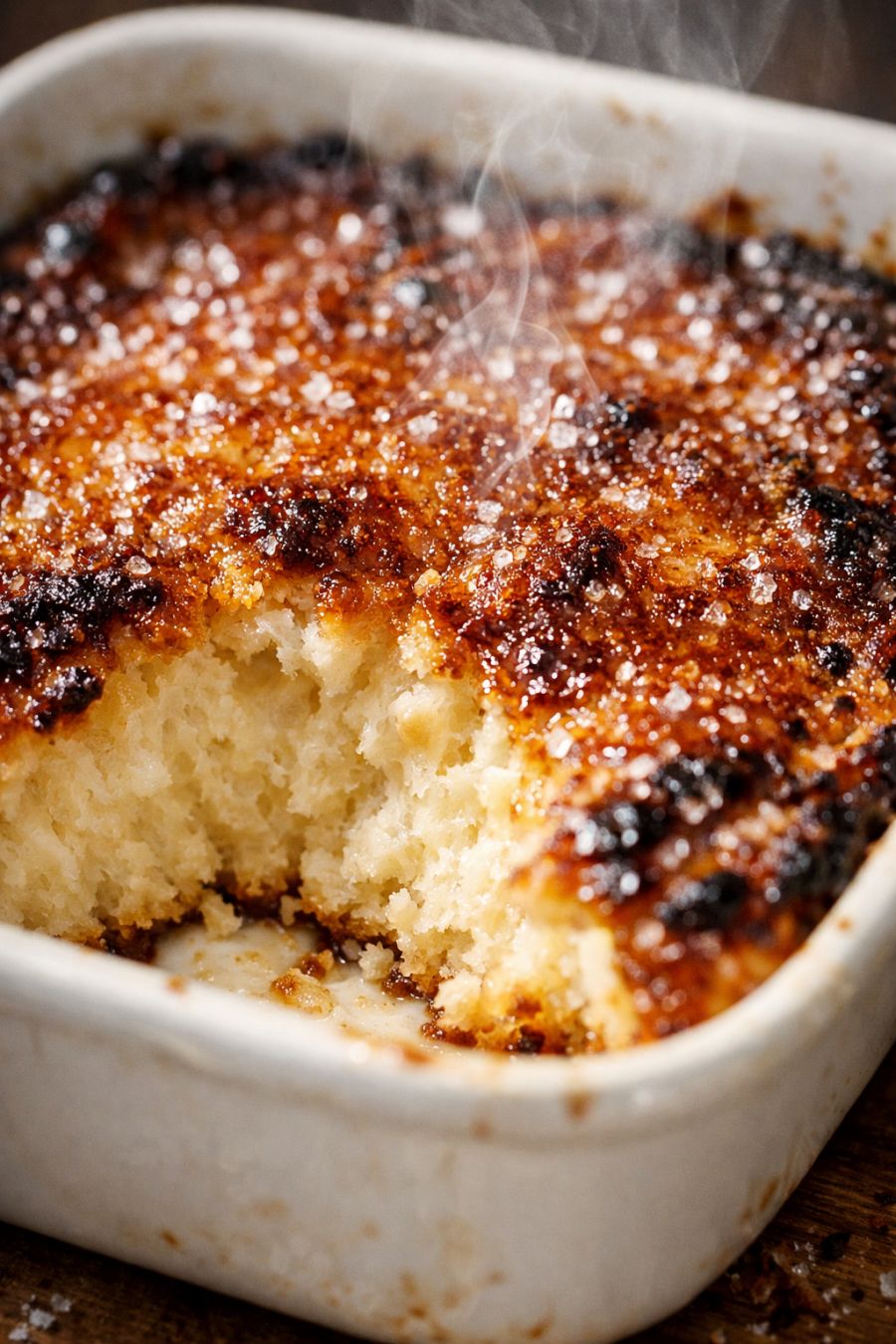
This little caramel cloud is the kind of dessert I reach for when spring is busy and the calendar is full of potlucks, church suppers, and last‑minute company. It bakes up in one plain white dish, turns a deep amber on top, and stays soft and pillowy underneath—like a cross between a custard and a bread pudding, but lighter. The idea comes from the old custard and sugar pies we made in the rural Midwest, pared down to just four everyday ingredients so you can pull something impressive from the oven even when you’re short on time and energy.
Serve this warm right from the baking dish, while the caramelized top is still crackly and the steam curls up from the soft center. A small spoonful of lightly sweetened whipped cream or a scoop of vanilla ice cream alongside is lovely, but not required. Coffee, hot or iced, or a simple cup of black tea balances the sweetness. For a spring gathering, pair it with fresh berries or sliced strawberries on the side so folks can spoon a bit of fruit next to their portion without hiding that shiny caramel top.
4-Ingredient Caramel Cloud
Servings: 6–8
Ingredients
4 large eggs, at room temperature
2 cups whole milk
3/4 cup granulated sugar, plus 2 tablespoons for the dish
1 tablespoon pure vanilla extract
Directions
Heat your oven to 350°F (175°C). Place a rack in the center of the oven. Lightly butter or spray a 2-quart white ceramic baking dish (an 8x8-inch or similar size works well). Sprinkle 2 tablespoons of granulated sugar evenly over the bottom of the dish.
Slide the sugared dish into the hot oven, uncovered, for 8–12 minutes, or until the sugar has melted, turned a deep amber color, and is beginning to bubble and darken around the edges. Watch closely toward the end so it doesn’t burn completely black. When it looks like a rich caramel with a few darker spots at the edges, carefully remove the dish and set it on a heatproof surface. Leave the oven on.
While the sugar is caramelizing, make the custard base. In a medium bowl, whisk the eggs until the yolks and whites are well blended and just slightly thickened, about 30–45 seconds by hand. You don’t need a lot of air, just a smooth mixture.
Add the remaining 3/4 cup granulated sugar to the eggs and whisk until the mixture looks pale and a bit creamy, about 1–2 minutes. This helps the sugar start to dissolve so the finished dessert bakes up smooth and pillowy.
Whisk in the vanilla extract. Gradually pour in the whole milk, whisking constantly but gently so everything is evenly combined without foaming too much. If you see many bubbles, tap the bowl on the counter a few times to knock them down.
Give the hot caramel in the baking dish a quick look. It will have started to firm around the very edges as it cools, and that’s fine. Slowly pour the custard mixture over the caramel layer. If any caramel has hardened into a thin glassy sheet, it will soften again in the oven and create little pockets of deep flavor along the bottom and sides.
Carefully transfer the baking dish to the center oven rack. Bake at 350°F (175°C) for 35–45 minutes, or until the top is a deep golden brown with some darker, almost charred spots at the edges and the center is just set. The custard should still wobble gently like gelatin when you nudge the dish, but it shouldn’t look liquid.
For the most pillowy interior, turn off the oven and crack the door open slightly. Let the dessert rest in the warm oven for 10 minutes. This gentle finish helps the custard settle without collapsing and keeps the top beautifully caramelized.
Remove the dish from the oven and let it stand on a cooling rack for at least another 15–20 minutes before serving. As it cools, the top will stay shiny and caramelized, and the interior will thicken to a soft, cloud-like texture. Serve warm, scooping straight out of the dish so everyone can see the contrast between the deeply caramelized top and the tender inside.
Variations & Tips
For a slightly firmer, sliceable dessert, bake closer to 45 minutes and chill for several hours before serving; the caramel top will soften a bit, but the custard will cut into neat squares. If you prefer a more rustic, spoonable pudding, pull it from the oven as soon as the edges are set and the center still has a pronounced wobble. You can swap 1/2 cup of the whole milk for heavy cream for a richer, silkier texture, or use 2% milk if that’s what you keep on hand (the dessert will be a touch lighter but still satisfying). For a subtle flavor twist that still fits the four-ingredient rule, use a different extract in place of vanilla, such as almond or maple. To echo old Midwestern custard pies, you can dust the top lightly with ground nutmeg after baking, though that does technically add a fifth ingredient. Food safety tips: Always use pasteurized milk and fresh, uncracked eggs from a reliable source. Bake until the custard reaches a safe temperature (an instant-read thermometer inserted in the center should read at least 160°F/71°C). If you choose to chill leftovers, cool them to room temperature within 1–2 hours, cover the dish, and refrigerate for up to 3 days. Reheat individual portions gently in the microwave or enjoy cold. Avoid leaving the dessert out at room temperature for more than 2 hours, especially at spring gatherings where the house may be warm.
