
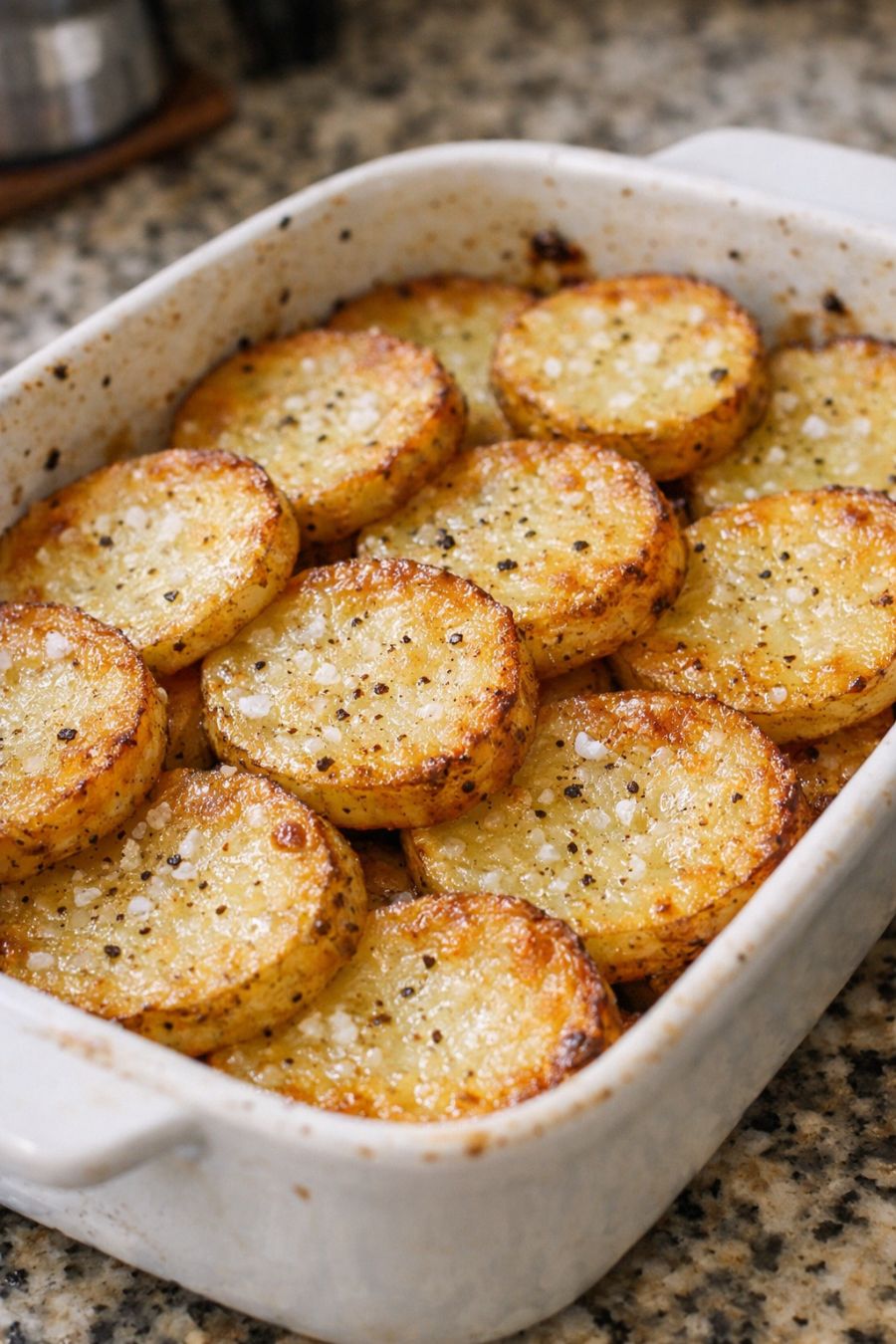
This 4-ingredient oven depression era potato rounds recipe leans on the kind of pantry staples many families relied on when money was tight but comfort was non-negotiable. Thinly sliced raw potatoes are tossed directly in a glass casserole dish with just three other basics—fat, flour, and onion—then baked until they’re tender, creamy inside, and deeply browned on top. It’s humble, filling, and surprisingly satisfying, the kind of dish that makes it easy to understand why generations before us stretched simple ingredients into a full meal.
Serve these potato rounds as a main dish with a crisp green salad or simple cooked greens (like sautéed cabbage or spinach) to balance the richness. They’re also great alongside roasted or pan-fried sausages, baked chicken thighs, or a simple bean dish if you want to keep the meal meatless but protein-rich. A splash of vinegar or a spoonful of tangy pickles on the side cuts through the creamy, starchy comfort, and any leftover rounds reheat well in a skillet the next day for breakfast with a fried egg.
4-Ingredient Oven Depression Era Potato Rounds
Servings: 4
Ingredients
2 pounds russet or Yukon Gold potatoes, scrubbed (peels left on), sliced into 1/2-inch rounds
1/4 cup all-purpose flour
1 large yellow onion, thinly sliced into half-moons
1/4 cup neutral oil or melted butter (or a mix), plus a little more for greasing the dish
1 1/2 teaspoons kosher salt (or 3/4 teaspoon table salt), plus more to taste
1/2 teaspoon black pepper (optional)
1 cup hot water (for adding partway through baking, not counted in the 4 core ingredients)
Directions
Preheat your oven to 400°F (200°C). Lightly grease a 9x13-inch glass casserole dish with a bit of oil or butter so the potatoes release easily after baking.
Scrub the potatoes well under cool running water, leaving the skins on for both flavor and thrift. Slice them into rounds about 1/2 inch thick; try to keep the slices as even as you can so they cook at the same rate.
In the greased glass casserole dish, add the raw potato rounds, separating them slightly with your fingers. Scatter the sliced onion over and between the potatoes so the onion is fairly evenly distributed.
Sprinkle the flour, salt, and black pepper (if using) evenly over the potatoes and onions right in the dish. Use clean hands or a large spoon to toss everything together directly in the casserole dish until the potatoes and onions are lightly coated with the seasoned flour.
Drizzle the oil or melted butter evenly over the flour-coated potatoes and onions. Toss once more in the dish so every round has a bit of fat and flour clinging to it. Then spread the mixture into an even layer, arranging the potato rounds in a slightly overlapping pattern so you see a shingled effect across the top—this helps them brown nicely while trapping steam underneath for tenderness.
Cover the dish tightly with foil to keep in the moisture, then place it on the middle rack of the preheated oven. Bake for 25 minutes to start softening the potatoes and allowing the flour to begin thickening with the natural potato juices.
Carefully remove the dish from the oven and peel back a corner of the foil away from you to avoid steam. Pour the hot water evenly around the edges and over the top of the potatoes; it will mix with the flour and fat to create a simple, lightly creamy sauce as it bakes.
Re-cover the dish tightly with foil and return it to the oven. Bake for another 25 to 30 minutes, until the potatoes are just tender when pierced with a knife through the center of the dish.
Remove the foil and continue baking, uncovered, for 15 to 20 minutes more, or until the top layer of potato rounds is golden brown with crisp edges and most of the liquid has thickened into a light, clinging sauce. The overlapping rounds should look pale ivory with browned edges and a few deeply golden spots.
Let the casserole rest for at least 10 minutes before serving. This short rest allows the sauce to settle and thicken slightly so the potato rounds lift out in satisfying scoops, and it keeps anyone from burning their mouth on the hot, starchy steam.
Variations & Tips
To stay close to the depression-era spirit, think in terms of what you already have on hand. For extra savoriness, you can add 1/2 teaspoon of dried herbs (such as thyme or rosemary) with the flour, or a pinch of garlic powder if it’s in your pantry. If you have a bit of cheese, sprinkle 1/2 to 1 cup of grated cheddar or any good melting cheese over the top during the last 10 minutes of baking for a more indulgent, gratin-style dish. A splash of milk instead of some of the water will give you a richer, creamier sauce, but it’s optional and not necessary for the recipe to work. For a heartier one-pan meal, tuck a few small, pre-cooked sausage pieces or bits of leftover ham between the potato rounds before baking, understanding this moves the dish away from its strictly four-ingredient roots. You can also swap the yellow onion for leeks or shallots if that’s what you have, or add a handful of thinly sliced cabbage layered with the potatoes for more bulk. For food safety, always scrub potatoes thoroughly and discard any that are very soft, moldy, or strongly sprouted; small, firm sprouts can be cut away, but if the potato is heavily sprouted or green under the skin, it’s best not to use it. Use hot water when adding liquid to the hot glass casserole dish to reduce the risk of thermal shock, and handle the dish carefully when uncovering, as steam can cause burns. Leftovers should be cooled, covered, and refrigerated within two hours of baking and eaten within 3 to 4 days; reheat in a 350°F (175°C) oven until steaming hot in the center.
