
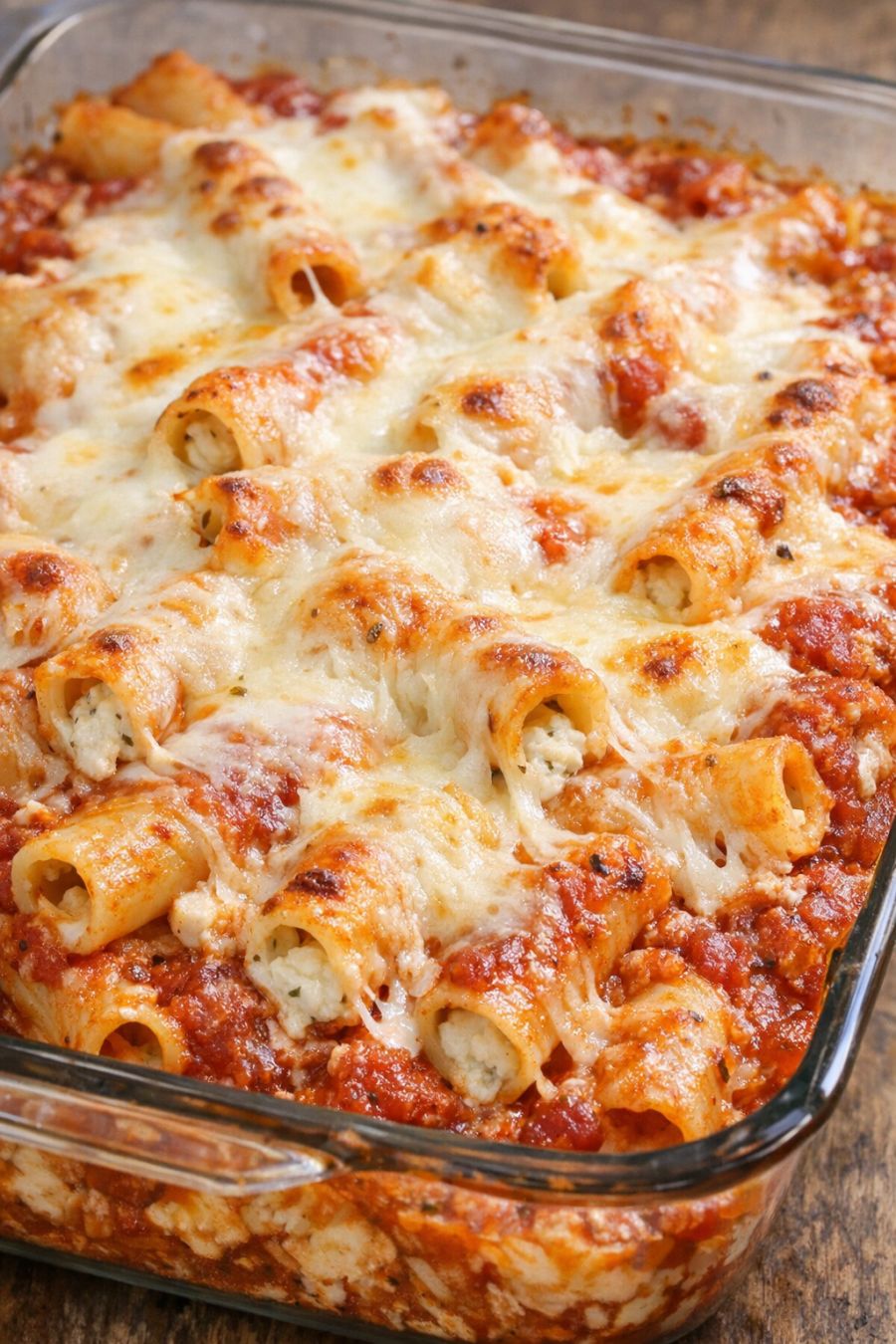
This oven baked 3-ingredients creamy ricotta ziti is exactly the kind of weeknight dinner my brother throws together without overthinking—and the first time he made it for me, it completely blew my mind. With just dry ziti, a good jar of tomato sauce, and a tub of ricotta, you get that classic baked-pasta comfort: tender tubes coated in rich red sauce, pockets of warm, tangy ricotta, and a lightly caramelized top. Baked pasta dishes trace their roots to Italian-American home cooking, where pantry ingredients are layered and baked until bubbling. This version keeps that spirit but strips it down to the essentials so anyone can pull it off, even on a busy night.
Serve this creamy ricotta ziti straight from the glass baking dish with a simple green salad—think mixed greens, a bright vinaigrette, and maybe a few shaved carrots or radishes for crunch. Garlic bread or a crusty baguette is ideal for scooping up the extra sauce and ricotta from the corners of the pan. A light red wine such as Chianti or a medium-bodied Zinfandel pairs nicely, as does sparkling water with lemon if you prefer something non-alcoholic. Leftovers reheat well and can be rounded out with a side of roasted vegetables like broccoli, zucchini, or bell peppers.
Oven-Baked 3-Ingredient Creamy Ricotta Ziti
Servings: 4
Ingredients
12 oz (about 340 g) dry ziti or penne pasta
24 oz (about 680 g) jarred tomato pasta sauce (marinara or similar)
15 oz (about 425 g) whole-milk ricotta cheese
Directions
Preheat your oven to 375°F (190°C). Lightly grease a 9x13-inch glass baking dish to help prevent sticking and make cleanup easier.
Bring a large pot of well-salted water to a boil. Add the dry ziti and cook until just shy of al dente, usually 1–2 minutes less than the package directions. The pasta will continue to cook in the oven, so you want it slightly firm.
While the pasta cooks, pour about 1 cup of the tomato sauce into the bottom of the prepared glass baking dish and spread it into an even layer. This creates a saucy cushion that keeps the pasta from drying out or sticking.
Drain the pasta thoroughly, shaking off excess water so it doesn’t thin the sauce. Return the hot pasta to the pot.
Add the remaining tomato sauce to the warm pasta and stir until every piece is lightly coated. You want the pasta well-sauced but not swimming; this balance gives you a creamy bake instead of a soupy one.
Spoon about half of the sauced pasta into the glass baking dish, spreading it into an even layer over the base of sauce.
Dollop roughly half of the ricotta over the pasta in large spoonfuls, spacing them out so each scoop of the finished dish gets some of that creamy center. There’s no need to smooth it perfectly; the ricotta will relax and meld into the pasta as it bakes.
Add the remaining pasta on top, spreading it gently so you don’t disturb the ricotta too much. Then dot the top with the remaining ricotta, again in generous spoonfuls. Aim for visible pockets of white that will bake into creamy, slightly golden spots.
Cover the baking dish tightly with foil. Bake in the preheated oven for 20 minutes, until the sauce is bubbling around the edges and the pasta is heated through.
Carefully remove the foil and continue baking for another 10–15 minutes. The exposed ricotta should look set and just beginning to take on a light golden color in places, and you should see steady bubbling around the sides of the dish.
Remove the dish from the oven and let the ziti rest for at least 5–10 minutes before serving. This short rest allows the sauce to thicken slightly and makes it easier to scoop neat portions while still staying wonderfully creamy.
Serve warm, straight from the glass baking dish, making sure to dig down so each portion includes pasta, sauce, and those rich, creamy pockets of ricotta.
Variations & Tips
You can stay true to the three-ingredient spirit while tailoring this to your taste. For a slightly different character, swap the plain marinara for a spicy arrabbiata or a basil-forward tomato sauce; the flavor of the sauce will define the dish. If you prefer a looser, extra-creamy texture, stir a few spoonfuls of ricotta directly into the hot pasta and sauce mixture before layering, then dot the rest on top as directed. For a more structured, sliceable bake, cook the pasta fully al dente, pack it a bit more firmly in the dish, and allow a longer rest (15–20 minutes) before serving so it sets. To keep the three-ingredient rule intact but add a little nuance, choose a ricotta that’s whole-milk and high quality—its sweetness and texture really matter here. If you need to make this ahead, you can assemble the dish, cover tightly, and refrigerate for up to 24 hours; add about 10–15 minutes to the covered baking time and ensure it’s heated through to the center before serving. For food safety, keep ricotta refrigerated at or below 40°F (4°C) until you’re ready to assemble, and don’t leave the baked dish at room temperature for more than 2 hours. Leftovers should be cooled quickly, stored in shallow containers, and refrigerated, then reheated until steaming hot before eating.
