
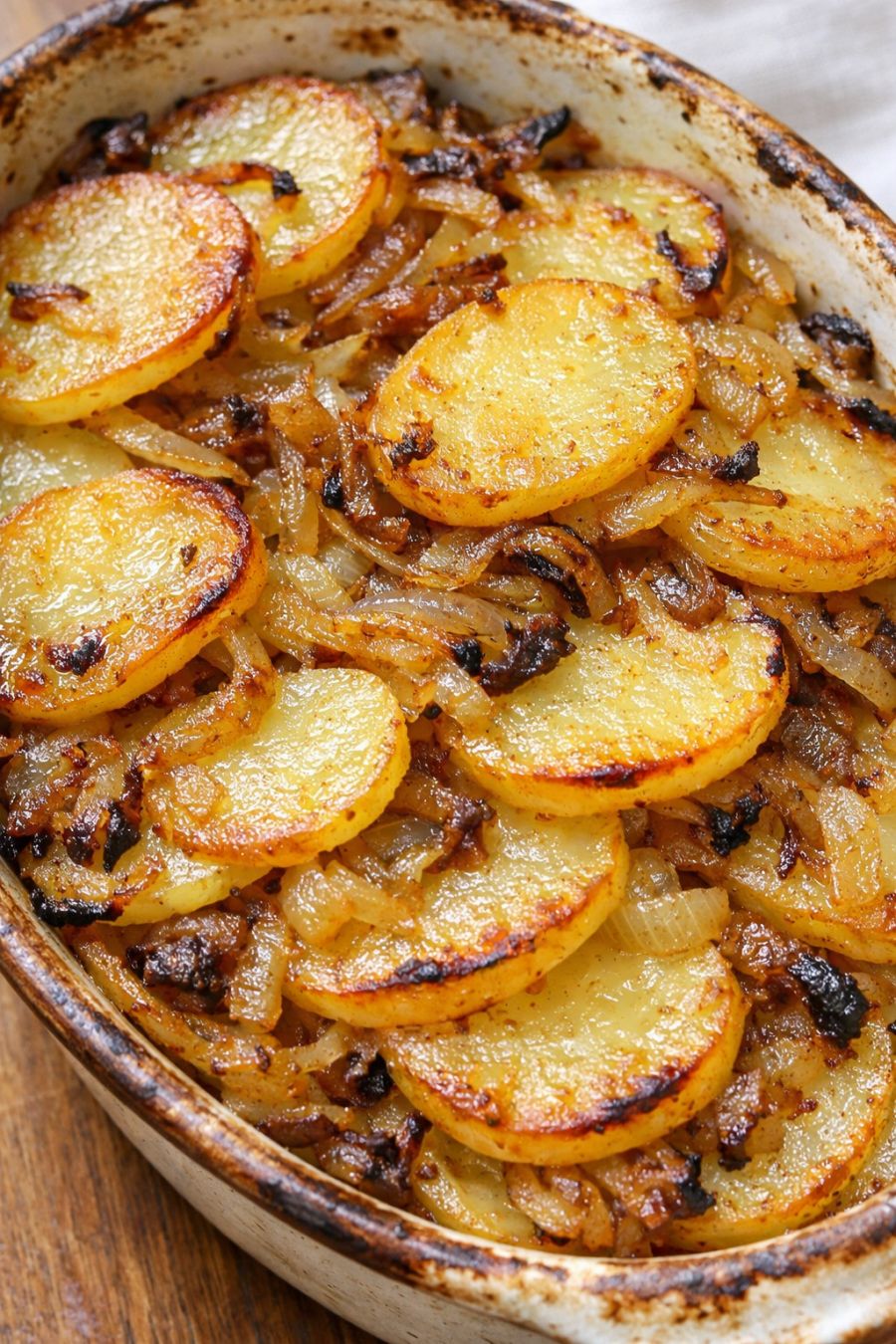
These oven baked 3-ingredients Lyonnaise potatoes are my pared-down version of the dish my grandmother made every Sunday after church. Classic Lyonnaise potatoes come from the Lyon region of France and are known for their simple combination of potatoes, onions, and fat, cooked until everything turns golden and crisp at the edges. This version keeps to that spirit but is streamlined for a home oven: just potatoes, onions, and butter, layered in a casserole dish and baked until the onions are deeply golden and the potatoes are tender with crisp, browned edges. It’s the kind of recipe you make once and then keep in your back pocket for roast chicken nights, potlucks, or any time you want something comforting that doesn’t require a lot of fuss.
Serve these Lyonnaise potatoes alongside simple roasted meats like roast chicken, pork loin, or pan-seared steak, where the buttery onions can soak up some of the juices on the plate. They’re also excellent with a crisp green salad dressed in a sharp vinaigrette to cut through the richness. For a brunch table, pair them with soft-scrambled eggs or a frittata and fresh fruit. If you’re leaning vegetarian, these potatoes sit nicely next to roasted seasonal vegetables or a hearty lentil dish, and leftovers reheat well in a skillet to accompany a fried egg for an easy next-day meal.
Oven Baked 3-Ingredients Lyonnaise Potatoes
Servings: 4
Ingredients
2 pounds russet or Yukon Gold potatoes, peeled (if desired) and thinly sliced, about 1/8 inch
2 large yellow onions, thinly sliced pole-to-pole
6 tablespoons unsalted butter, melted, plus a little extra for greasing the dish
1 1/4 teaspoons kosher salt (or to taste)
1/2 teaspoon freshly ground black pepper (optional but recommended)
Directions
Preheat your oven to 375°F (190°C). Lightly grease a vintage-style oval casserole dish or any similar 2-quart baking dish with a bit of butter, making sure to coat the bottom and sides so the potatoes don’t stick.
Prepare the potatoes by peeling them if you prefer (the dish is slightly more classic without skins, but either works). Using a sharp knife or mandoline, slice the potatoes into thin rounds about 1/8 inch thick. Try to keep them as even as possible so they cook at the same rate.
Slice the onions from root to stem (pole-to-pole) into thin slices. This cut helps the onions hold some structure as they soften and turn golden instead of melting away completely.
In a large bowl, add the sliced potatoes and onions. Drizzle with the melted butter, then sprinkle in the kosher salt and black pepper if using. Toss gently with your hands to coat every slice; this is important so the onions and potatoes both get enough fat to brown properly.
Build the first layer by arranging a snug layer of potato slices over the bottom of the prepared casserole dish, overlapping them slightly like shingles. Scatter a loose, even layer of onions over the potatoes. The goal is to have onions touching the surface of as many potatoes as possible—this contact is what leads to that golden edge and deep flavor.
Continue layering potatoes and onions, repeating the process until you’ve used everything, finishing with a layer of potatoes on top and tucking stray onion pieces between slices so they don’t burn. Pour any remaining butter from the bowl evenly over the top.
Cover the dish tightly with foil and bake for 30 minutes. This covered time allows the potatoes to steam and soften while the onions begin to collapse and sweeten without drying out.
Remove the foil and return the dish to the oven. Continue baking uncovered for 30 to 40 minutes, rotating the dish once halfway through if your oven has hot spots. Watch for the visual cues: the onions should turn a deep, even golden color and the edges of the potato slices should crisp and brown. This is the key step—don’t rush it. If the top is pale after 30 minutes, give it another 5 to 10 minutes.
Check for doneness by sliding the tip of a knife into the center; it should glide through the potatoes with almost no resistance. If the potatoes are tender but you’d like more color, you can move the dish to the upper third of the oven for the last 5 to 10 minutes to encourage deeper browning on the onions and edges.
Let the Lyonnaise potatoes rest for at least 10 minutes before serving. This short rest helps the layers settle so you can scoop out neat portions and ensures the butter redistributes instead of running straight to the bottom of the dish. Serve warm, making sure each portion includes both golden onions and crisp-edged potatoes.
Variations & Tips
For a slightly richer version, you can increase the butter to 8 tablespoons, but keep in mind that too much fat can make the layers feel heavy rather than crisp. If you prefer olive oil, you can swap half of the butter for a fruity extra-virgin olive oil; this will shift the flavor toward a more Mediterranean profile while still keeping the Lyonnaise spirit of potatoes and onions. For a herb-forward twist, sprinkle 1 to 2 teaspoons of fresh thyme leaves or finely chopped rosemary between the layers with the salt and pepper. If you want a subtle garlic note, lightly crush 2 garlic cloves and tuck them into the dish near the sides so they infuse the butter without burning on top (remove before serving if you don’t want to bite into them). To make ahead, assemble the dish up to the point of baking, cover tightly, and refrigerate for up to 8 hours; add an extra 5 to 10 minutes to the covered baking time since it will be starting cold. Food safety tips: cool leftovers quickly and refrigerate within 2 hours of baking in a shallow container; they’ll keep safely for about 3 to 4 days. Reheat thoroughly in a 350°F (175°C) oven until steaming hot in the center, which improves both safety and texture compared with microwaving alone. Always use a sharp knife or mandoline guard when slicing potatoes thinly to avoid cuts, and be cautious when removing the hot casserole dish and foil, as steam can escape quickly.
