
My grandmother kept a little glass baking dish just for this recipe, and she’d pull it out on nights when money was tight or the day had simply been too long. She called it her “four-thing angel hair,” and I didn’t appreciate its magic until I was raising a family of my own. Just pasta, butter, garlic, and Parmesan, baked together until the noodles drink up all that garlicky butter and turn silky and golden around the edges. It’s the kind of simple, oven-baked comfort that feels like home—no fancy tricks, just the quiet confidence of a recipe that’s been made the same way in Midwestern kitchens for generations.
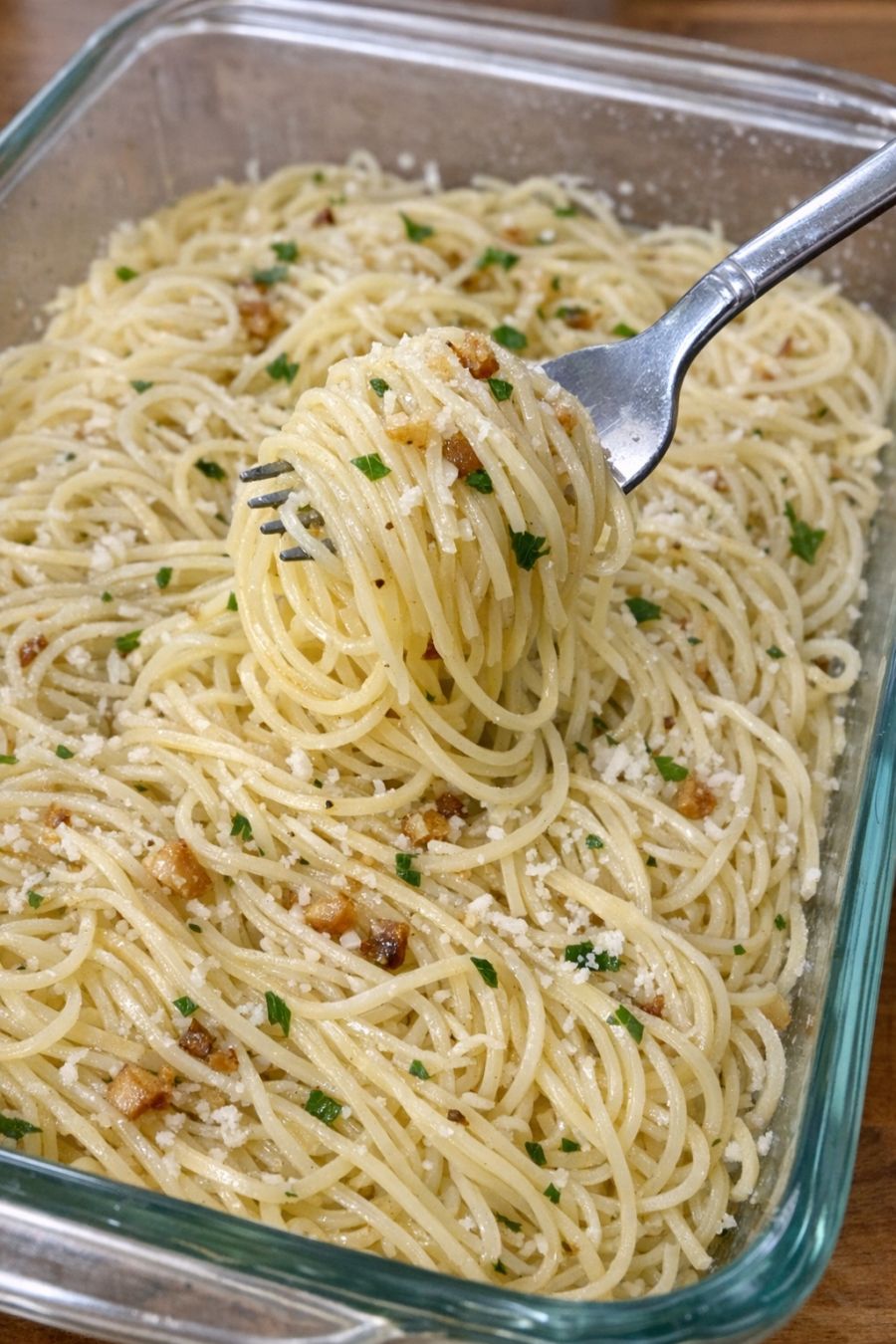
Serve this garlic butter angel hair straight from the glass baking dish with a big fork for twirling. It pairs nicely with a crisp green salad dressed with vinegar and a pinch of sugar, or steamed green beans with a squeeze of lemon to cut through the richness. A simple roasted chicken or baked pork chops make it a full Sunday-style meal, but on busy weeknights, my grandmother often set this on the table with sliced garden tomatoes and a jar of pickles, and no one complained. A little extra grated Parmesan and black pepper at the table never hurt either.
Oven-Baked Garlic Butter Angel Hair
Servings: 4
Ingredients
8 ounces dry angel hair pasta
1/2 cup (1 stick) unsalted butter, plus a little more for greasing the dish
4 large cloves garlic, finely minced
1 cup finely grated Parmesan cheese, divided
Directions
Preheat your oven to 375°F (190°C). Lightly butter a rectangular glass baking dish (about 8x11 inches or similar) so the pasta won’t stick.
Bring a large pot of salted water to a boil. Add the angel hair pasta and cook just until very al dente, about 2–3 minutes, since it will finish softening in the oven. Drain well.
While the pasta water heats, melt the 1/2 cup butter in a small saucepan over low heat. Add the minced garlic and cook gently, stirring, for 1–2 minutes until fragrant and just starting to turn a light golden color. Do not let the garlic burn; remove from heat as soon as it smells toasty.
Place the drained angel hair back into the warm pot or a large bowl. Pour the garlic butter over the pasta and toss well so every strand is lightly coated.
Sprinkle in 3/4 cup of the grated Parmesan and toss again until the cheese clings to the buttery noodles. The mixture will look a bit loose and glossy—that’s what you want.
Transfer the coated angel hair to the prepared glass baking dish, gently spreading it out. Use a fork to lightly fluff and twist the noodles so they’re not packed down too tightly; this helps them bake up tender with some golden edges.
Sprinkle the remaining 1/4 cup Parmesan evenly over the top of the pasta.
Bake, uncovered, for 18–22 minutes, or until the top looks lightly golden, the edges of the pasta are just starting to crisp, and you can see a bit of sizzling around the sides of the dish.
Remove from the oven and let the pasta rest for 5 minutes so it can set slightly. Then use a fork to twirl portions straight from the baking dish, catching those toasted garlic bits and cheesy strands as you go. Serve warm.
Variations & Tips
If you’d like a little more color, sprinkle the finished dish with chopped fresh parsley or snipped chives, though my grandmother kept it plain and simple. For extra richness, you can dot the top with a tablespoon or two more butter before baking, or stir in a splash of cream with the garlic butter. If you prefer a saltier bite, use salted butter and taste before adding any extra salt, since Parmesan is already quite salty. To stretch this dish, you can bake it with a layer of thinly sliced cooked chicken tucked into the noodles, or stir in a handful of thawed frozen peas before baking for a bit of sweetness and color. For a slightly crispier top, run the dish under the broiler for 1–2 minutes at the end, watching closely so the garlic and cheese don’t burn. Food safety tips: Always cook the pasta in clean, fresh water and handle the hot butter carefully to avoid burns—keep the heat low so the garlic doesn’t scorch, as burned garlic turns bitter. If you add any meat or dairy beyond what’s listed, make sure those ingredients are fully cooked and promptly refrigerate leftovers within 2 hours in a shallow container; reheat thoroughly until steaming before serving again. Because this recipe uses a glass baking dish, avoid placing it from a very cold surface directly into a very hot oven or onto a cold countertop right out of the oven to prevent cracking; set it on a dry towel or trivet instead.
