
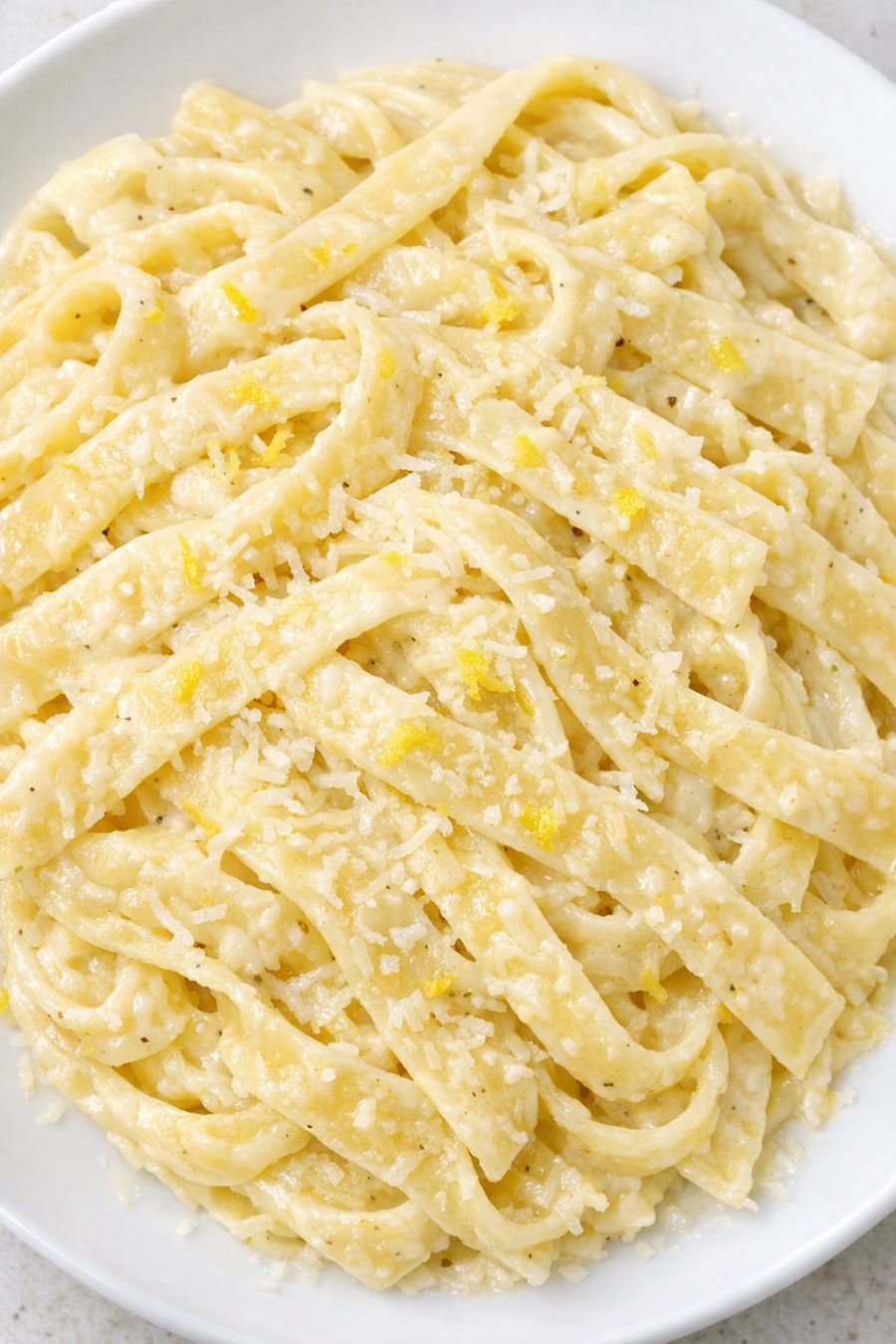
This slow cooker 4-ingredient lemon parmesan pasta is exactly the kind of bright, low-effort meal my mother-in-law loves to pull out on busy weeknights. It leans on a very simple Italian-inspired combination: pasta, good parmesan, fresh lemon, and cream. The result is a silky, pale yellow sauce that clings to every piece of tender pasta, with pops of lemon zest and salty cheese that feel far more restaurant-worthy than the process suggests. Everything comes together in the slow cooker, so you can walk away and come back to a vibrant, comforting bowl of pasta without hovering over the stove.
Serve this lemon parmesan pasta in warm shallow bowls with an extra shower of freshly grated parmesan and a final pinch of lemon zest. It pairs especially well with a simple green salad dressed in a sharp vinaigrette to balance the richness, or lightly steamed or roasted vegetables like broccoli, asparagus, or green beans. A crisp white wine such as Pinot Grigio or Sauvignon Blanc is a natural match, and for a non-alcoholic option, sparkling water with a lemon slice echoes the citrus in the dish. Garlic bread or a crusty baguette is ideal for swiping through any leftover sauce on the plate.
Slow Cooker Lemon Parmesan Pasta
Servings: 4
Ingredients
12 oz (340 g) short dry pasta, such as penne or rotini
2 cups (480 ml) heavy cream
1 cup (90 g) finely grated parmesan cheese, plus more for serving
1 large lemon, zested and juiced (about 2–3 tbsp juice)
Directions
Lightly coat the inside of a 4- to 6-quart slow cooker with nonstick spray or a thin film of neutral oil to help prevent sticking.
Add the dry pasta to the slow cooker and spread it into an even layer so it cooks uniformly.
In a medium bowl, whisk together the heavy cream, finely grated parmesan, all of the lemon zest, and 2 tablespoons of the lemon juice until the mixture looks mostly smooth. A few tiny cheese flecks are fine; you just want to avoid big clumps.
Pour the lemon-parmesan cream mixture evenly over the dry pasta. Stir gently to coat all of the pasta, making sure most of it is submerged in the liquid for even cooking.
Cover the slow cooker with the lid and cook on LOW for 1½ to 2½ hours, stirring once about halfway through. The exact time will depend on your slow cooker and pasta shape. Begin checking at 1½ hours: the pasta should be just tender and the sauce should look silky and slightly thickened.
Once the pasta is al dente and the sauce has thickened, give everything a thorough stir. If the sauce seems too thick, add a splash of hot water or a bit more cream, 1–2 tablespoons at a time, stirring until it reaches a creamy, pourable consistency that still clings to the pasta.
Taste and adjust the seasoning by adding an extra teaspoon or so of lemon juice if you want more brightness, and a pinch of salt if needed (remember the parmesan is salty). Stir again so the lemon is evenly distributed through the sauce.
Turn the slow cooker to WARM and let the pasta rest for 5 minutes with the lid slightly ajar; this allows the sauce to settle into a glossy, pale yellow coating that hugs the pasta without breaking.
Serve the lemon parmesan pasta immediately, topped with a little extra grated parmesan and a pinch of fresh lemon zest on each plate to highlight the bright, citrusy aroma.
Variations & Tips
For a lighter version, you can replace up to half of the heavy cream with whole milk, understanding that the sauce will be slightly thinner and less rich. If you prefer a stronger lemon flavor, add an additional teaspoon of zest or a bit more lemon juice at the end, tasting as you go so it doesn’t become overly sharp. To introduce protein without complicating the ingredient list too much, you can serve this pasta alongside simply seasoned grilled or roasted chicken or fish prepared separately. Different pasta shapes will behave slightly differently: short, sturdy shapes like penne, rotini, or shells work best and are less likely to turn mushy; avoid very thin or delicate pastas, which can overcook quickly in the slow cooker. If the sauce ever looks like it’s separating slightly, a vigorous stir usually brings it back together; you can also whisk in a tablespoon or two of hot water to smooth it out. For food safety, keep dairy-based sauces like this out of the temperature danger zone (40°F–140°F / 4°C–60°C) by not leaving the cooked pasta on the counter for more than 2 hours; refrigerate leftovers promptly in a shallow container and reheat gently on the stovetop or in the microwave with a splash of water or cream, stirring often so the sauce returns to a creamy consistency without curdling.
