
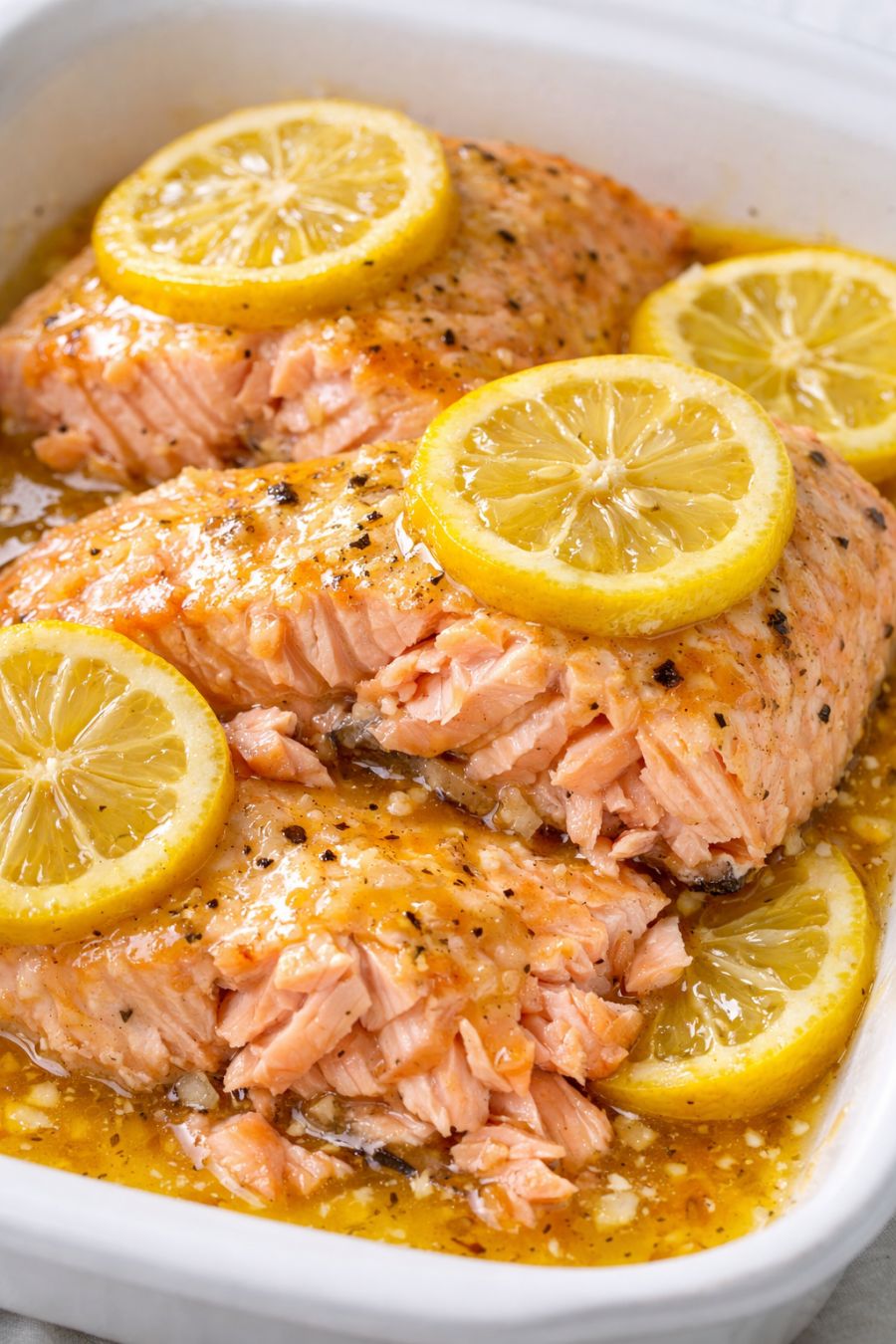
This low carb 3-ingredient lemon butter salmon is the kind of dish that makes people lean over the table and whisper, “How did you make this?” My mother-in-law did exactly that the first time I brought it to a Sunday brunch, and she’s not easily impressed. The beauty of it is in its simplicity: just salmon, real butter, and fresh lemons. It reminds me of the old Midwestern church suppers where the best dishes were never fussy, just honest food cooked with care. The salmon bakes up tender and flaky, bathed in a glossy golden butter sauce and crowned with soft, bright lemon slices that perfume the whole kitchen.
This salmon makes a lovely brunch centerpiece, but it’s just as comfortable on a weeknight table. For a low carb plate, pair it with roasted asparagus, sautéed green beans, or a simple cucumber salad. A side of buttery steamed broccoli or a crisp green salad with a light vinaigrette soaks up the extra lemon-butter juices beautifully. If you’re feeding a mixed crowd, you can also offer a basket of warm rolls or a pan of roasted baby potatoes on the side for those who aren’t watching carbs. Serve the salmon right on the white platter it’s baked in, with a big spoon so everyone can help themselves to those golden pan juices.
3-Ingredient Lemon Butter Salmon
Servings: 4
Ingredients
1 1/2 to 2 pounds salmon fillet, skin-on or skinless, pin bones removed
6 tablespoons unsalted butter, melted (plus a little extra for greasing the dish, if needed)
2 medium lemons, thinly sliced into rounds (ends discarded), plus any juice caught on the board
1/2 teaspoon kosher salt (optional, but recommended)
1/4 teaspoon freshly ground black pepper (optional, but recommended)
Directions
Preheat your oven to 400°F (200°C). Set out a shallow white ceramic baking dish or serving platter that is oven-safe. Lightly grease the bottom with a bit of butter if your dish tends to stick.
Pat the salmon dry on both sides with paper towels. This helps the butter cling and the fish bake up nicely. Lay the salmon in the center of the dish, skin-side down if it has skin. Tuck the thin tail end under if one side is much thinner so it cooks more evenly.
Sprinkle the salmon lightly with the kosher salt and black pepper, if using. These are optional, but a little seasoning brings out the flavor of the fish and the butter.
Melt the butter in a small saucepan or in the microwave just until liquid, not bubbling. Pour the melted butter slowly over the salmon, letting it run down the sides so it pools around the fish in the dish. If any lemon juice collected on your cutting board while slicing, you can stir it into the melted butter before pouring for extra brightness.
Arrange the lemon slices in a slightly overlapping layer directly on top of the salmon, covering as much of the surface as you can. Tuck any extra slices into the butter around the edges so they can cook and flavor the juices.
Place the dish on the middle rack of the preheated oven. Bake for 12 to 18 minutes, depending on the thickness of your salmon. Start checking at 12 minutes. The salmon is done when it flakes easily with a fork and the center is just barely opaque. The butter around it will be bubbling and golden, and the lemon slices will look soft and glossy.
Once done, remove the dish from the oven and let the salmon rest for 3 to 5 minutes. During this time, the juices settle and the fish finishes cooking gently. Spoon some of the hot lemon-butter sauce from the bottom of the dish over the top to give it that shiny, golden look.
To serve for a brunch centerpiece, bring the whole white ceramic dish to the table. Use a large spoon or spatula to break the salmon into big, rustic flakes, making sure each portion gets a few lemon slices and plenty of the glossy butter and cooking juices spooned over the top.
Variations & Tips
For an even richer flavor, you can use cultured or European-style butter, which has a slightly tangy, fuller taste that plays nicely with the lemon. If you’d like a touch of herb without adding more true ingredients, you can line the bottom of the dish with a few sprigs of fresh dill or parsley from the garden; they’ll perfume the butter but can be considered garnish rather than part of the core recipe. To stretch this for a crowd, bake two smaller fillets side by side and increase the butter and lemon proportionally, keeping the same simple method. If you prefer a little color on top, switch the oven to broil for the last 1 to 2 minutes, watching very closely so the butter doesn’t burn—this can give the lemons a light caramelized edge. For very thick salmon (over 1 1/2 inches), lower the oven to 375°F and bake a bit longer so the center cooks gently without drying the edges. Food safety tips: Always start with fresh or properly thawed salmon that smells clean and mild, never fishy or sour. Thaw frozen salmon overnight in the refrigerator on a plate to catch any liquid; do not thaw at room temperature. Cook salmon to an internal temperature of 145°F (63°C) at the thickest part, or until it flakes easily with a fork and is opaque throughout. Keep raw fish and its juices away from ready-to-eat foods, and wash your hands, cutting board, and knife thoroughly with hot, soapy water after handling the raw salmon. Refrigerate leftovers within 2 hours of baking, and reheat gently at a low oven temperature or enjoy chilled over a salad.
