
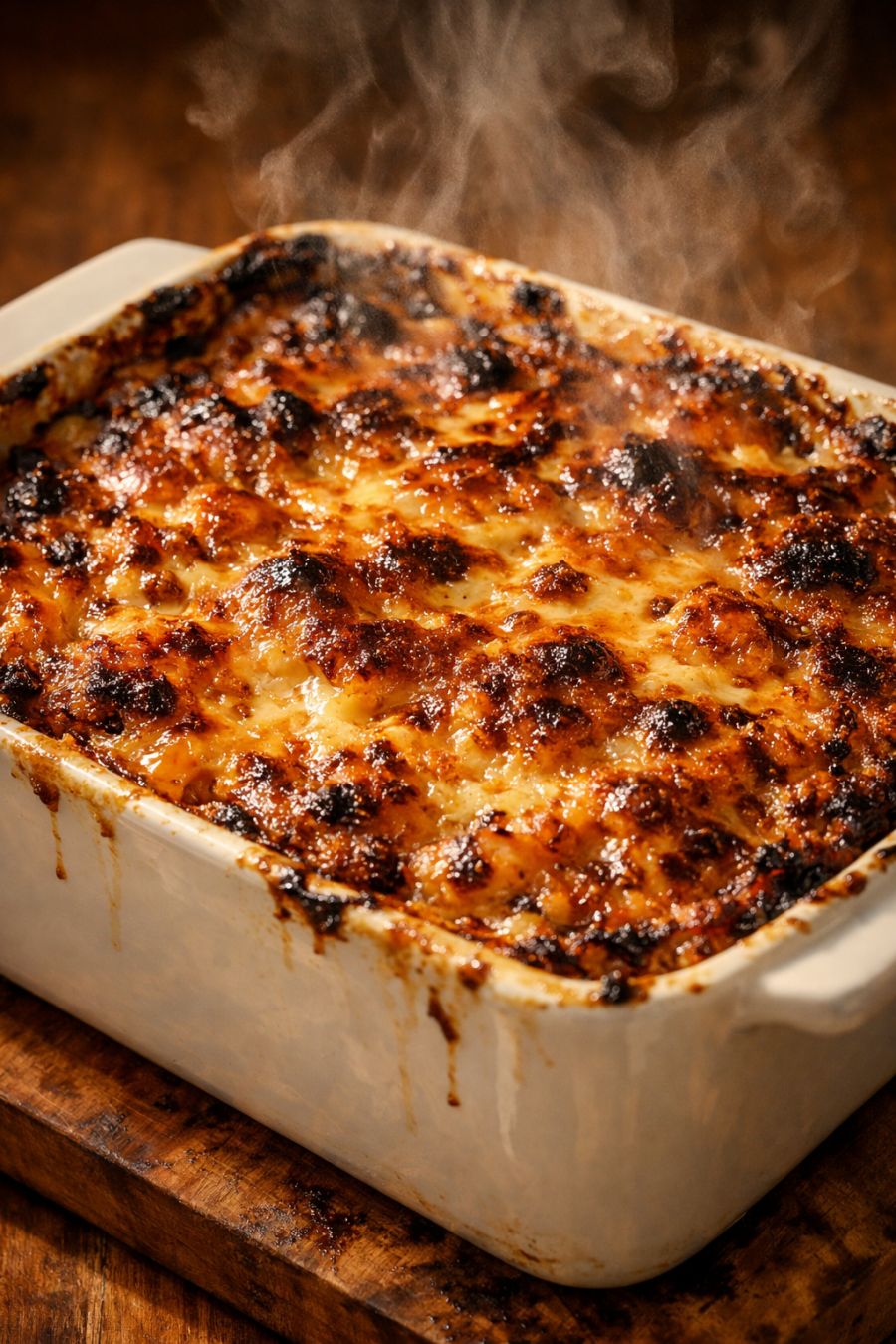
This 4-ingredient vintage scalloped potato dish is the kind of oven-baked comfort that feels right at home on a Sunday table in the Midwest. It leans on an old-fashioned method: thinly sliced potatoes baked low and slow with cream, onion, and a generous snowfall of cheese until everything bubbles up, the top turns deeply golden, and the edges pull away from the pan in crisp, caramelized ribbons. You won’t find roux, stock, or extra seasonings here—just a pared-back, classic approach that lets the potatoes, dairy, and gentle sweetness of onion do the work. It’s the kind of recipe you memorize after making it once, then bring out any time you need something cozy and reliable from the oven.
Serve these scalloped potatoes alongside simple roasted chicken, seared pork chops, or a pan-fried steak to soak up the creamy sauce. They’re also wonderful with a crisp green salad dressed in a sharp vinaigrette to balance the richness, or steamed green beans or asparagus with a squeeze of lemon. For brunch, pair them with soft scrambled eggs and sliced ham. A bright, acidic white wine—like a Sauvignon Blanc—or a light, malty beer helps cut through the cream and cheese, while crusty bread is nice for swiping up the browned bits from the edges of the dish.
4-Ingredient Oven Scalloped Potatoes
Servings: 6
Ingredients
3 pounds russet or Yukon Gold potatoes, peeled and very thinly sliced
1 large yellow onion, very thinly sliced
2 cups heavy cream
2 cups shredded sharp cheddar cheese, lightly packed
Directions
Preheat your oven to 375°F (190°C). Lightly butter or oil a 2-quart ceramic or glass baking dish, making sure to coat the bottom and sides so the potatoes release easily and the edges can crisp.
Peel the potatoes and slice them as thinly as you can, about 1/8 inch thick. A mandoline makes this fast and even, but a sharp knife and a steady hand work fine. Keep the slices in a bowl; there is no need to rinse them, as the surface starch helps the dish thicken.
Slice the onion as thinly as the potatoes. You want delicate half-moons or slivers so the onion softens completely and almost melts into the cream as it bakes.
Layer one-third of the potatoes in the bottom of the prepared dish, overlapping the slices slightly like shingles so there are no large gaps. Scatter one-third of the sliced onion evenly over the potatoes.
Sprinkle one-third of the shredded cheddar over the onions, spreading it all the way to the edges of the dish. This layering of cheese throughout, rather than just on top, helps the center become creamy while the top turns deeply golden.
Repeat the layering process two more times: potatoes, onion, then cheese, ending with a final, generous layer of cheese on top. Aim for even layers so the potatoes cook uniformly and the top browns in a consistent sheet.
Slowly pour the heavy cream over the layered potatoes, aiming for the edges and corners first, then across the center. The cream should come just to the top layer of potatoes, but not completely submerge the cheese cap. If your dish is very shallow, leave a small margin at the top to prevent bubbling over.
Cover the baking dish tightly with foil, tenting it slightly so it does not stick to the cheese. Place the dish on a rimmed baking sheet to catch any drips. Bake covered for 45 to 55 minutes, until the potatoes are just tender when pierced with a knife and the cream is hot and starting to bubble around the edges.
Remove the foil and continue baking, uncovered, for 25 to 35 minutes, or until the top is deeply golden-brown with some darker, caramelized spots, the edges have pulled slightly away from the sides of the dish, and the cream is bubbling vigorously. If your oven runs cool, you can increase the heat to 400°F (200°C) for the last 10 minutes to encourage more color and crisping.
Once the potatoes are bubbling and richly browned, remove the dish from the oven. Let it rest for at least 15 minutes before serving; this pause allows the cream and melted cheese to thicken into a cohesive sauce so the portions hold together instead of sliding apart.
Serve the scalloped potatoes hot, scooping down through all the layers so everyone gets a mix of tender potatoes, sweet onion, and the caramelized, crisp-cheesy top. Expect wisps of steam and a glossy, golden surface when you break through that top layer.
Variations & Tips
To stay true to the 4-ingredient promise, any changes should swap, not add. For the dairy, you can replace heavy cream with half-and-half for a slightly lighter texture, understanding it may not thicken quite as luxuriously and may need a few extra minutes in the oven to reduce. For the cheese, Gruyère or an aged white cheddar offer a more classic French-style flavor, while a mix of cheddar and Monterey Jack melts into a silkier, stretchier layer. If you prefer a more rustic texture, leave the potato skins on and scrub well before slicing; the dish will be slightly earthier and more casual. You can also shift the character by swapping the yellow onion for a sweet onion, which will caramelize more intensely at the edges. For make-ahead convenience, assemble the dish up to the point of baking, cover tightly, and refrigerate for up to 12 hours; add 10 to 15 minutes to the covered baking time if starting from cold. Food safety notes: keep the heavy cream refrigerated until you are ready to assemble, and do not leave the unbaked dish at room temperature for more than 1 to 2 hours, especially in warm kitchens, to reduce the risk of bacterial growth. Leftover scalloped potatoes should be cooled, covered, and refrigerated within 2 hours of baking and eaten within 3 to 4 days. Reheat leftovers in a 350°F (175°C) oven until thoroughly hot in the center; avoid reheating multiple times, as repeated cooling and warming can encourage bacterial growth and deteriorate the texture.
