
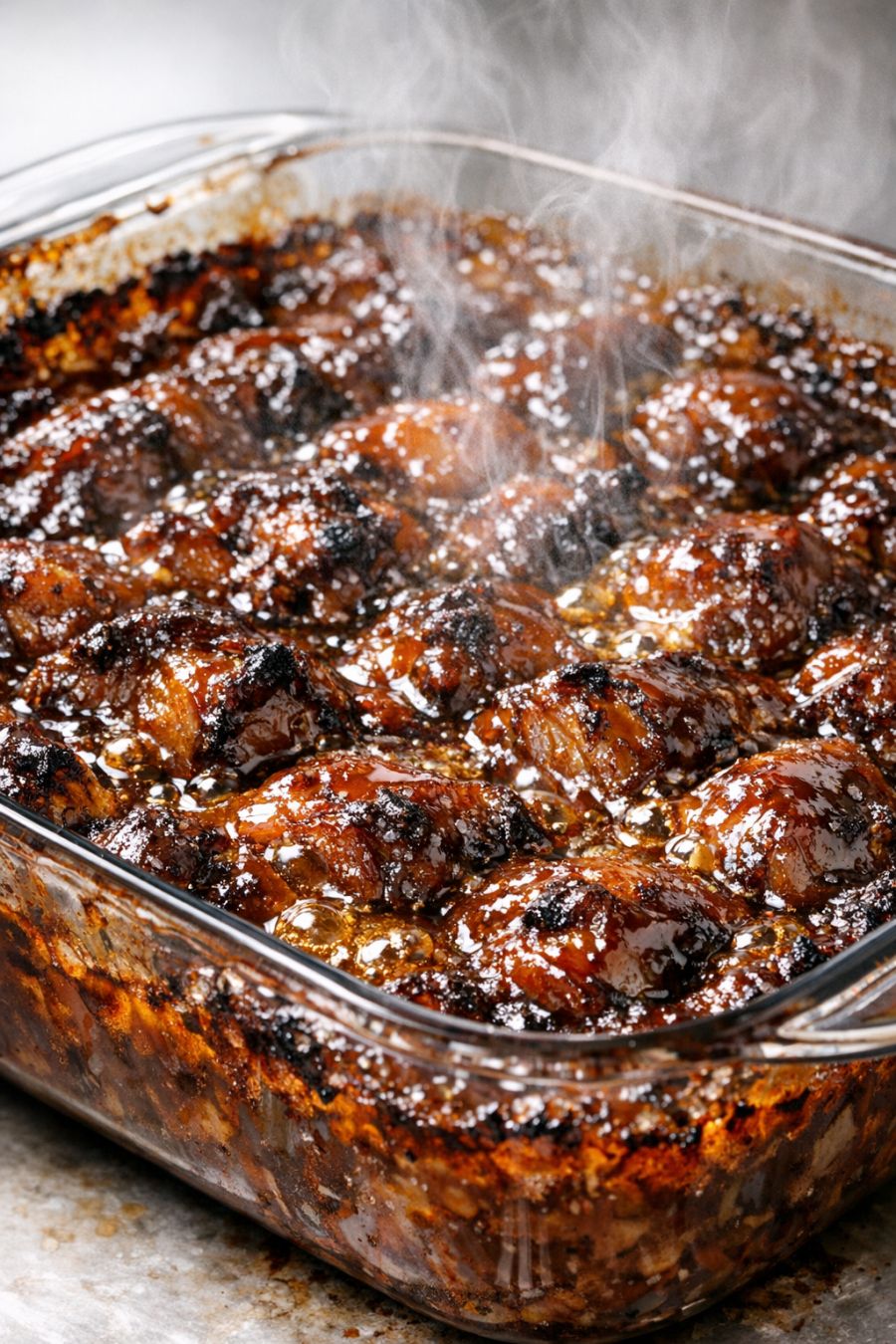
This 4-ingredient oven beef casserole is my kind of late-winter comfort food: you do a few minutes of prep, then let the oven quietly work its magic while the house fills with that cozy, savory aroma. Think of it as a Midwestern nod to old-fashioned baked beef stews and church-basement hot dishes, but streamlined for a chilly April evening when you’re still craving something hearty, yet don’t want to fuss on the stovetop. A simple brown sugar–soy glaze bakes down into a dark amber, glossy finish that clings to the beef and onions, with caramelized edges around the pan and just enough rendered fat to make everything taste indulgent.
Serve this casserole spooned over buttery mashed potatoes, egg noodles, or steamed white rice to catch every bit of the glossy glaze. A crisp green salad with a tangy vinaigrette or some simply roasted carrots or green beans help balance the richness. A crusty baguette or warm dinner rolls are great for swiping through the caramelized edges of the pan, and if you enjoy wine, a medium-bodied red like a Merlot or Côtes du Rhône pairs nicely with the sweet-savory beef.
4-Ingredient Glazed Oven Beef Casserole
Servings: 4
Ingredients
2 pounds beef chuck roast, cut into 1 1/2-inch cubes
2 large yellow onions, peeled and thickly sliced
1/2 cup soy sauce (regular or low-sodium)
1/3 cup packed brown sugar (light or dark)
Directions
Preheat your oven to 325°F (165°C). Position a rack in the center of the oven so the casserole heats evenly.
Lightly grease a 9x13-inch glass baking dish or a similar-sized casserole with a thin film of neutral oil or a quick spritz of cooking spray; this helps with sticking and encourages those caramelized edges.
Scatter the sliced onions evenly over the bottom of the dish. They will act as a flavorful bed for the beef and soak up the glaze as it cooks.
Pat the beef cubes dry with paper towels to help them brown and glaze better in the oven. Spread the beef in an even layer over the onions, leaving a little space between pieces where possible so the heat can circulate.
In a small bowl, whisk together the soy sauce and brown sugar until the sugar is mostly dissolved and the mixture looks smooth and syrupy. This is your simple glaze base.
Pour the soy–brown sugar mixture evenly over the beef and onions, tilting the pan slightly if needed so everything gets a light coating. Use a spoon to nudge any dry-looking spots so they catch some of the liquid.
Cover the baking dish tightly with foil to keep the moisture in for the first part of cooking. Place the dish on the center rack and bake for 1 1/2 hours, undisturbed. During this time, the beef will start to tenderize and release some juices into the glaze.
After 1 1/2 hours, carefully remove the foil, watching for steam. Give the beef and onions a gentle stir to recoat everything in the developing glaze, then spread back into an even layer.
Return the uncovered dish to the oven and continue baking for 45 to 60 minutes, stirring once more halfway through. The liquid will gradually thicken into a dark amber, glossy glaze, the onions will become deeply caramelized, and the edges of the dish will turn sticky and browned. You should see small bubbles across the surface and little rivulets of rendered fat pooling around the edges.
Check for doneness: the beef should be very tender when pierced with a fork, and the glaze should be thick enough to coat the back of a spoon. If it still looks thin, continue baking in 10-minute increments, uncovered, keeping an eye on the edges so they don’t burn.
Once done, remove the casserole from the oven and let it rest for 10 minutes. The glaze will thicken slightly as it cools, and the juices will settle. Skim off any excess fat from the top if you like a leaner finish, or gently fold some of it back into the sauce for extra richness.
Taste a bit of the glaze and beef; if you’d like a touch more salt, add a small splash of soy sauce and stir gently. Serve the casserole hot, spooning some of the glossy glaze and caramelized onions over each portion.
Variations & Tips
Because this recipe is built on just four ingredients, each one pulls a lot of weight, but there’s still room to adapt within that framework. For the beef, chuck roast works best because of its marbling and connective tissue, which break down into tenderness over a long, slow bake. If you substitute a leaner cut, like round, expect a slightly drier result; in that case, cut the cubes a bit smaller and check for doneness earlier. You can also swap in boneless beef short ribs cut into chunks for an especially rich version. For the onions, yellow onions are classic, but sweet onions will give you a more pronounced caramel sweetness, while red onions will add a hint of sharpness and a deeper color to the glaze. The soy sauce can be regular or low-sodium; if you’re watching salt, choose low-sodium and avoid adding any extra salt at the table until you’ve tasted the finished dish. Tamari can work if you need a gluten-free option, but always verify the label. Brown sugar can be light or dark; dark brown sugar will give a deeper molasses note and a slightly darker glaze. If you prefer a less sweet finish, you can reduce the brown sugar to 1/4 cup, understanding that the glaze will be a bit less sticky and more savory. To keep the spirit of the recipe—“just 4 ingredients”—I’ve left out extra seasonings, but if you’re comfortable bending that rule, a pinch of black pepper or a clove of minced garlic stirred into the glaze are natural additions. Food safety tips: Always start with fresh beef that has been kept refrigerated at or below 40°F (4°C), and avoid leaving it at room temperature for more than 2 hours total (including prep time). Use a clean cutting board and knife dedicated to raw meat, and wash them thoroughly with hot, soapy water before reusing. While this is a braise-style dish, it still needs to reach a safe internal temperature; the beef should hit at least 145°F (63°C) internally, but for tenderness, we’re cooking it much longer than that. Leftovers should be cooled and refrigerated within 2 hours of cooking, stored in a shallow container, and eaten within 3 to 4 days. Reheat leftovers to at least 165°F (74°C), adding a splash of water if the glaze has thickened too much in the fridge.
