
This oven baked 4-ingredient apricot glazed chicken is the kind of simple, comforting supper that reminds me of the church potlucks we used to have every spring when the snow finally melted off the fields. It leans on a jar of store-bought apricot preserves and just three pantry ingredients, all spread right over raw chicken halves in a roasting pan. No fuss, no fancy tricks—just honest, homey flavor that feels special enough for Sunday but easy enough for a Tuesday. The sweet-tangy glaze bakes into a beautiful, sticky coat that makes the chicken golden and irresistible, the sort of dish you’ll find yourself craving again and again.
Serve this apricot glazed chicken with simple, familiar sides that soak up the juices: buttered egg noodles or fluffy mashed potatoes, and a pan of roasted carrots or green beans. A crisp green salad with a light vinaigrette balances the sweetness of the glaze nicely. Warm dinner rolls or a slice of crusty bread are perfect for sopping up every last bit of sauce from the roasting pan. For a springtime touch, add a side of steamed asparagus or a fruit salad with berries and citrus.
Oven Baked 4-Ingredient Apricot Glazed Chicken
Servings: 4
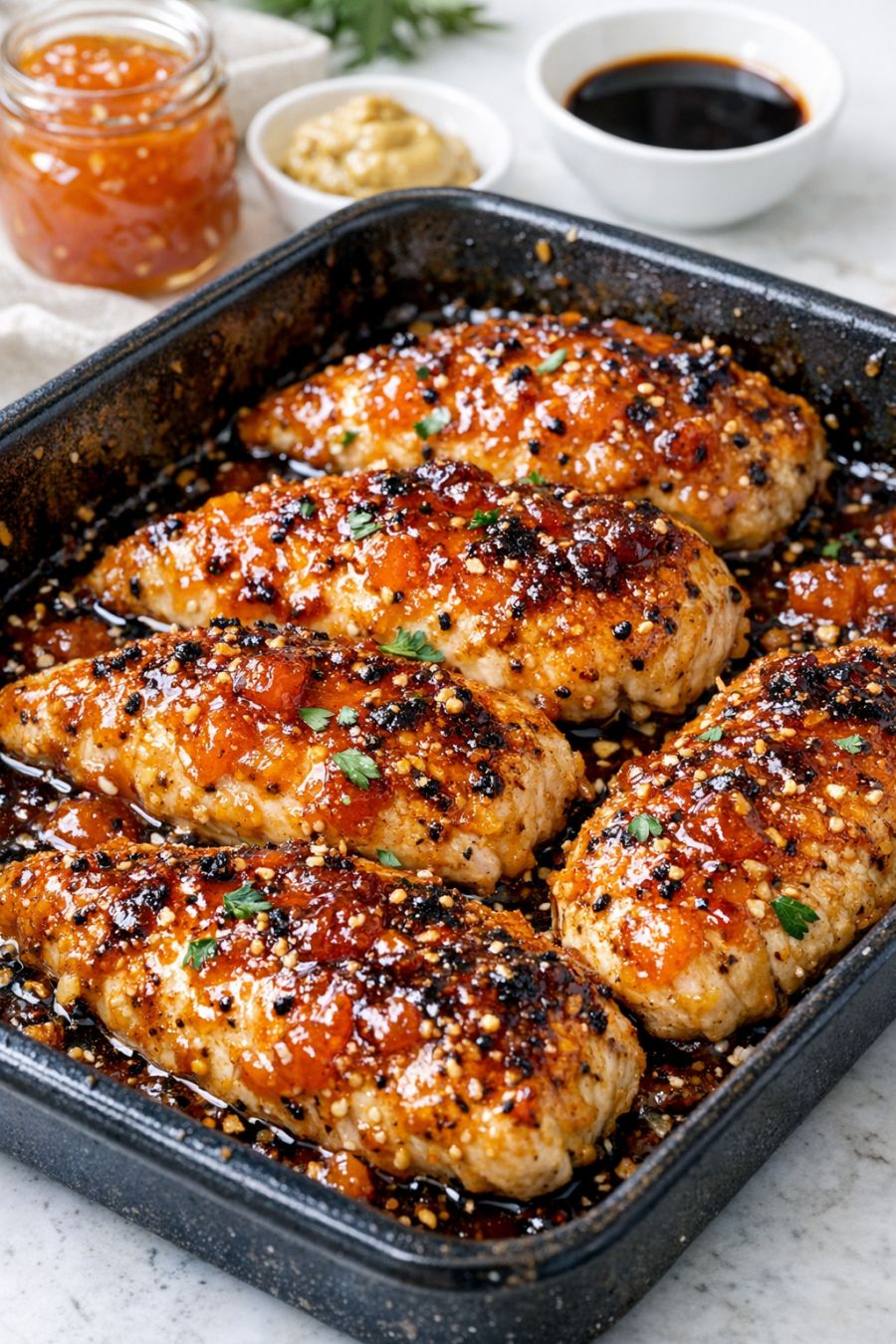
Ingredients
2 chicken halves (bone-in, skin-on, about 2 1/2–3 pounds total)
3/4 cup apricot preserves
2 tablespoons Dijon mustard
1 tablespoon soy sauce (regular or low-sodium)
1 teaspoon garlic powder
1/2 teaspoon salt (or to taste)
1/4 teaspoon black pepper
Cooking spray or 1 teaspoon vegetable oil for greasing pan
Directions
Preheat your oven to 375°F (190°C). Lightly grease a roasting pan or a 9x13-inch baking dish with cooking spray or a little vegetable oil so the chicken doesn’t stick.
Pat the chicken halves dry with paper towels. This helps the glaze cling better and encourages the skin to brown nicely. Lay the chicken halves skin-side up in the prepared roasting pan, leaving a little space between them.
In a small bowl, stir together the apricot preserves, Dijon mustard, soy sauce, and garlic powder until smooth and well combined. Taste the mixture; if you like it a bit saltier or spicier, you can add an extra pinch of salt or pepper at this point.
Sprinkle the chicken halves lightly with the salt and black pepper. Using a spoon or your hands, spread the apricot mixture generously over the raw chicken halves, coating the tops and sides well. It’s fine if some of the glaze pools in the bottom of the pan—that will turn into a lovely sauce as it bakes.
Place the roasting pan on the center rack of the preheated oven. Bake for 45–55 minutes, basting once or twice with the pan juices and any glaze that slides off, until the chicken skin is deep golden and the thickest part of the meat reaches an internal temperature of 165°F (74°C).
If you’d like the glaze a bit more caramelized, move the pan to the upper third of the oven for the last 5 minutes of baking, watching closely so the sugars in the preserves don’t burn.
Remove the chicken from the oven and let it rest in the pan for about 10 minutes. This allows the juices to settle and the glaze to thicken slightly. Spoon some of the pan juices over the chicken halves before serving, and carve into portions at the table or kitchen counter.
Variations & Tips
You can easily tailor this simple apricot glaze to what you have on hand or to your family’s taste. For a little heat, stir 1/4–1/2 teaspoon of crushed red pepper flakes into the apricot mixture before spreading it over the chicken. If you prefer a more savory, herb-forward flavor, add 1 teaspoon of dried thyme or rosemary to the glaze or sprinkle it directly over the chicken before baking. Honey mustard fans can swap half of the apricot preserves for honey for a deeper sweetness. Boneless, skinless chicken breasts or thighs can be used instead of chicken halves; just reduce the baking time to about 25–35 minutes, depending on thickness, and still cook to 165°F (74°C). For a slightly lighter dish, you can remove the skin from the chicken halves before baking, though you’ll lose some crispness; in that case, cover the pan loosely with foil for the first 20 minutes so the meat doesn’t dry out, then uncover to let the glaze set. Food safety tips: Always start with clean hands and utensils when handling raw chicken. Keep raw chicken and its juices away from other foods, especially those eaten raw, and wash cutting boards, knives, and your hands with hot, soapy water after contact. Use a meat thermometer to ensure the thickest part of the chicken reaches 165°F (74°C) before serving. Refrigerate leftovers within 2 hours in a shallow container, and reheat thoroughly until steaming hot before eating.
