
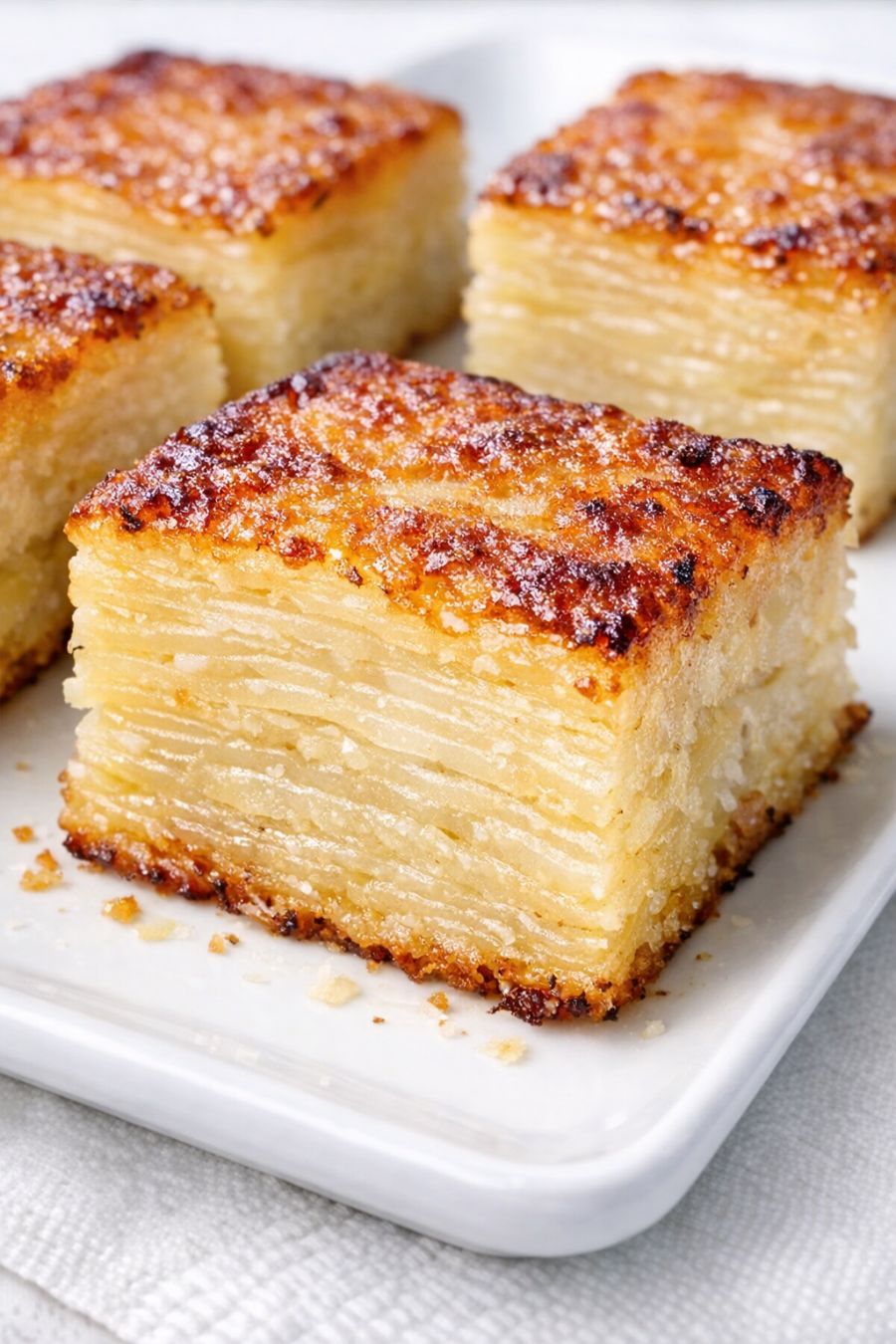
This oven baked 3-ingredient potato pavé is my pared‑down version of the dish I first watched my neighbor, Mrs. Kline, make for her bridge club back in 1972. She stacked paper-thin potatoes with nothing more than butter and salt, then baked and pressed them into a neat brick that sliced into elegant, shimmering layers. It looked impossibly fancy, but the method is surprisingly straightforward once you know the rhythm: slice, layer, butter, bake, press, and crisp. This is the kind of recipe you pull out when you want something that feels restaurant-worthy but relies on pantry basics and a bit of patience.
Serve the potato pavé sliced into rectangles or slim bars alongside simply cooked meats like roast chicken, seared steak, or pan-roasted salmon. A crisp green salad with a sharp vinaigrette balances the buttery richness nicely, as do lemony green beans or roasted asparagus. For a retro-inspired spread, pair it with a classic green bean almondine and a chilled white wine or light red. Leftover slices reheat well in a skillet and make an excellent base for poached or fried eggs the next morning.
Oven-Baked 3-Ingredient Potato Pavé
Servings: 6
Ingredients
3 pounds Yukon Gold potatoes, peeled
10 tablespoons unsalted butter, melted, plus more for greasing
2 teaspoons kosher salt, divided
Directions
Preheat the oven to 350°F (175°C). Line a 9x5-inch loaf pan (or similar small rectangular baking pan) with a long sheet of parchment paper, leaving enough overhang on the long sides to lift the pavé out later. Lightly grease the parchment and any exposed pan sides with a thin layer of melted butter.
Peel the potatoes and keep them in a bowl of cold water while you work to prevent browning. Using a mandoline set to about 1/16 inch (very thin) or a sharp knife, slice the potatoes into thin, even slices. Pat the slices dry with a clean kitchen towel or paper towels; excess moisture will make the layers steam instead of bake into distinct tiers.
Brush the bottom and sides of the prepared pan with some of the melted butter. Arrange a neat, slightly overlapping layer of potato slices in the bottom of the pan, covering it completely. Brush this layer lightly but thoroughly with melted butter and sprinkle with a pinch of salt.
Continue layering: add another layer of potatoes, brush with butter, and sprinkle lightly with salt. Press each layer gently with your fingertips to keep it even and compact. Repeat this process until you’ve used all of the potatoes, buttering and lightly salting as you go. Aim for tight, even layers all the way to the top of the pan; the potatoes will shrink as they bake.
Fold any overhanging parchment loosely over the top, then cover the pan tightly with aluminum foil. Place the loaf pan on a rimmed baking sheet to catch any drips. Bake in the preheated oven for 75 to 90 minutes, or until a thin knife or skewer slides through the center with no resistance and the potatoes feel completely tender.
Remove the pan from the oven and carefully peel back the foil. Lay a piece of parchment over the top of the potatoes, then place a second loaf pan or a small baking dish directly on top to act as a weight. Add a few cans or a heavy item to weigh it down. Let the pavé cool and compress at room temperature for about 30 minutes, then transfer the whole setup (with the weight still on) to the refrigerator and chill for at least 4 hours, or overnight. This pressing step is what creates the clean, elegant layers.
When ready to serve, preheat the oven to 425°F (220°C). Remove the weights and top pan, then use the parchment overhang to lift the chilled potato block out of the loaf pan and onto a cutting board. Trim the edges if you want perfect, straight sides (optional but visually striking), then cut the pavé into neat rectangles or bars, about 1 to 1 1/2 inches wide.
Transfer the sliced pieces to a parchment-lined baking sheet, standing them on a cut side so the layers face up and have room to crisp. Brush the exposed tops and sides lightly with any remaining melted butter (or a bit more, if needed) and sprinkle lightly with the remaining salt.
Bake at 425°F (220°C) for 20 to 25 minutes, turning the pan once halfway through, until the tops are deeply golden and crisp and the edges are sizzling. The interior should be hot all the way through, with clearly defined, tender layers. Serve hot on a white rectangular platter, arranging the slices in a tidy row or staggered slightly so the buttery layers and crisp tops are visible.
Variations & Tips
To stay true to the 1970s bridge-club spirit, this recipe uses just potatoes, butter, and salt, but you can adjust within that frame. Swap Yukon Gold potatoes for classic Russets if you prefer a fluffier interior and even crisper edges; just be sure to dry the slices well, since Russets hold more surface starch. If you need to reduce sodium, cut the salt by half and finish with just a light sprinkle of flaky salt at the table so the flavor still feels focused. For a slightly richer version that still counts as three ingredients, you can replace a few tablespoons of the butter with heavy cream, brushing it between a couple of central layers for a softer, custard-like core. Food safety and handling tips: Always use a sharp knife or a stable mandoline with a hand guard when slicing the potatoes; thin slices are key, but protect your fingertips. Chill the pavé promptly after the initial bake so it moves quickly through the food temperature “danger zone” (40°F to 140°F); don’t leave it at room temperature for more than 2 hours. Reheat leftovers thoroughly in a hot oven or skillet until steaming in the center, and store them covered in the refrigerator for up to 3 days. If any portion smells off or develops an unusual texture, discard it. For entertaining, you can bake and press the pavé a day ahead, then slice and crisp it just before guests arrive so the top is freshly golden and the layers show beautifully on the platter.
