
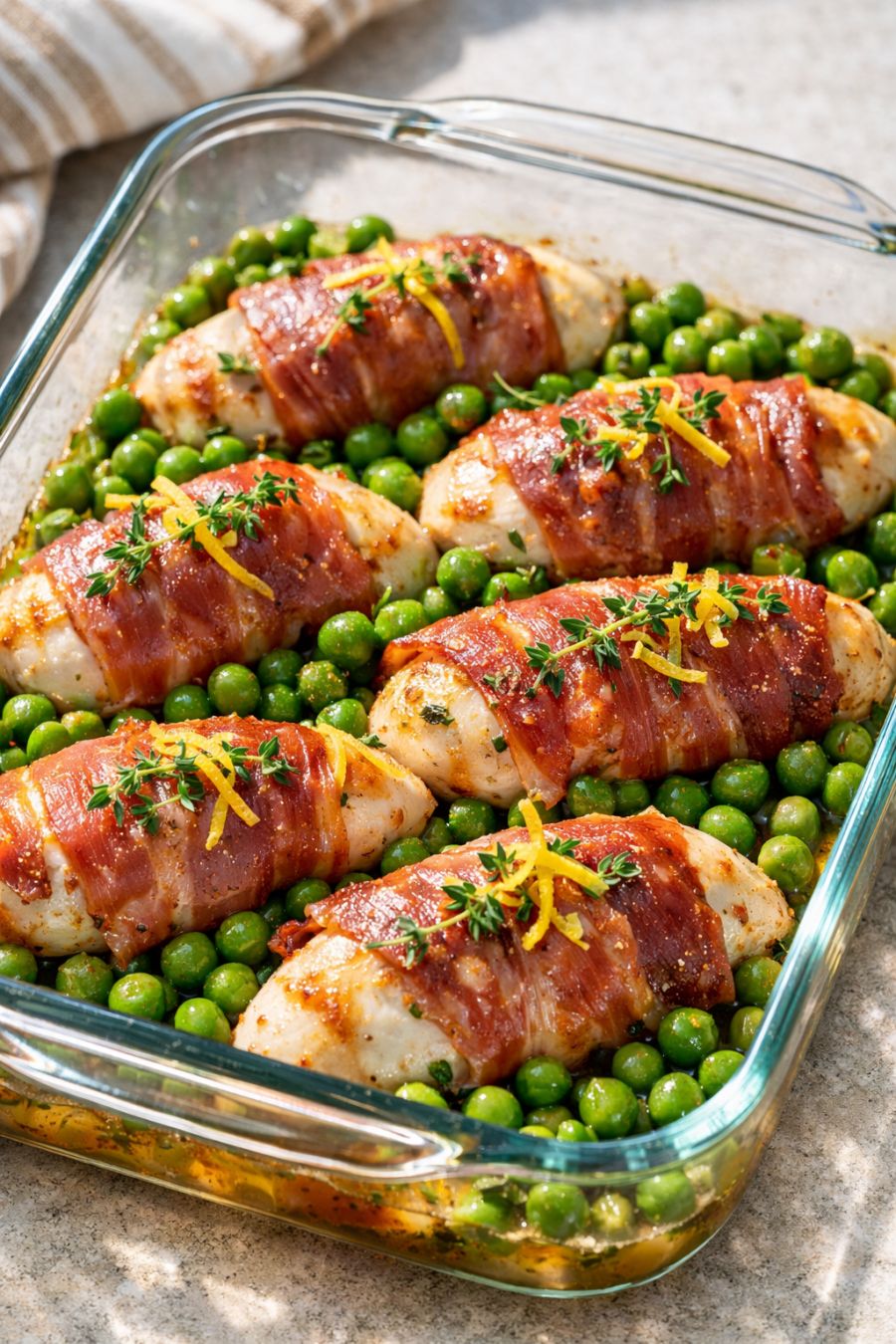
This is my default springtime dinner for the nights when I stare into the fridge and think, “I have no idea what to make.” It uses just five ingredients, goes straight into a glass casserole dish, and the whole thing feels a little bit fancy without any extra work. Thin, salty prosciutto hugs juicy chicken breasts, and everything bakes together with sweet spring peas and a bright splash of lemon. It’s very much a Midwest weeknight kind of recipe: pantry-friendly, minimal dishes, and easy enough to pull off after a long workday.
I like to serve this prosciutto-wrapped chicken over a bed of buttered egg noodles or simple steamed rice so all the lemony, salty juices have something to soak into. A quick side salad with mixed greens, cucumbers, and a light vinaigrette keeps it fresh and balances the richness of the prosciutto. Roasted asparagus or green beans also fit the spring vibe perfectly. If you drink wine, a chilled glass of Pinot Grigio or Sauvignon Blanc pairs really nicely with the peas and lemon.
Oven-Baked 5-Ingredient Spring Pea Prosciutto Chicken
Servings: 4
Ingredients
4 boneless skinless chicken breasts (about 2 pounds total)
8 to 12 thin slices prosciutto (enough to wrap each chicken breast)
1 1/2 cups frozen peas (no need to thaw)
3 tablespoons olive oil
1 large lemon, zested and juiced (about 3 tablespoons juice)
Directions
Preheat your oven to 400°F (200°C). Grab a 9x13-inch glass casserole dish and set it on the counter. Lightly brush or rub the bottom of the dish with a little bit of the olive oil to keep the chicken from sticking.
Pat the raw boneless skinless chicken breasts dry with paper towels. This helps the prosciutto cling better and gives you nicer browning. Set the chicken on a plate or cutting board near your glass dish.
Lay 2 to 3 thin slices of prosciutto slightly overlapping on your work surface, roughly the length of one chicken breast. Place one chicken breast on top, then wrap the prosciutto around it, tucking the ends underneath so it stays snug. Repeat with the remaining chicken breasts, using more slices if they’re very thin. Arrange each wrapped breast seam-side down in a single layer in the glass casserole dish.
Sprinkle the frozen peas evenly around the prosciutto-wrapped chicken in the dish, keeping most of them in the spaces between and around the chicken rather than directly on top. They’ll roast and steam in the juices as the chicken cooks.
In a small bowl, whisk together the remaining olive oil, the lemon zest, and the lemon juice. Drizzle this mixture evenly over the chicken and peas, making sure each breast gets some of the lemony oil. If you like, you can gently tilt the dish to help coat the peas in the corners.
Slide the glass casserole dish into the preheated oven and bake for 25 to 30 minutes, or until the chicken is cooked through. The prosciutto should look slightly crisped at the edges and the peas bright green and tender. For food safety, the thickest part of the chicken should reach an internal temperature of 165°F (74°C) when checked with an instant-read thermometer.
Once done, remove the dish from the oven and let the chicken rest in the glass casserole dish for about 5 minutes. This helps the juices settle so the chicken stays moist. Spoon some of the lemony pan juices and peas over the top of each piece when serving.
Taste a pea and a bit of the pan juice; if you want extra brightness, squeeze a little more lemon juice over everything right before bringing it to the table. Serve the prosciutto-wrapped chicken breasts whole or sliced, with the peas and juices spooned over or around them.
Variations & Tips
You can swap the frozen peas for a mix of peas and sliced carrots, or use fresh shelled peas when they’re in season (just keep the cooking time the same). If you want a touch of creaminess, stir a tablespoon or two of softened butter into the hot pan juices right after baking. For a slightly herby version, rub the chicken lightly with dried Italian seasoning or dried thyme before wrapping it in prosciutto (this technically adds another ingredient, but even a pinch can make a difference). If your chicken breasts are very thick, you can slice them horizontally to create thinner cutlets so they cook more evenly and stay juicy. Food safety tips: Always wash your hands, cutting board, and any utensils that touch the raw chicken before using them for anything else. Don’t rinse raw chicken under water, as that can spread bacteria around your sink. Use a meat thermometer to confirm the chicken has reached 165°F (74°C) at the thickest part before serving. Leftovers should be cooled quickly, stored in an airtight container, and refrigerated within 2 hours; reheat until hot all the way through before eating.
