
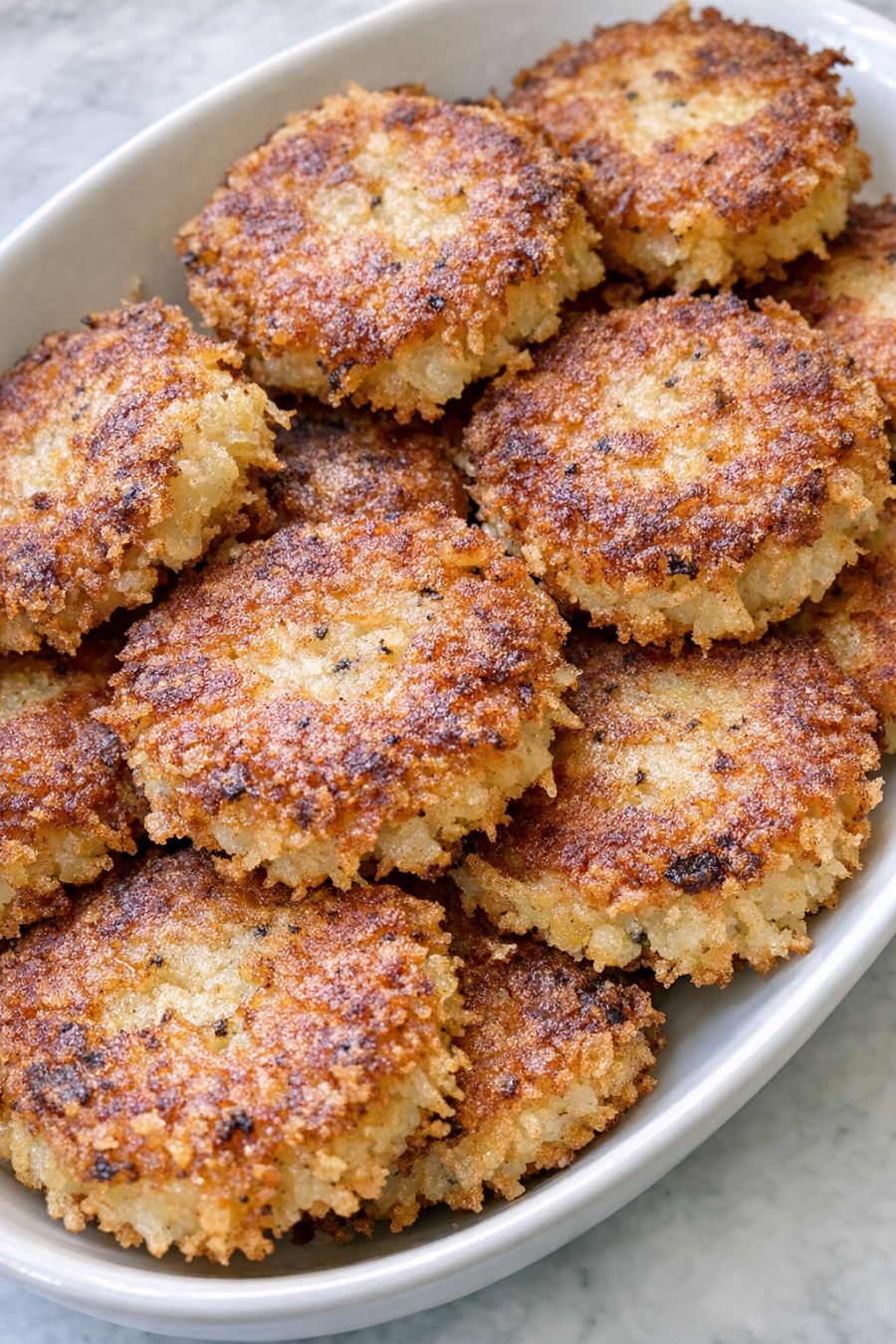
These oven baked 3-ingredient potato cakes are the kind of simple, honest food that used to anchor a Sunday. My grandmother made a pan of them every week after church, setting that white oval platter right in the middle of the table so the crispy, frilly edges tempted everyone before we’d even taken off our coats. They’re made from nothing more than potatoes, eggs, and a bit of flour, but the heat of the oven coaxes out golden brown, lacy edges and soft, tender centers. If you’re looking for an easy, comforting side that feels like it’s been in the family forever, this is it.
Serve these potato cakes hot from the oven on a simple white platter so those golden, crispy edges really show. They’re wonderful alongside roast chicken, meatloaf, or a skillet of pork chops, and they hold their own next to a big green salad if you’re keeping things lighter. A dollop of sour cream, a spoonful of applesauce, or just a pat of soft butter on top is all they really need. They also reheat well, so you can tuck a few next to scrambled eggs and bacon the next morning for a hearty farmhouse-style breakfast.
Oven Baked 3-Ingredient Potato Cakes
Servings: 4
Ingredients
2 pounds russet potatoes, peeled
2 large eggs
1/4 cup all-purpose flour
1 teaspoon kosher salt (optional but recommended)
1/2 teaspoon black pepper (optional, for seasoning)
3 tablespoons neutral oil or melted butter, for greasing the pan (not counted as one of the 3 main ingredients)
Directions
Preheat your oven to 425°F (220°C). Line a large baking sheet with parchment paper or lightly grease it with oil or melted butter. This helps the potato cakes release easily and develop crisp edges.
Peel the potatoes and rinse them under cold water to remove any surface starch. Pat them dry with a clean kitchen towel so they grate more cleanly.
Using the large holes of a box grater, grate the potatoes into a large bowl. If the potatoes release a lot of liquid, gather the shreds in a clean kitchen towel and squeeze firmly over the sink to remove excess moisture. Drier shreds lead to crispier edges.
In a separate small bowl, lightly beat the eggs with the salt and pepper (if using). Pour the beaten eggs over the grated potatoes.
Sprinkle the flour evenly over the potato and egg mixture. Using a fork or your hands, gently toss and mix until the potatoes are evenly coated and the mixture holds together when pressed. It should feel moist but not soupy.
Lightly oil the prepared baking sheet, spreading the oil so there’s a thin, even film where the cakes will sit. This helps them sizzle and brown in the oven.
Scoop about 1/4 cup of the potato mixture for each cake and place mounds on the baking sheet, leaving a little space between them. Use the back of a spoon or your fingers to gently flatten each mound into a round about 1/2 inch thick, tucking in the centers but letting some wispy bits stick out around the edges for extra crispiness.
Drizzle or brush a little additional oil or melted butter over the tops of the potato cakes. This encourages a deep golden color and crunchy edges.
Bake on the middle rack for 15–20 minutes, until the bottoms are golden and the edges look dry and lacy. Carefully flip each potato cake with a thin spatula.
Return the pan to the oven and bake for another 10–15 minutes, or until both sides are golden brown and the edges are deeply crisp while the centers feel tender when lightly pressed.
Transfer the potato cakes to a warm platter as soon as they come out of the oven. If you like, sprinkle with a pinch more salt while they’re still hot so it clings to the surface.
Serve right away while the edges are at their crispiest, piling them onto a white oval serving platter just like Grandma did, with the frilly, browned sides facing up.
Variations & Tips
These potato cakes are meant to be plain and humble, just like the Sunday tables they came from, but there’s room for a little personality. For extra flavor, you can stir in 2 tablespoons of finely minced onion or chives, or a small handful of finely shredded cheddar cheese, keeping in mind that any add-ins may soften the edges slightly. If you’re cooking for someone who avoids gluten, swap the all-purpose flour for an equal amount of potato starch or a gluten-free all-purpose blend; the texture will still crisp nicely. To keep the cakes warm and crisp for a crowd, place them on a wire rack set over a baking sheet in a 200°F (95°C) oven until serving time, rather than stacking them directly on a plate, which can trap steam and soften the edges. For a lighter version, you can brush the pan and tops of the cakes with just a thin sheen of oil instead of a generous drizzle, though the edges may be a bit less rich. Food safety tips: Always refrigerate leftover potato cakes within 2 hours of baking, storing them in a shallow, covered container. Reheat in a hot oven or toaster oven (400°F / 200°C) until heated through and crisp again; avoid reheating multiple times. When handling raw eggs, wash your hands, utensils, and the mixing bowl well before using them for other foods. If preparing ahead, you can grate and squeeze the potatoes up to an hour in advance, but don’t mix in the eggs until just before baking to reduce the risk of the mixture becoming watery or the potatoes discoloring too much.
